

The next-generation additive manufacturing platform, “Kavian,” integrates an innovative dry-process manufacturing step into a unified tool designed for the production of complete lithium-ion battery electrodes.
According to Sakuu Corporation, this dry 3D printing system enables the fabrication of fully functional lithium-ion battery electrodes. Unlike conventional methods, it employs a powder-based process that eliminates the need for wet slurries and drying ovens. This approach also avoids the use of toxic chemicals—such as the solvent NMP and polymer binders like PTFE—commonly found in traditional battery manufacturing.
By streamlining electrode production while enhancing sustainability and safety, 3D printing is emerging as a promising pathway for the next generation of lithium battery manufacturing.
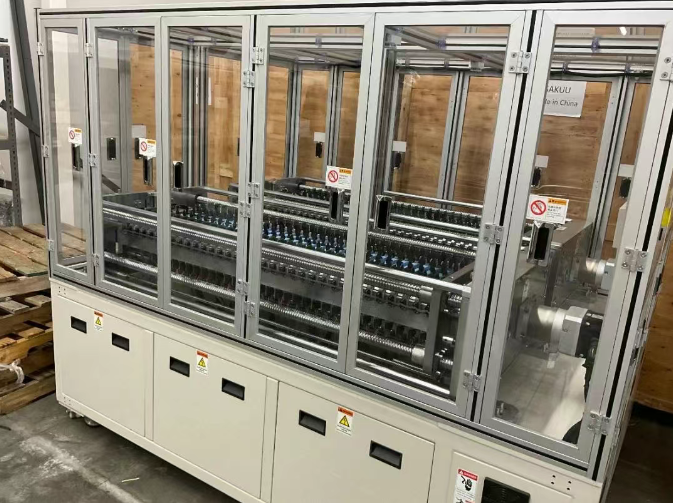
The system is compatible not only with existing battery chemistries such as LFP (Lithium Iron Phosphate) and NMC (Nickel Manganese Cobalt), but also with emerging technologies including lithium-metal, aluminum-ion, and sodium-ion batteries.
According to Sakuu, the “Kavian” platform can reduce factory footprint by approximately 33%, lower energy consumption by 40%, and cut carbon emissions by 55%.
The platform has already drawn significant attention through early collaborations with major industry players, including the South Korean battery manufacturer SK On.
Sakuu’s Core 3D Printing Battery Technology
Sakuu focuses on additive manufacturing technologies for the production of solid-state and lithium-ion batteries, gaining widespread attention for its ability to fabricate battery components using 3D printing. This approach significantly reduces material waste, conserves energy, and enhances performance.
As demand for batteries continues to surge across electric vehicles, consumer electronics, and renewable energy systems, such innovations are becoming increasingly critical for advancing the next generation of energy storage solutions.
| Aspect | Sakuu’s Technology | Traditional Lithium-Ion Batteries |
| Process | Dry 3D printing, eliminating toxic solvents | Wet process, which usually uses NMP and PTFE |
| Sustainability | Nearly 50% reduction in waste, close to zero waste | Highly sufficient, but produces more waste |
| Customization | Customized shape and size before printing, ideal for heat management | Standard shape, limited customization |
| Energy Density | Over 800 Wh/L, potential to exceed 1200 Wh/L (claimed) | Usually 500 – 700 Wh/L |
| Cycle Life | Over 1000 cycles, still over 80% SOH | Chemical differentiation, usually 500 – 800 cycles |
| Cost | Reduce capital and material costs, claimed cost-effective | Higher, due to the use and management of solvents |
Sakuu Kavian® Platform: Redefining Battery Manufacturing
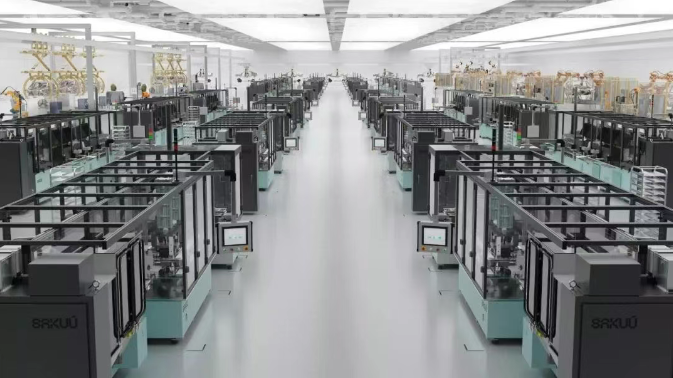
Sakuu is transforming the energy industry with its Kavian® platform, the world’s first commercial-scale dry 3D printing solution for batteries. Unlike traditional wet processes that rely on toxic solvents such as NMP and PTFE, Kavian eliminates hazardous materials, cuts energy use, and reduces carbon emissions—paving the way for safer, cleaner, and more cost-efficient production.
At its core, Kavian enables the printing of custom-shaped lithium-metal and lithium-ion batteries, offering unmatched design flexibility. With energy densities exceeding 800 Wh/L, power outputs up to 10C pulse, and cycle life surpassing 1,000 full-depth cycles, Sakuu delivers performance well beyond today’s standard EV and energy storage batteries.
The platform’s three-step process—dry powder printing, powder conditioning, and integrated surface inspection— ensures precision, reliability, and sustainability at scale. By simplifying manufacturing, Kavian reduces factory footprint by ~33%, energy consumption by 40%, and CO₂ emissions by over 50%.
Since its commercial release in January 2025, Kavian has gained global traction. A major partnership with SK On, a leading EV battery supplier, is driving innovation in dry electrode manufacturing for electric vehicles. The platform has also earned top honors, including TIME’s Best Inventions 2024 and Fast Company’s World-Changing Ideas 2025.
Applications span electric vehicles, grid and residential energy storage, and next-gen consumer electronics—where custom-shaped, high-performance batteries enable lighter, more efficient, and more sustainable designs.
With its breakthrough blend of scalability, performance, and sustainability, Sakuu’s Kavian® platform is setting a new standard for next-generation energy storage.