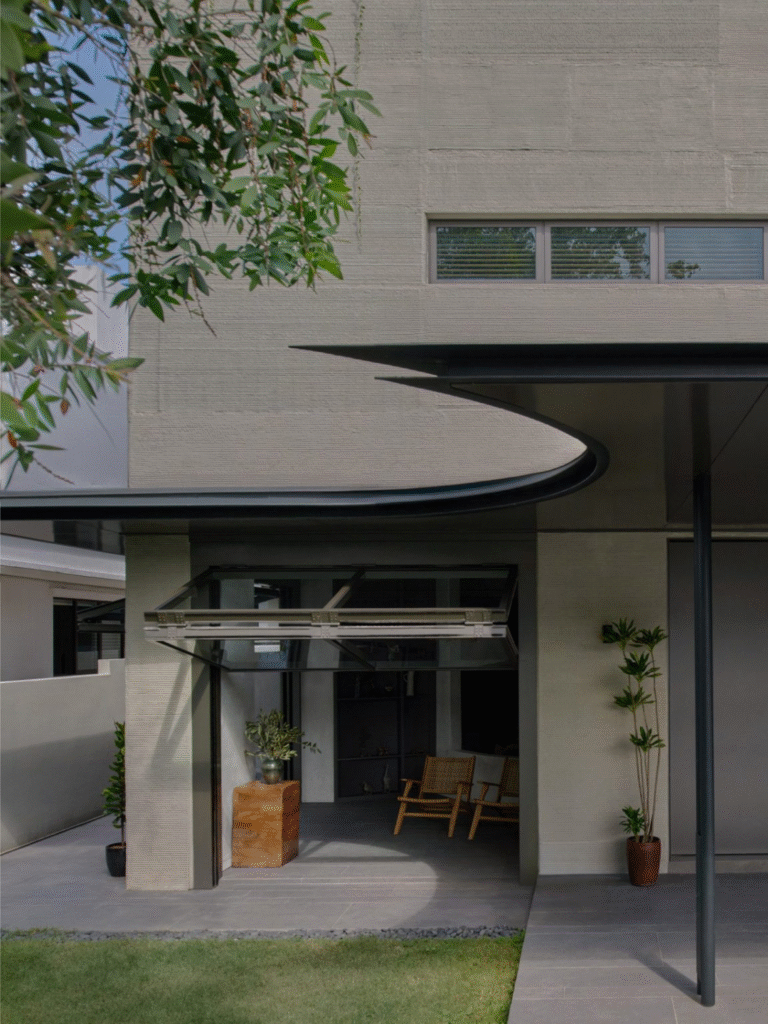
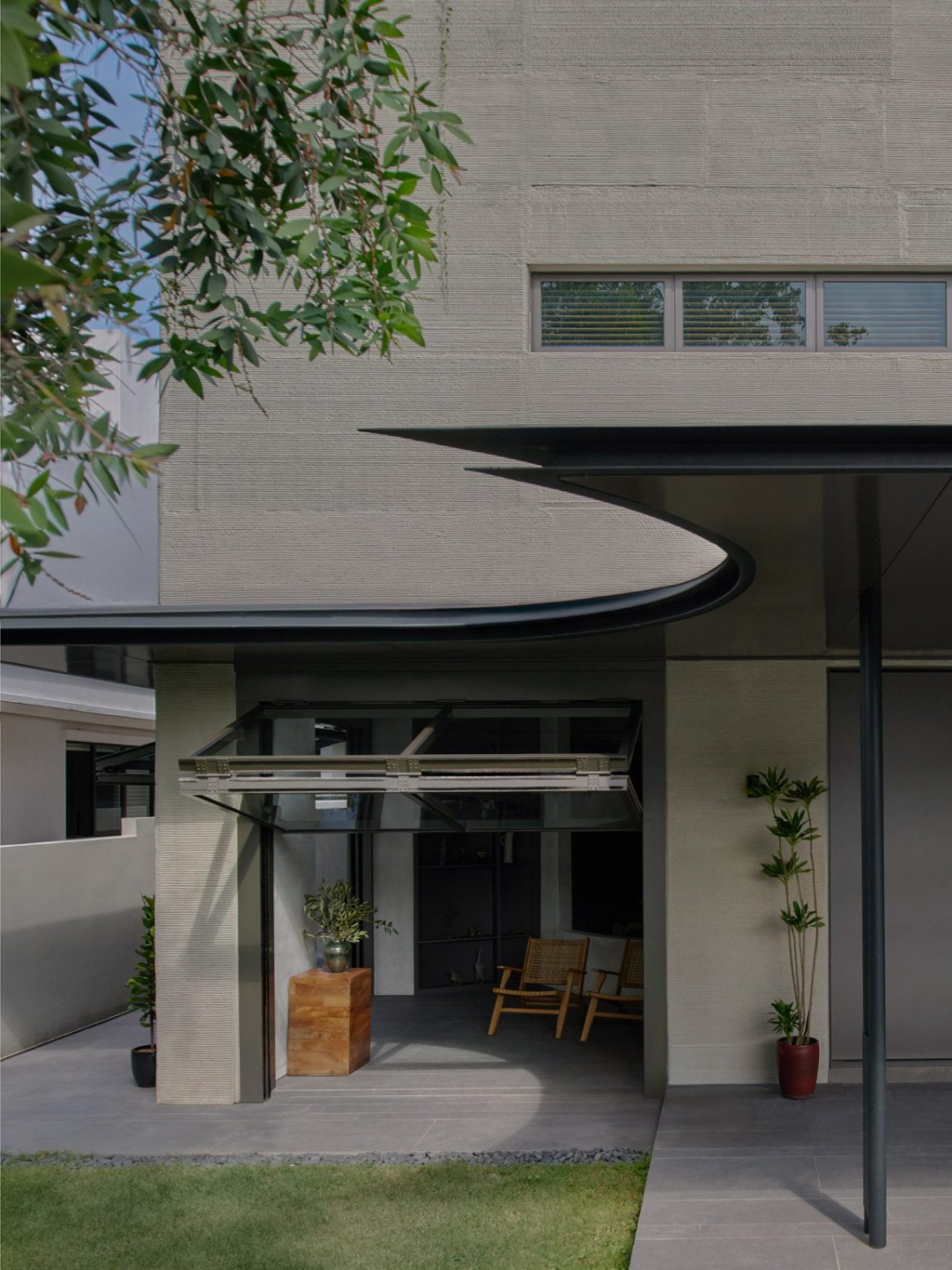
Singapore-based architecture firm Park + Associates, in collaboration with CES_InnovFab, a developer specializing in large-scale 3D-printed architecture, has completed QR3D, the nation’s first multi-storey 3D-printed residential building. Conceived as the personal residence of Park + Associates’ founder, Lim Koon Park, the project serves as a full-scale prototype to evaluate the potential of additive manufacturing (AM) technology in residential construction.
Over 90% of the structure was built using a patented concrete mixture, with components printed both on-site and off-site. This hybrid approach highlights the scalability of 3D-printing technology for comprehensive built-environment projects.
Design and Technical Strategy
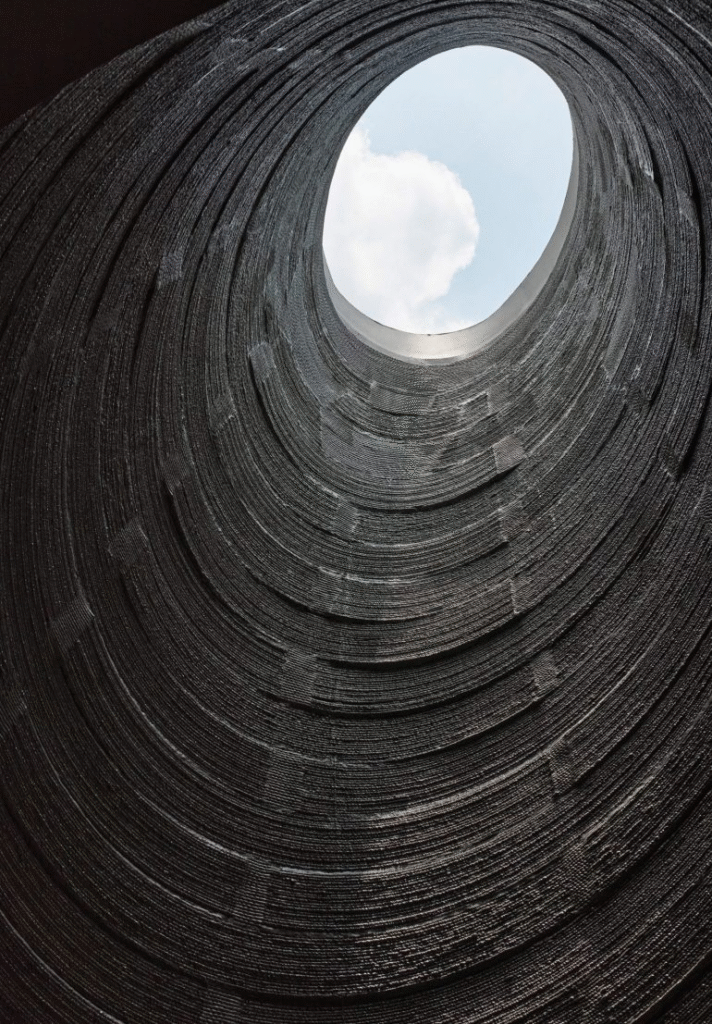
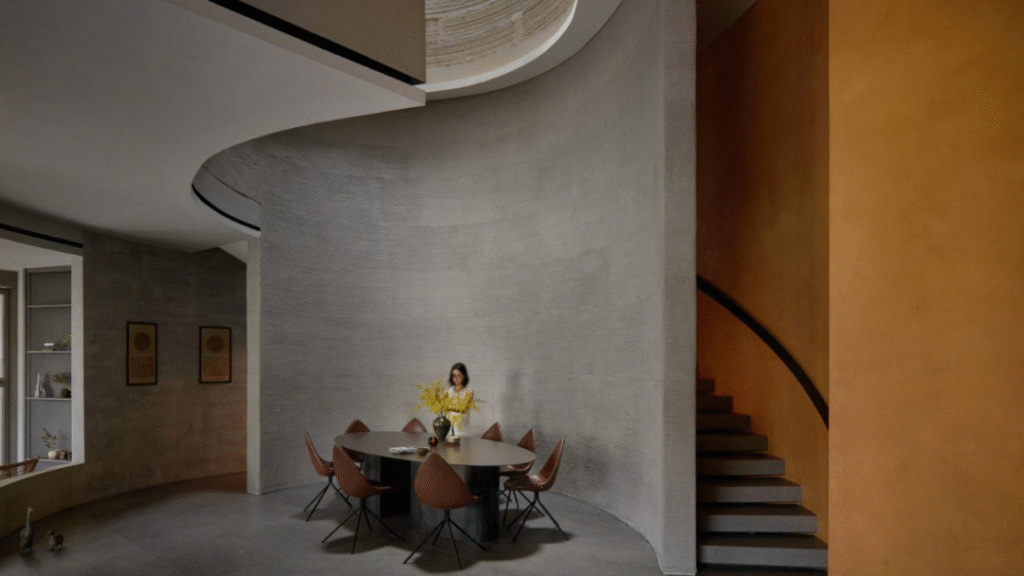
The house embodies Park + Associates’ commitment to sculptural clarity and environmental sensitivity. The exposed printed concrete and restrained detailing celebrate the construction process and highlight the authenticity of the materials. A circular oculus located above the dining area provides passive cooling and references the neoclassical house that once occupied the site.
This architectural element serves a functional purpose — shaping the interior space and enhancing natural light — reinforcing the relationship between environmental performance and user experience.
“Our goal was never to chase novelty,” said Lim Koon Park. “We aimed to create a family home that will remain meaningful and respected for decades to come. QR3D is about embracing the possibilities of new technology while staying true to our design values.”
Park + Associates emphasized that additive manufacturing can provide practical solutions to some of the construction industry’s most pressing challenges, particularly in urban contexts. By streamlining labor requirements, reducing material waste, and minimizing on-site disruption, 3D-printing technology offers a more efficient and potentially more sustainable approach to residential construction.
3D Printing in Architecture: Speed, Economy, and Sustainability
In June this year, Kyiv National University of Construction and Architecture (KNUBA) launched a two-year collaborative project aimed at developing concrete mixtures from construction waste and other discarded materials. These innovative mixes will be applied to both conventional construction and advanced 3D-printing techniques to accelerate the rebuilding of Ukraine’s war-damaged infrastructure. The initiative not only supports rapid and sustainable reconstruction but also seeks to create a scalable model for post-crisis infrastructure development worldwide.
In 2024, Ohio-based firm Sustainable Concrete Innovations (SCI) applied 3D concrete printing technology in residential building projects. Using advanced machinery supplied by Dutch company CyBe Construction, SCI set out to deliver homes that are faster to build, more cost-effective, and environmentally sustainable.
By integrating 3D-printed wall elements into traditional construction workflows, SCI achieved significant reductions in both labor and material costs. This approach not only shortened project timelines but also dramatically minimized material waste, aligning construction activities with broader sustainability goals by reducing their environmental impact.