
On October 24, Nike unveiled its latest 3D-printed sneaker — the Air Max 95000, a model that not only pays tribute to the iconic Air Max 95 but also propels sneaker innovation into a new era.
The Air Max 95000 features a large Max Air unit in the heel and a smaller one in the forefoot, delivering a consistently soft, smooth, and springy underfoot experience.
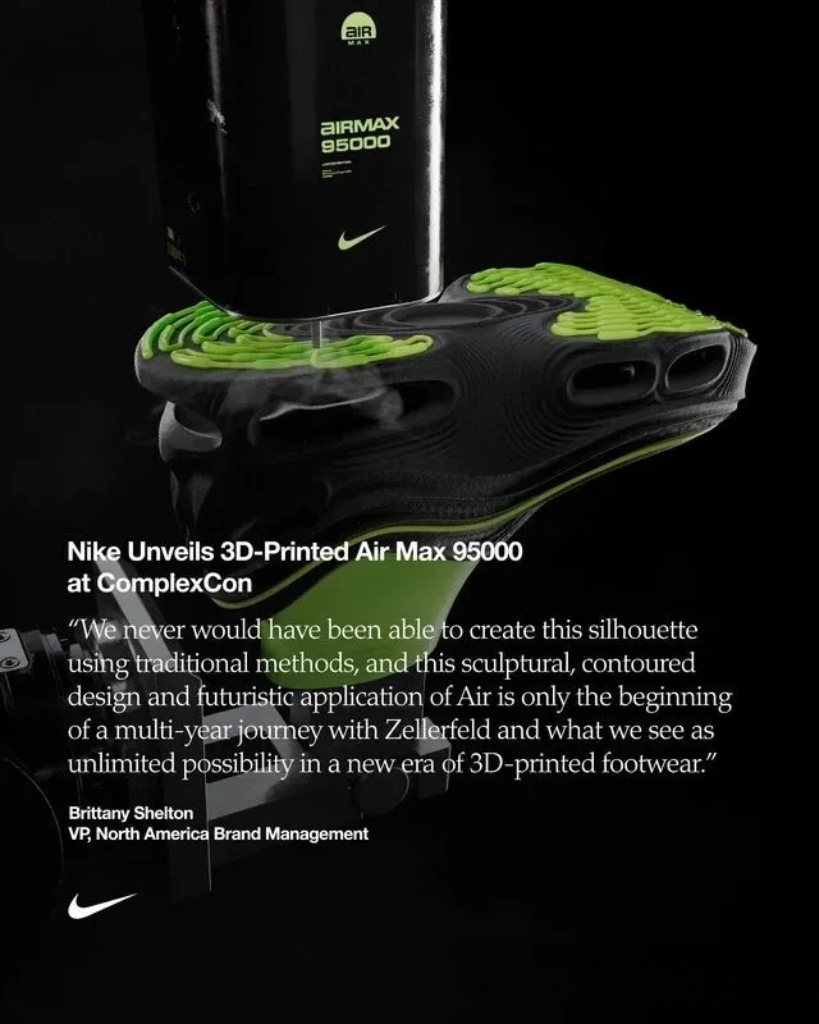
This sneaker marks Nike’s first design created using Project Nectar and the second collaboration with Zellerfeld, representing another milestone in Nike’s long-standing exploration of 3D printing in footwear.
Unlike previous experimental releases, the Air Max 95000 is designed to establish the foundation for repeatable, multi-color production. Powered by Zellerfeld’s Gen3 3D printer, the shoe can be printed as a single, fully formed piece with parametric fit customization and multi-color capabilities, eliminating the need for molds or traditional assembly.

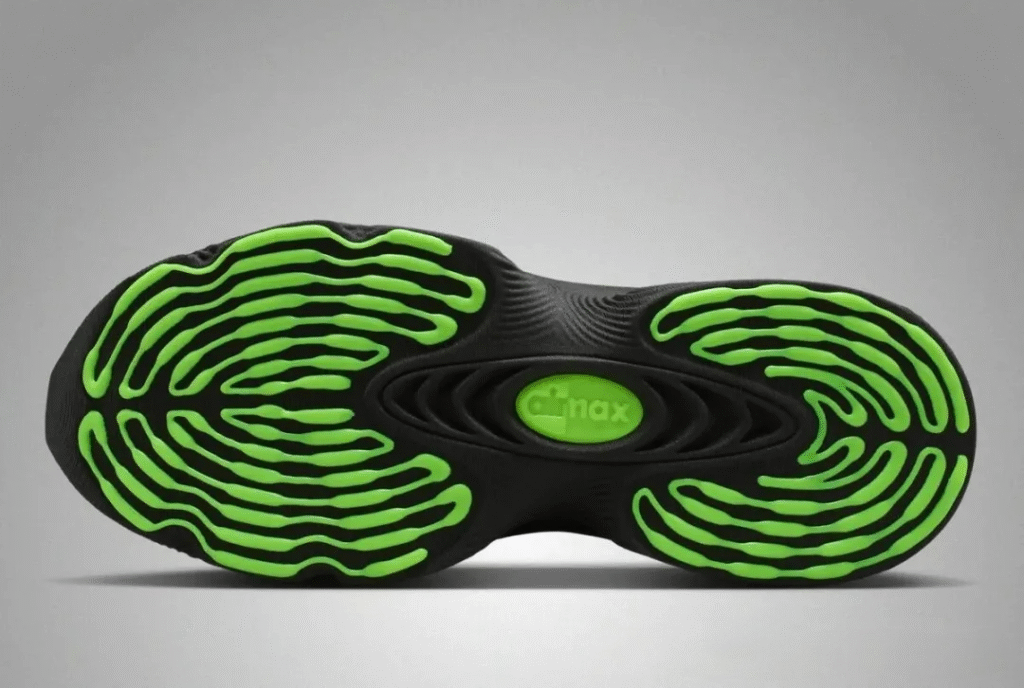
From a technical standpoint, the Air Max 95000 builds upon the foundation of the Air Max 1000, fully leveraging Zellerfeld’s continuously advancing production capabilities and expertise. While the 1000 featured a single-material lattice structure, the 95000 introduces dual Air units—a larger heel cushion and a smaller forefoot cushion—embedded within a 3D-printed midsole.
The printed lattice structure features region-specific density tuning, providing targeted cushioning and support where it’s needed most. This modular architecture allows Nike to fine-tune comfort and performance without redesigning the entire shoe, marking a major step toward adaptive, data-driven footwear design.