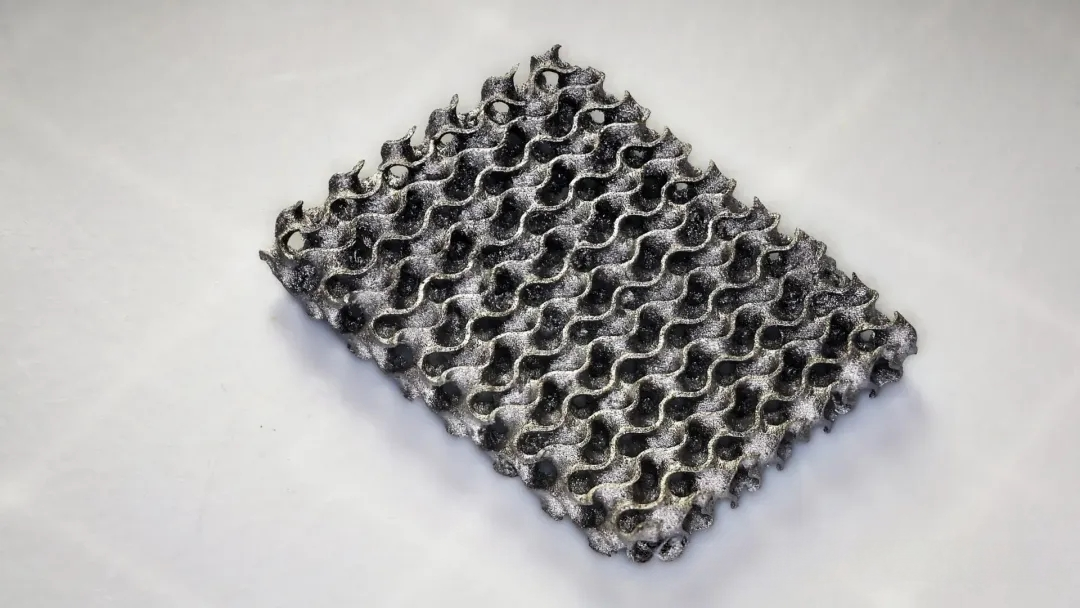
Multiple universities are researching a groundbreaking new 3D printing method that uses hydrogel as a template to produce ultra-high-density, durable metals and ceramics This approach enables the fabrication of advanced three-dimensional structures that are simultaneously high in strength, lightweight, and complex in structure
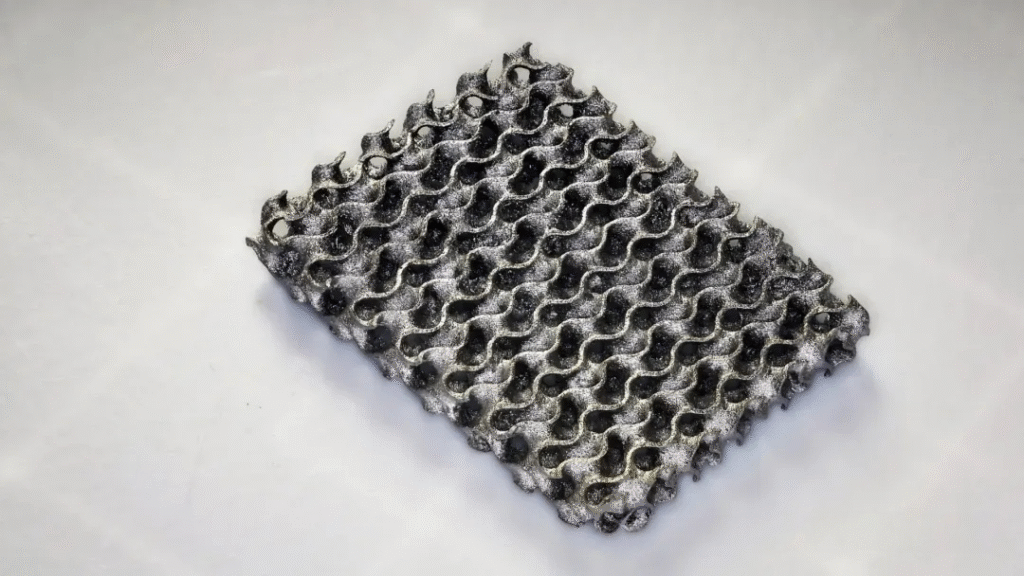
The iron helicoid (13x 10 cm) fabricated by École Polytechnique Fédérale de Lausanne (EPFL) using this technology
The basic principle and process are as follows: first, a hydrogel scaffold is created via stereolithography 3D printing After processing, it is immersed in a metal salt solution, where metal salt ions diffuse into the hydrogel due to concentration gradients or electrostatic interactions Finally, the metal-ion-laden scaffold undergoes freeze-drying, calcination, and reduction to produce the final metal
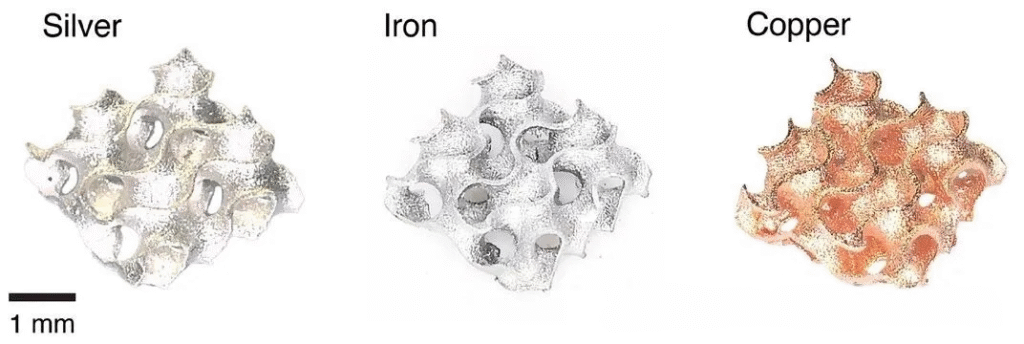
Silver, Iron, and Copper Fabricated by EPFL Using This Technology
Differences from Laser 3D Printing
This process may seem more complex than laser powder bed fusion (LPBF) 3D printing, so why is the scientific community so interested? Because it can create structures that conventional LPBF processes cannot produce—particularly complex three-dimensional lattices or microarchitected materials with micron-scale structural features These structures have specific applications in fields such as sensors, medical devices, and energy conversion and storage equipmentAdditionally, it avoids common defects in laser 3D printing, such as thermal stress, cracks, and porosity The hydrogel infusion method completely eliminates the high-temperature melting process, fundamentally circumventing these issues in principle
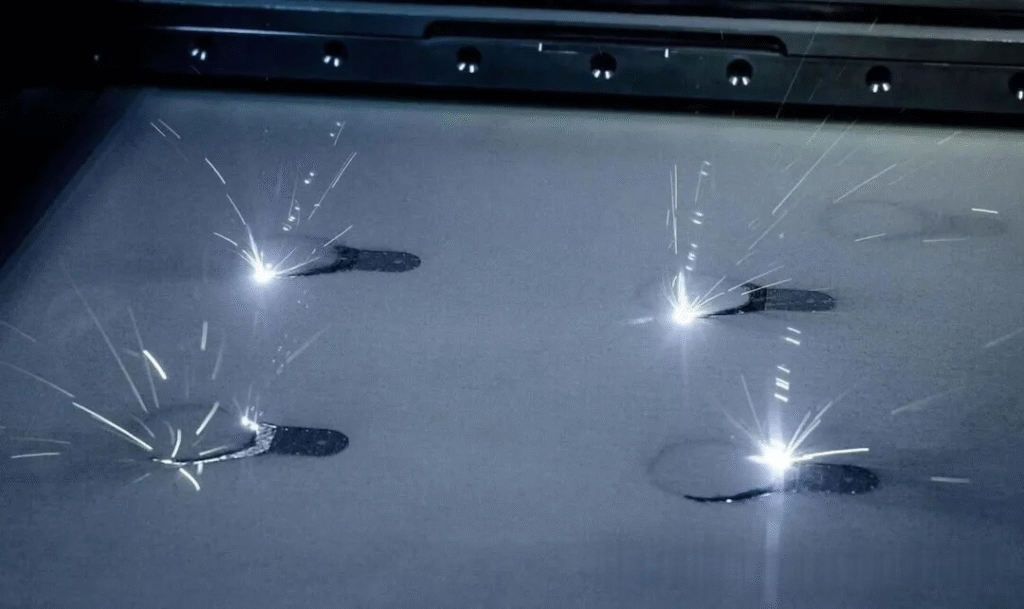
Laser-Based Powder Bed Fusion 3D Printing Differences from Other Indirect, Sintering-Based Metal 3D Printing Although this technology is an indirect, sintering-based metal 3D printing method, it differs from HP’s binder jetting and the recently spotlighted cold metal fusion Its process is much more complex Technologies like HP’s are still used to manufacture macro-scale metal parts, whereas hydrogel infusion focuses more on extremely high-precision, complex structures, and micro-scale fabrication Another approach involves stereolithography printing of photosensitive resin mixed with metal powder This type is considered to have issues such as high resin viscosity and light scattering caused by metal particles
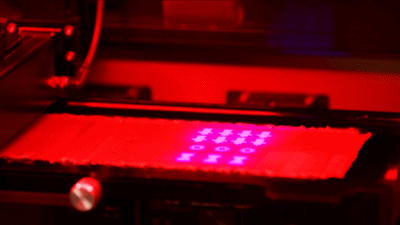
Photocuring-Based Metal 3D Printing
Existing Challenges and Solutions
However, this technology itself is not yet mature, and it faces unavoidable challenges such as high shrinkage rate, easy deformation, and porosity To address these issues, 3D Printing Technology Reference has noted that researchers at École Polytechnique Fédérale de Lausanne (EPFL) have proposed a solution
They transfer 3D-printed hydrogel scaffolds soaked in a metal salt ion solution to a second solution for a chemical reaction, converting the salt ions from the previous step into insoluble metal nanoparticles, which are anchored to the network backbone Then, they repeatedly perform the above two steps of solution soaking and chemical reaction to continuously increase the metal content
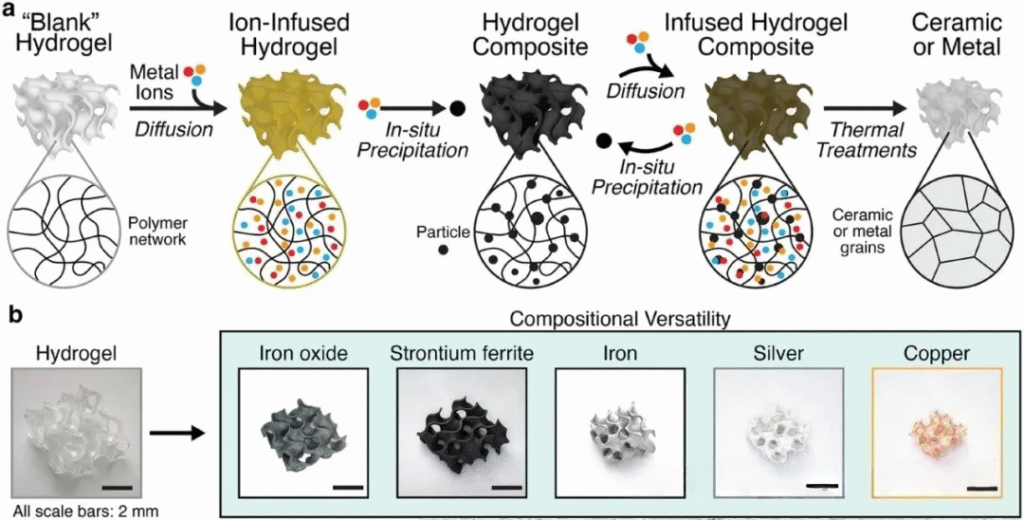
A) Schematic diagram of hydrogel infusion and precipitation process for ceramics and metals
B)Metal oxides and metals fabricated based on this process
After 5-10 such “growth cycles”, the remaining hydrogel is removed by heating, leaving behind a metal or ceramic structure that perfectly replicates the original gel shape The resulting object is exceptionally dense and durable Since metal salts are added after the printing step, a single hydrogel model can be converted into various metals, ceramics, or composite materials
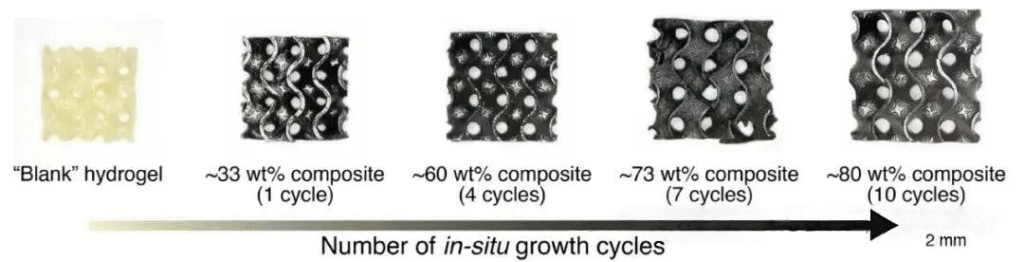
After multiple infusions, the salt ion content continues to increase
Researchers stated that this process is actually very easy to operate, and high-quality metals and ceramics can be produced at a very low cost Furthermore, it is also a new form of manufacturing because the material selection is carried out after 3D printing
The research team fabricated helical lattice structures using iron, silver, and copper Strength tests revealed that compared to materials produced by previous methods, their materials can withstand 20 times higher pressure, with a shrinkage rate of only 20%, while the shrinkage rate of materials produced by previous methods was as high as 60-90%.
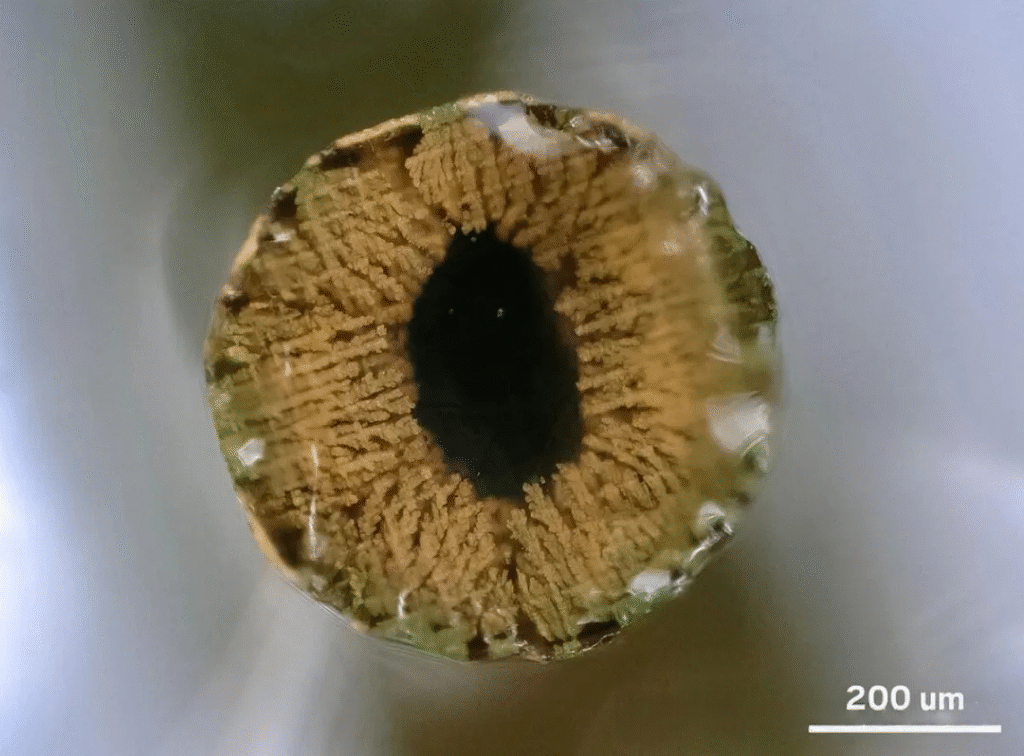
Cross-sectional view of hydrogel infused with copper
Compared to traditional laser powder bed 3D printing, hydrogel infusion for manufacturing metal materials can produce highly complex overhanging structures or microchannels without the need for supports, and can even freely adjust material composition and microstructure
Overall, hydrogel infusion metal 3D printing technology enables “print-first, material-select-later” with high-precision manufacturing; it can achieve microstructural fabrication that is difficult to realize with traditional methods; it can avoid some inherent defects in laser printing; and at the same time, it opens up new possibilities for developing materials with specific properties