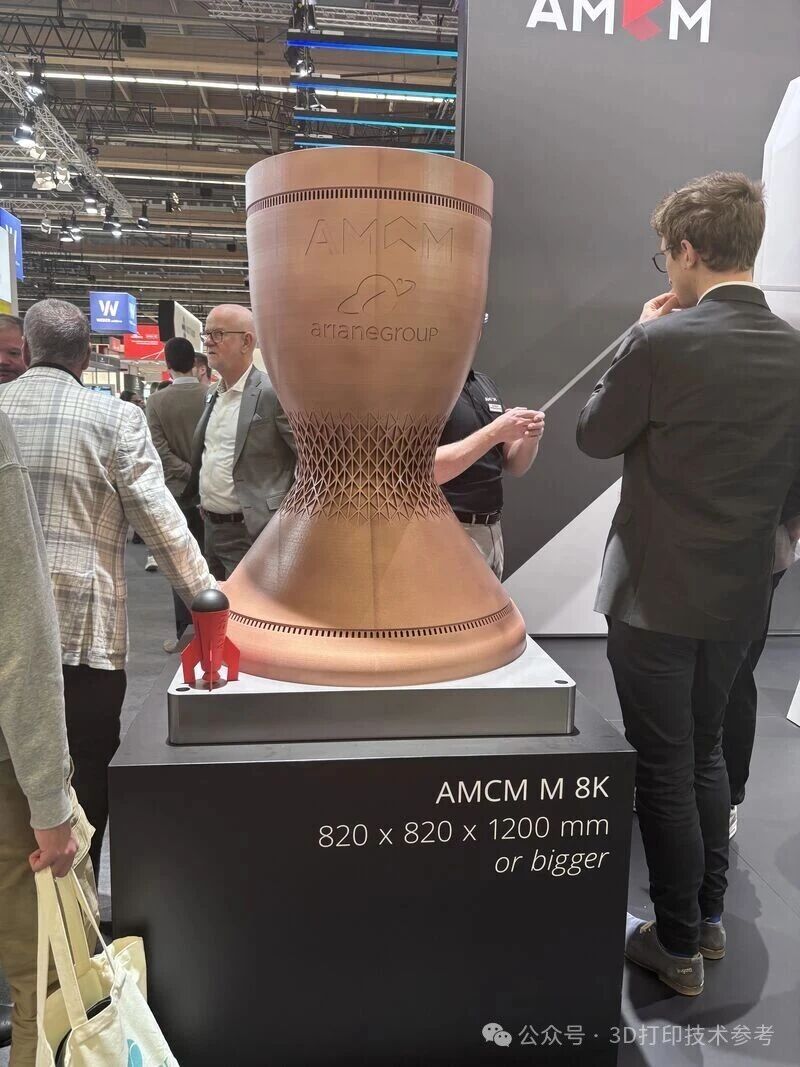
AMCM is a benchmark for ultra-large, high-end industrial 3D printing technology. The equipment it has developed represents the excellence of this field, capable of producing complex parts that surpass the limits of traditional methods in terms of scale, precision, and overall performance.
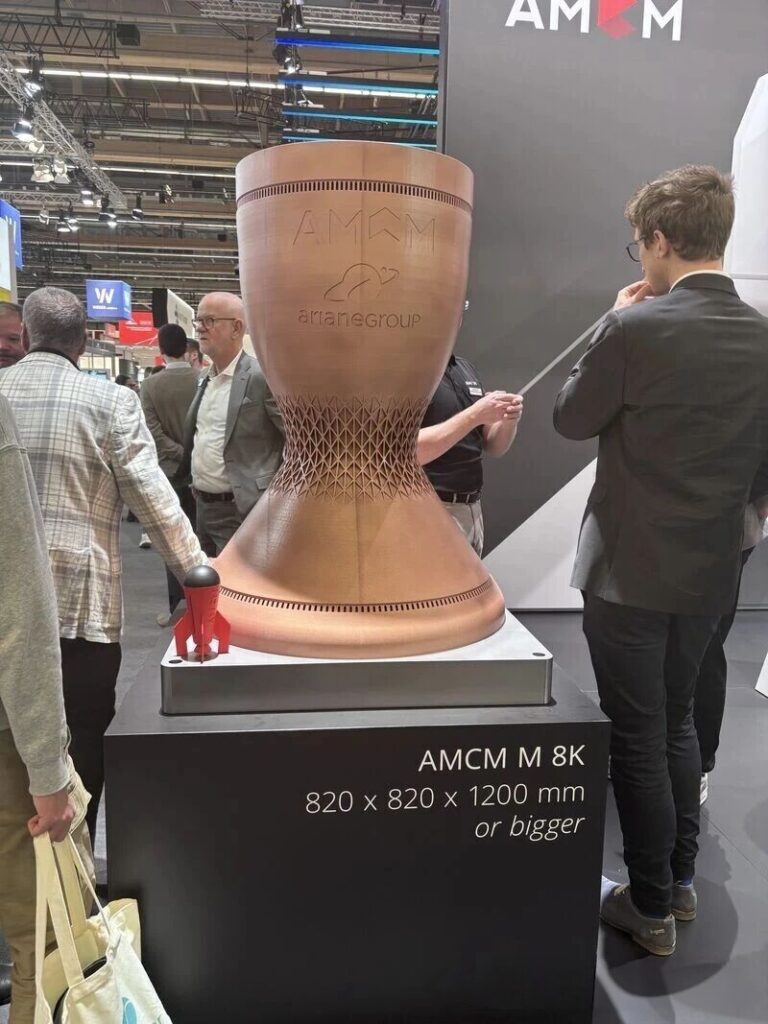
To break through the boundaries of additive manufacturing, AMCM partnered with PanOptimization and used the latter’s PanX simulation software to test the simulation capabilities for meter-scale components. The tests showed that even with meter-scale large parts, high-fidelity thermo-mechanical coupling simulations could be completed in under one hour on a desktop workstation, allowing for the determination of optimal process parameters.
AMCM’s metal 3D printing application expert, Tobias Petzinger, pointed out that the company was previously unable to perform thermo-mechanical simulations on CuCrZr components with a build volume the size of the M8K.
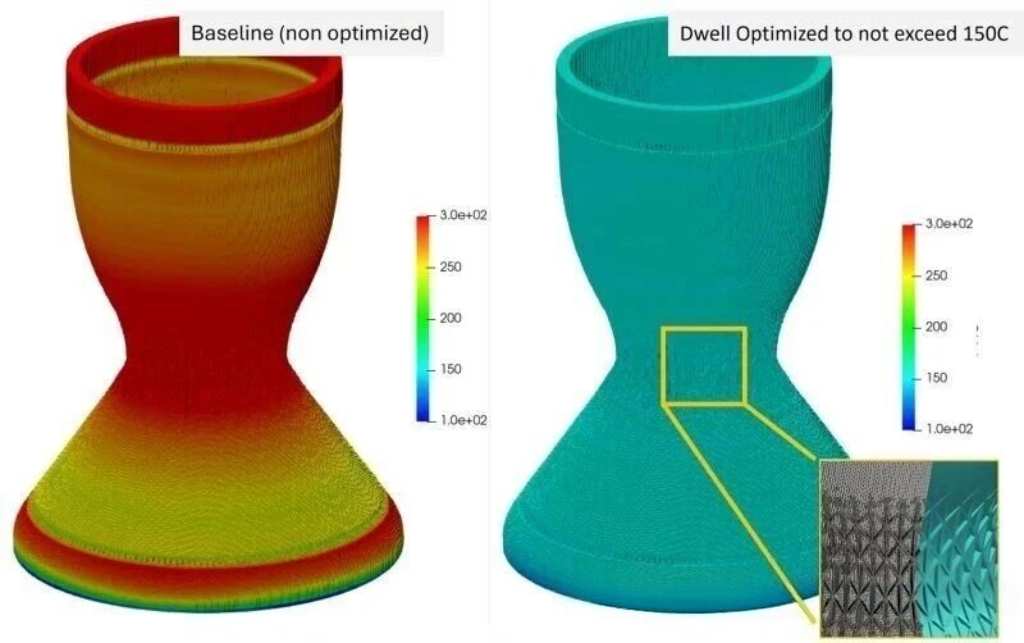
Fast, Precise, and Low Computer Configuration Requirements
According to the product introduction of PanX, it is a high-performance additive manufacturing simulation software that is accurate, efficient, scalable, and easy to use. The software can precisely analyze fine geometric features, model the entire print platform, and achieve high-precision thermodynamic predictions and calibration based on actual process parameters. It supports models of any size and complexity, with computation time increasing only linearly with model size, which is far superior to traditional finite element tools.
In terms of efficiency, PanX claims it can complete simulations of large and complex components in an extremely short time, with speeds more than 100 times faster than traditional methods. Most simulations can be run on a standard laptop, greatly lowering the entry barriers and computational resource requirements.
With its advanced simulation capabilities, AMCM states that it can:
- Optimize large-scale additive manufacturing processes
- Reduce failure and trial-and-error
- Ensure reliable, efficient, and safe production
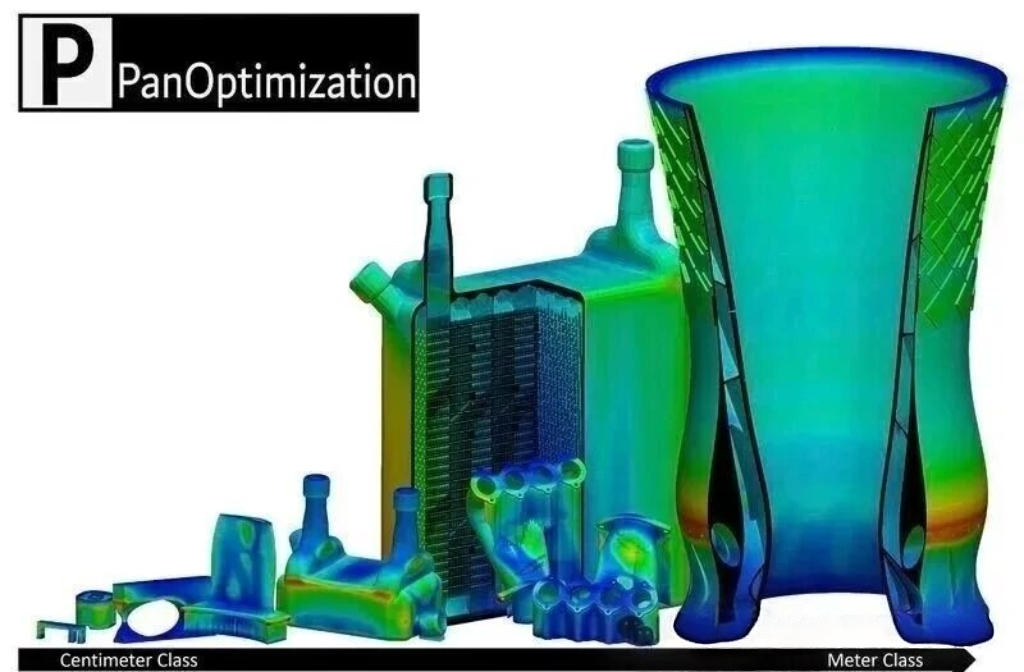
Referred to as the next-generation additive manufacturing finite element software, PanOptimization describes PanX as a highly parallelized and extremely low memory consumption tool. In addition to its efficient architecture, it employs an innovative periodic octree adaptive scheme that eliminates the need to generate or store grid arrangements. Traditional adaptive meshing methods require the generation and storage of these grids, resulting in high memory consumption.
Conventional adaptive mesh coarsening techniques lead to significant accuracy loss, as details are lost each time coarsening occurs. This is not only a major challenge faced by 3D printing simulations but also a key issue in finite element analysis (FEA).
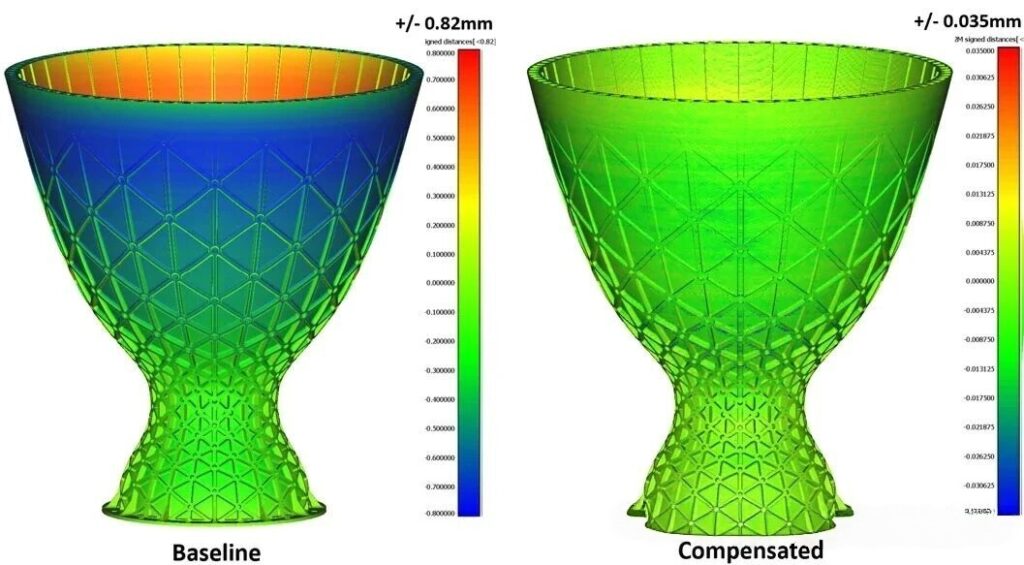
Distortion Compensation Simulation
Multigrid Modeling (MGM) addresses the issue of accuracy loss caused by mesh coarsening. MGM solves thermomechanical problems on a series of transient adaptive meshes, and the information from these transient solutions is combined to produce a high-resolution result. The results from the fine mesh solutions will closely match those of the model when run without mesh adaptivity.
Verification comparing the results of the MGM method with a reference analysis performed on a static uniform voxel grid shows that the distortion predictions generated by the MGM method are almost identical, within 3% of the reference values.
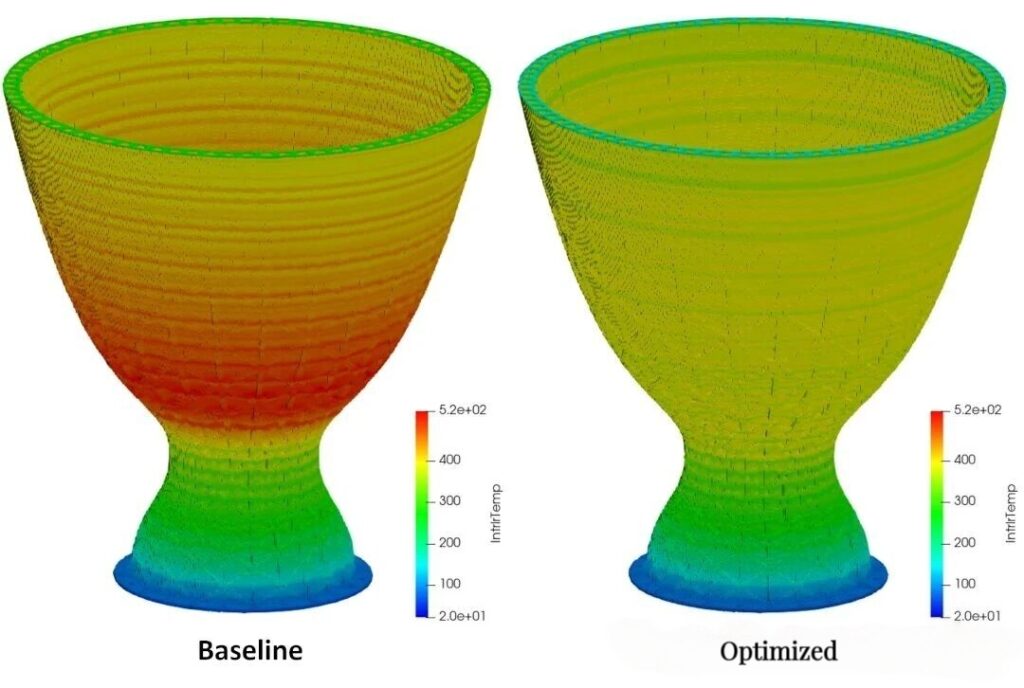
Optimizing Stay Simulation
The computational performance (runtime and memory requirements) of finite element analysis models grows cubically with the problem size. This means that as the problem size increases, even with vast computational resources, the problem quickly becomes unsolvable. The multigrid modeling method, however, is not limited by this and can scale approximately linearly with the problem size, allowing even the largest components to be solved quickly.
AMCM states that this partnership is a powerful example of how hardware and software are advancing together in industrial additive manufacturing. By combining large-scale 3D printing systems with simulation expertise, the future of aerospace and other industries can be further shaped.