AECC Successfully Conducts Maiden Test Flight of Fully 3D-Printed Micro Jet Engine at 4,100 Meters
Inner Mongolia, China — July 6, 2025 — The Aero Engine Corporation of China (AECC) announced today a major breakthrough: a micro jet engine manufactured entirely using advanced 3D printing technology has successfully completed its first test flight.
Independently developed by AECC, the ultra-light engine soared into the clear skies of Inner Mongolia, reaching an altitude of 4,100 meters. Throughout the flight, the engine demonstrated stable operation and excellent performance, providing strong proof of its reliability and practical application potential.
This milestone marks a significant step forward in China’s pursuit of next-generation aerospace propulsion solutions and highlights the transformative role of additive manufacturing in the aviation industry.
With a thrust of 160 kilograms (approximately 352 pounds), this micro jet engine ranks among the leading products of its kind. The successful development of this engine fills a critical technological gap in China’s turbojet engine sector, while also showcasing to the world China’s innovative capabilities and technological strength in advanced aerospace manufacturing.
Innovative Application of 3D Printing Technology
Traditional aero-engine manufacturing processes are highly complex, typically involving casting, forging, and precision machining through multiple stages. These processes not only require long production cycles and incur high costs but also face inherent limitations in realizing intricate internal structures. Through years of dedicated research, AECC has fundamentally transformed this situation.
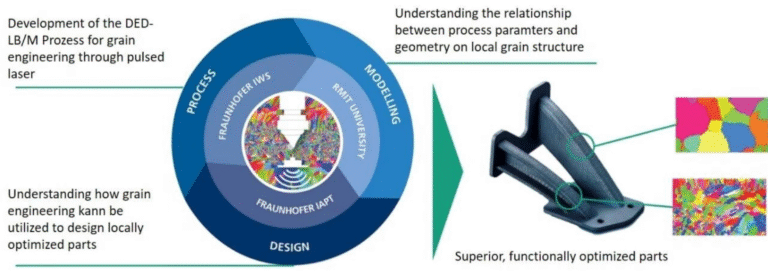
The R&D team skillfully integrated advanced design concepts with 3D printing technology to develop a comprehensive additive manufacturing solution for aero-engines. This breakthrough successfully addressed the challenges of 3D printing with high-temperature alloy materials and overcame the technical bottleneck of integrated manufacturing for complex structures. It has made possible the fabrication of intricate shapes that are extremely difficult to achieve through traditional methods. This new technological pathway has revolutionized the manufacturing philosophy of aero-engines, shifting from the traditional “design first, then manufacture” model to an innovative approach of “designing for manufacturing.” Leveraging the unique advantages of 3D printing, engineers have created lighter, higher-performance engine structures, opening new horizons for the future of aerospace propulsion systems.
Multidisciplinary Topology Optimization: A Perfect Fusion of Design and Manufacturing
The core technological highlight of this micro jet engine lies in the adoption of multidisciplinary topology optimization design methods. Tailored specifically for 3D printing, this advanced design technology takes into account multiple factors, including structural strength, thermodynamic performance, and fluid dynamics. By applying sophisticated algorithms to optimize material distribution, the design achieves maximum weight reduction while ensuring uncompromised performance.

Precision Design through Simulation and Optimization
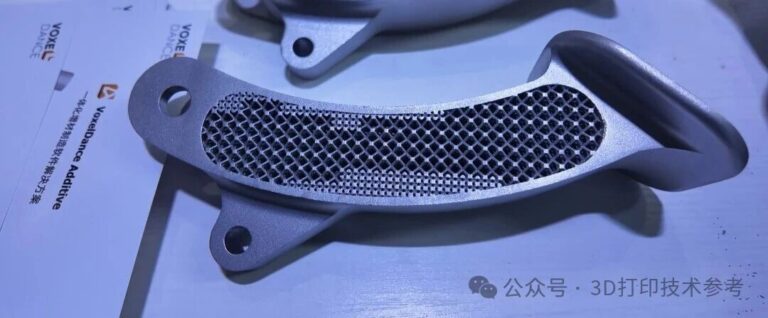
The R&D team employed extensive computational simulations and iterative optimization to precisely design the internal structure of the engine, ensuring stable operation under high-temperature and high-pressure conditions. This optimization approach enabled the formation of complex internal geometries—such as honeycomb and lattice structures—that are nearly impossible to achieve with traditional manufacturing techniques but can be easily realized through 3D printing. These meticulously designed structures provide sufficient strength while significantly reducing weight, laying a solid foundation for achieving an exceptional thrust-to-weight ratio.
Industry experts believe that the integration of multidisciplinary topology optimization with 3D printing technology represents the future direction of aero-engine development. This innovative approach is not only applicable to micro jet engines but is also expected to have a profound impact on the design and manufacturing of large-scale commercial and military engines.
Rigorous Testing to Ensure Reliability
Before its maiden flight, the engine underwent a comprehensive series of stringent ground tests. AECC established a dedicated testing platform to evaluate the engine across multiple dimensions, including starting performance, acceleration response, steady-state operation, and durability, ensuring reliable functionality under various operating conditions. Test results confirmed that all performance indicators met or exceeded design requirements. Notably, in high-altitude simulation testing, the engine demonstrated excellent adaptability, providing a strong foundation for real-world flight operations.
Successful Maiden Flight in Inner Mongolia
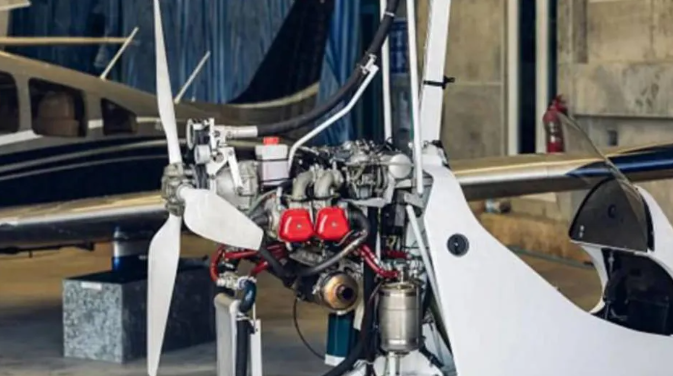
During the maiden flight test in Inner Mongolia, the engine proved its capabilities. Throughout the entire flight, it operated smoothly with sufficient thrust, and all parameters remained within normal ranges. Reaching a maximum altitude of 4,100 meters, the test verified the engine’s high-altitude performance, marking the transition of China’s independently developed 3D-printed aero-engine into the stage of practical application.
Impact on the Global Aviation Industry
The success of China’s 3D-printed jet engine is not only a national achievement but also one with profound implications for the global aviation manufacturing industry. It signifies that additive manufacturing technology in high-end equipment has advanced from the proof-of-concept phase into practical application, potentially ushering the global aviation sector into a new era of development.
From a global perspective, this breakthrough is expected to accelerate innovation in aviation manufacturing. As more countries and enterprises recognize the potential of 3D printing in aerospace, investment in related research and development will increase, and the pace of technological progress will quicken. The prospects are especially promising in commercial aviation, unmanned aerial vehicles (UAVs), and defense applications.
This technological advancement is also set to reshape the landscape of global manufacturing. With the wider adoption of 3D printing, production can become more decentralized, customized, and localized, potentially transforming traditional supply chain structures. For the aviation industry, this means greater design freedom, shorter development cycles, and reduced costs—propelling the entire sector into a new era driven by innovation.