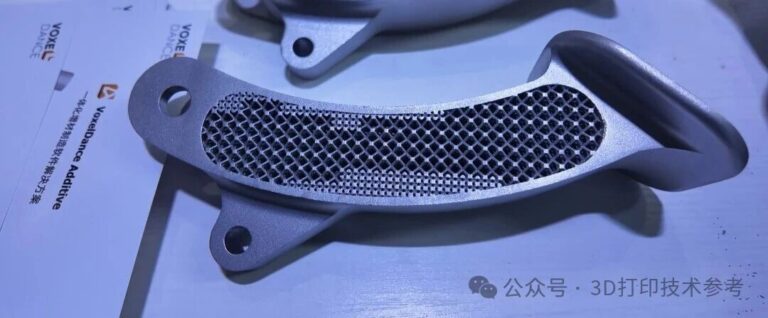
Among the many 3D printing materials, ceramics have always been one of the most challenging to “tame.” Although ceramic additive manufacturing technology has been studied for decades, truly viable commercial applications have only gradually matured in recent years.
We previously reported on Wuhan 3D Ceramics for its technological breakthroughs and industrialization progress in high-performance ceramic additive manufacturing. The company’s continuous innovation in ceramic SLA systems and materials has been particularly impressive. Today, as demand for extreme-environment applications continues to rise, silicon nitride ceramics (Si₃N₄), with their exceptional combination of properties, are emerging as the ideal material choice for cutting-edge fields such as high-temperature, corrosion-resistant, wear-resistant, high-insulation, and biomedical applications.
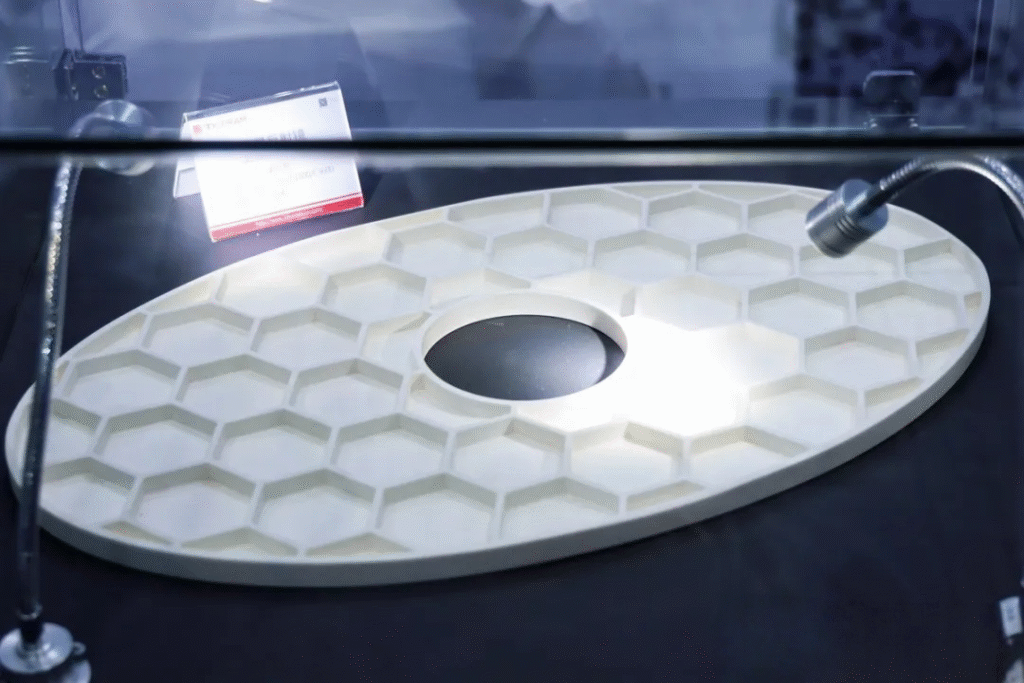
Large-Scale Ceramic 3D Printing Prototype
On September 17, 2025, Wuhan 3D Ceramics achieved a key breakthrough in silicon nitride (Si₃N₄) ceramic 3D printing, successfully developing a high-performance silicon nitride slurry specifically designed for SLA 3D printing.
Silicon nitride ceramics boast five outstanding core advantages:
Ultra-high strength and toughness: Far superior to conventional ceramics, with exceptional resistance to mechanical impact and thermal shock.
Excellent high-temperature performance: Maintains superior mechanical properties and chemical stability even above 1400°C.
Outstanding wear and corrosion resistance: The material of choice for critical components such as bearings and seals operating under extreme conditions.
Excellent insulation and thermal conductivity: Particularly suitable for scenarios in power electronics and the semiconductor industry where both heat dissipation and insulation are required.
Good biocompatibility: Can be widely applied in orthopedics, dentistry, and surgical instruments.
Despite its remarkable performance, traditional silicon nitride manufacturing processes — such as dry pressing, injection molding, and gel casting — struggle to efficiently produce highly complex, customized, and topology-optimized structures. These methods are often associated with long process cycles, significant material waste, and high costs.
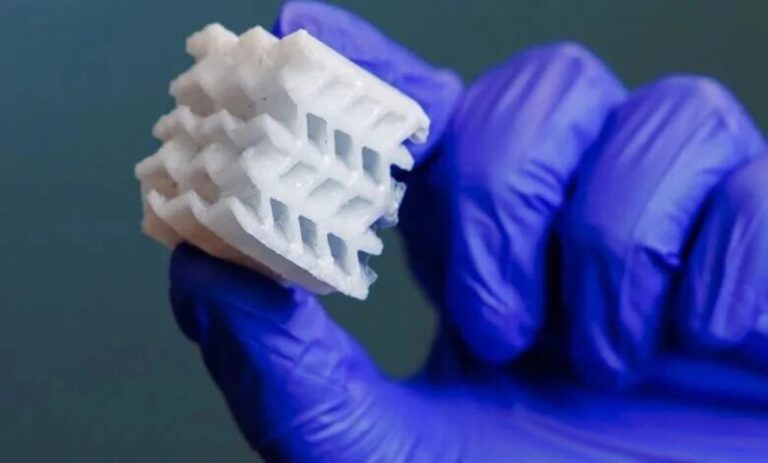
3D printing, especially SLA-based ceramic printing, opens new possibilities for silicon nitride — enabling integrated fabrication of complex channels, thin walls, lattices, and irregular geometries. It dramatically shortens R&D cycles, improves material utilization, and pushes part design toward greater functionality, lightweighting, and integration.
While SLA technology is the ideal path to achieving high-precision, high-density ceramic parts, its application to silicon nitride has long been constrained by the difficulty of developing high-quality slurries. Such slurries must simultaneously offer high solid loading, low viscosity, excellent rheological properties, and strong photocuring compatibility — a combination with significant technical barriers.
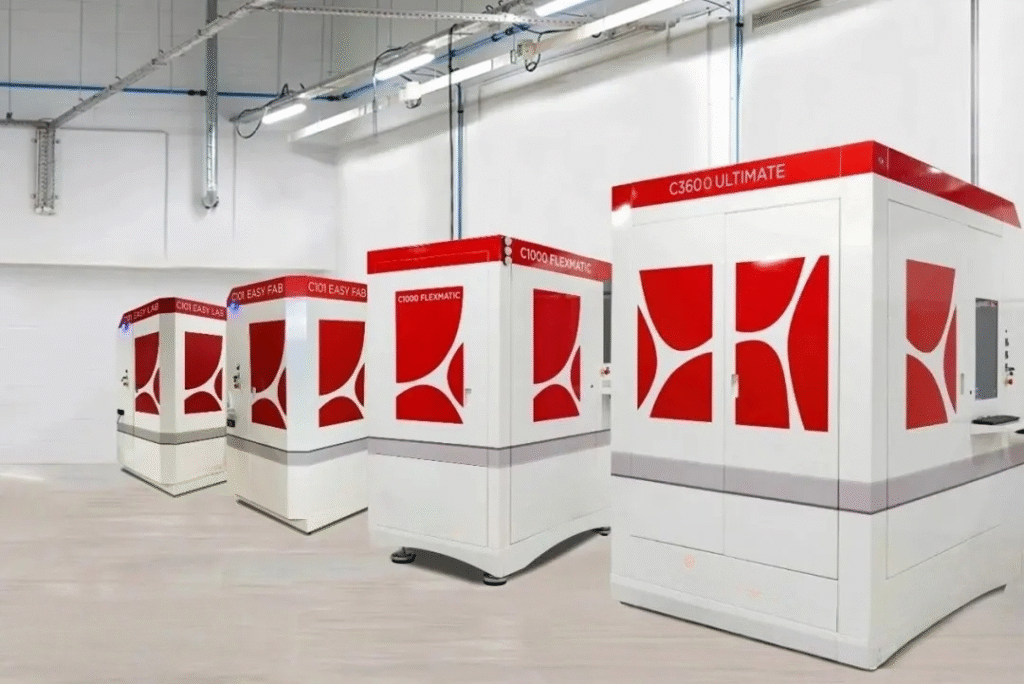
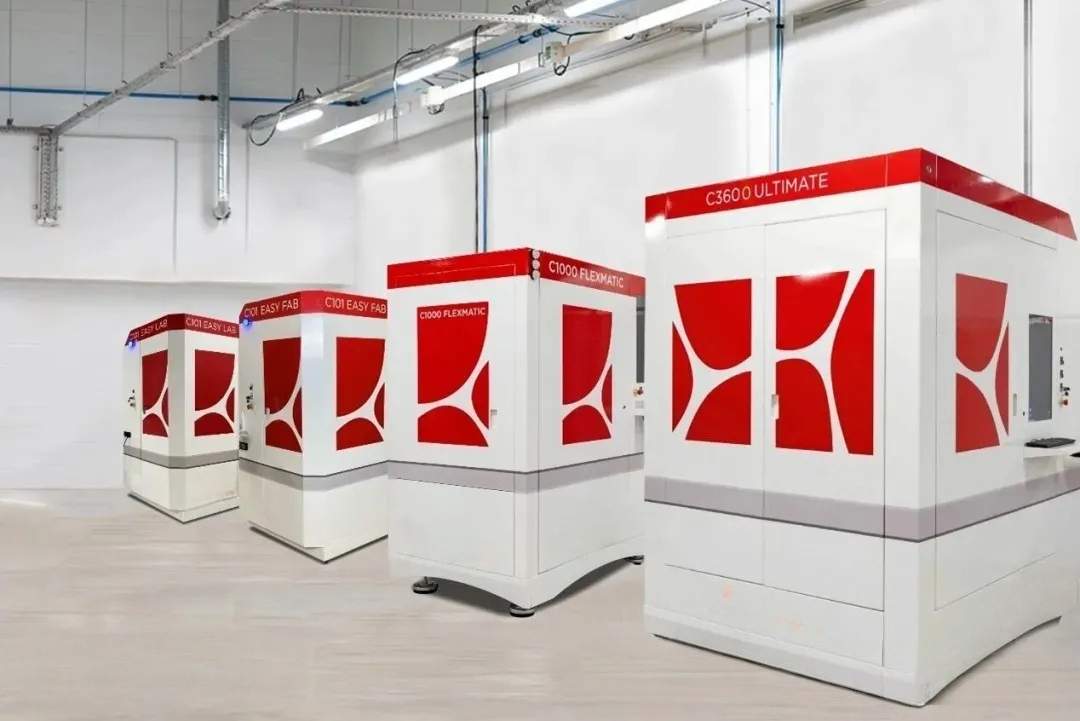
3DCeram 3D Printing Equipment Series
Encouragingly, Wuhan 3D Ceramics has successfully developed a high-performance silicon nitride slurry for SLA 3D printing and completed the first round of high-precision sample validation. This milestone marks a solid step forward for the industrialization of silicon nitride ceramic additive manufacturing in China.
The company’s technological breakthrough is mainly reflected in three areas:
Precision Slurry Formulation: Achieves an excellent balance of high solid loading, low viscosity, and photosensitive performance. The resulting green parts feature outstanding sharpness, uniformity, and strength, fully meeting the requirements for subsequent debinding and sintering.
Optimized Printing Process: Establishes a dedicated parameter model tailored for silicon nitride materials, effectively controlling warpage, improving dimensional accuracy, and enhancing production efficiency.
Iterative Closed-Loop Development: Employs a full-cycle “design–print–sinter–test” feedback loop, continuously optimizing both material and process to ensure that the final components meet stringent application requirements.
This technological advancement paves the way for the industrial application of SLA silicon nitride ceramics across multiple high-end sectors:
Aerospace: Turbine blades with complex internal channels, lightweight high-strength structural parts.
Energy & Semiconductors: High-temperature insulation components, heat-dissipating substrates, wafer-handling equipment parts.
Industrial Machinery: High-performance ceramic bearings, corrosion-resistant valves and pump bodies.
Biomedical: Customized implants, bone repair scaffolds, and surgical guides.
New Energy Vehicles: Key insulation and thermal management components for e-drive and battery systems.