In sectors ranging from electronics and new energy vehicles to aerospace, thermal management has always been a key factor affecting overall performance. From the early days of metal fins to the development of heat pipes and vapor chambers, humanity has been engaged in a century-long race to make heat dissipation ever more efficient and compact. Now, a new structure inspired by mathematics and nature—the Triply Periodic Minimal Surface (TPMS)—is redefining the future of heat transfer with its unique geometric advantages, ushering in a new era for thermal management.
The Evolution of Cooling Technology
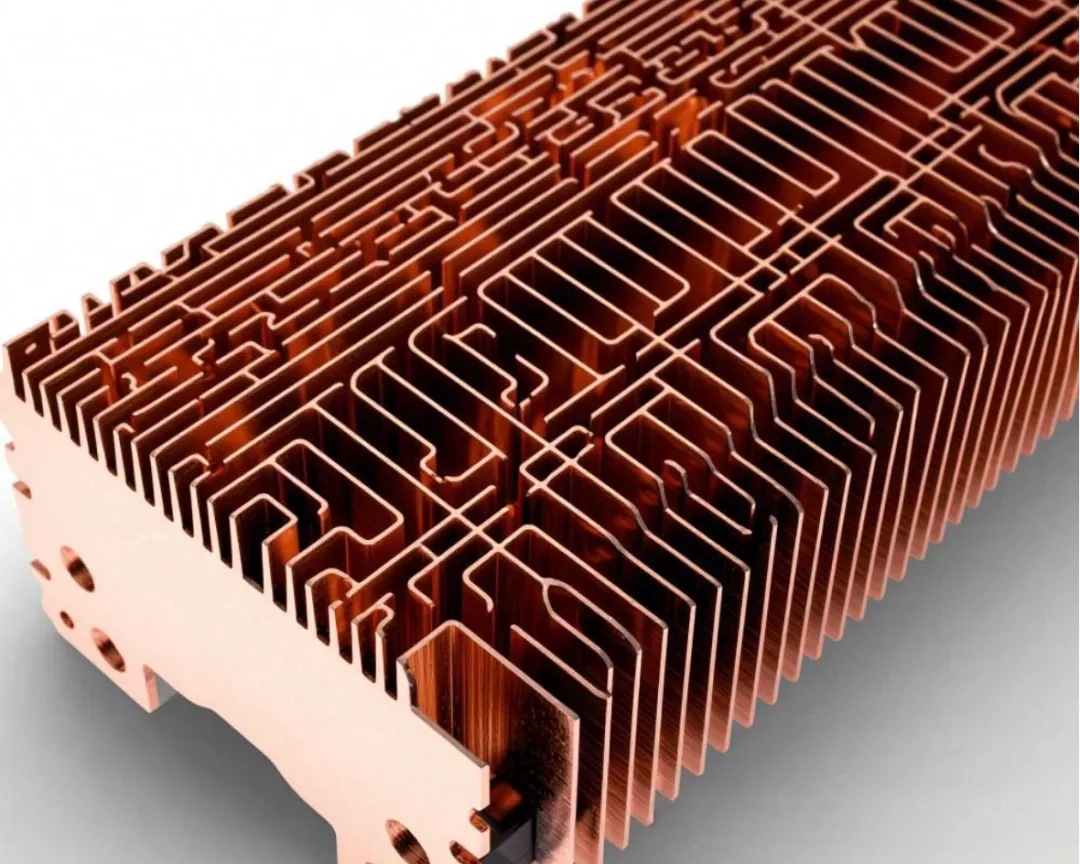
In the early stages, thermal management was primarily about ensuring basic functionality. Back then, electronic devices had relatively low power output. By taking advantage of metals like aluminum and copper—known for their excellent thermal conductivity—and pairing them with simple fin designs, engineers could increase surface area for heat exchange. Natural convection or fan-assisted air cooling was often sufficient to keep systems stable. This approach was cost-effective, mature, and dominant in the market for decades.
However, as chip fabrication technology advanced and power density skyrocketed, traditional metallic cooling methods began to reach their limits. The once-reliable metal fin could no longer keep up—its heat dissipation efficiency plateaued, and thermal bottlenecks became one of the biggest obstacles to unlocking higher device performance.
Traditional Heat Sinks
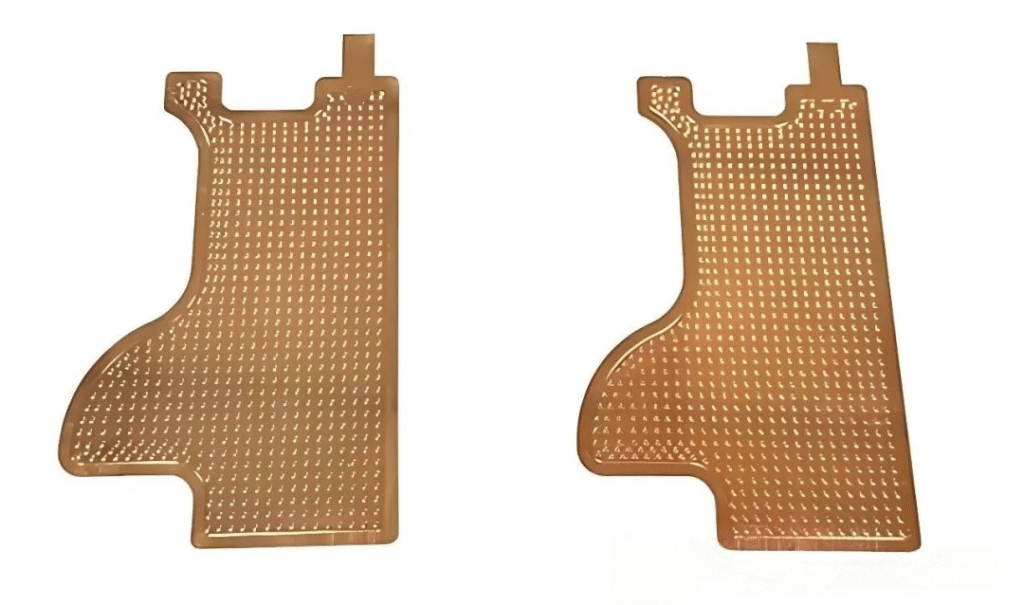
To overcome the limitations of conventional metal heat sinks, phase-change heat transfer technologies emerged—most notably, heat pipes and vapor chambers (VCs). These systems use a sealed vacuum cavity filled with a working fluid that evaporates to absorb heat and condenses to release it, forming a continuous heat transfer cycle.
This innovation marked a major leap forward in thermal design: transitioning from simple heat conduction to efficient heat transport and temperature equalization. By achieving an effective thermal conductivity far exceeding that of solid metals, vapor chambers and heat pipes became indispensable components in high-performance cooling systems—from laptops and smartphones to electric vehicles and aerospace electronics.
TPMS Structures: Redefining the Standard for Efficient Heat Dissipation
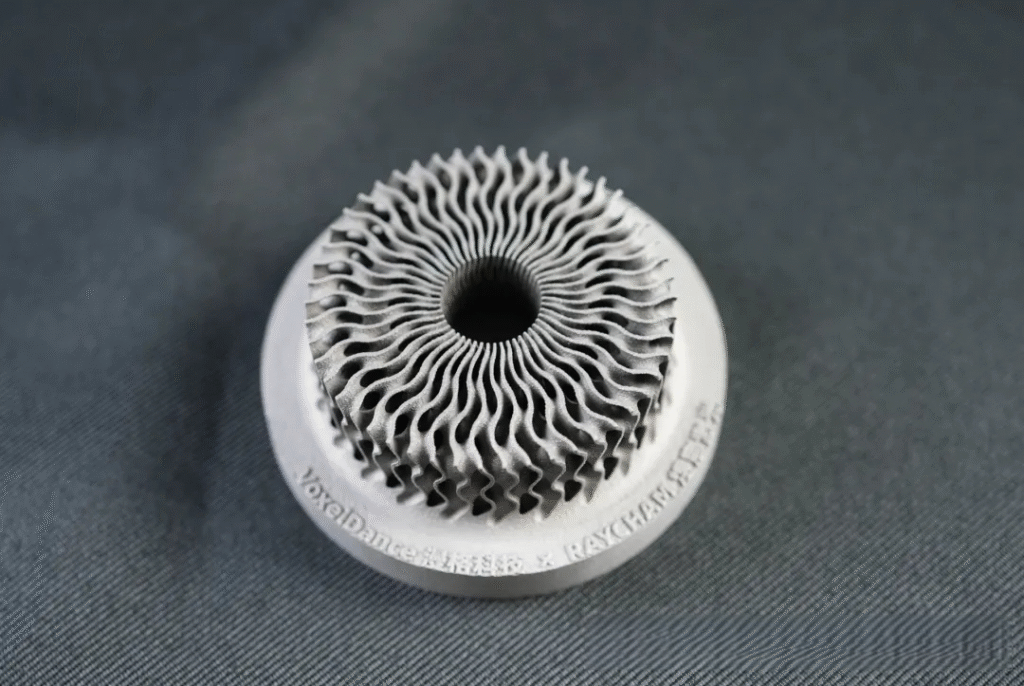
A Triply Periodic Minimal Surface (TPMS) is a smooth surface that extends periodically in three dimensions and has zero mean curvature at every point. Common types include Gyroid, Diamond, and Schwarz-P structures.
With the rise of additive manufacturing (3D printing), the full potential of TPMS geometry has been unlocked—making it a core solution for next-generation thermal management in high-performance applications.
1. Exceptional Surface Area and Streamlined Flow Channels
TPMS structures offer an extremely high specific surface area, dramatically enhancing heat transfer from solid surfaces to cooling media (air, liquid, or phase-change fluids).
Even more importantly, their channels are defined by continuous, smooth surfaces—free from sharp corners or dead zones—allowing coolant to flow more efficiently. This results in lower flow resistance and higher heat exchange efficiency, even under low pumping power conditions.
High Design Freedom and Precisely Tunable Performance
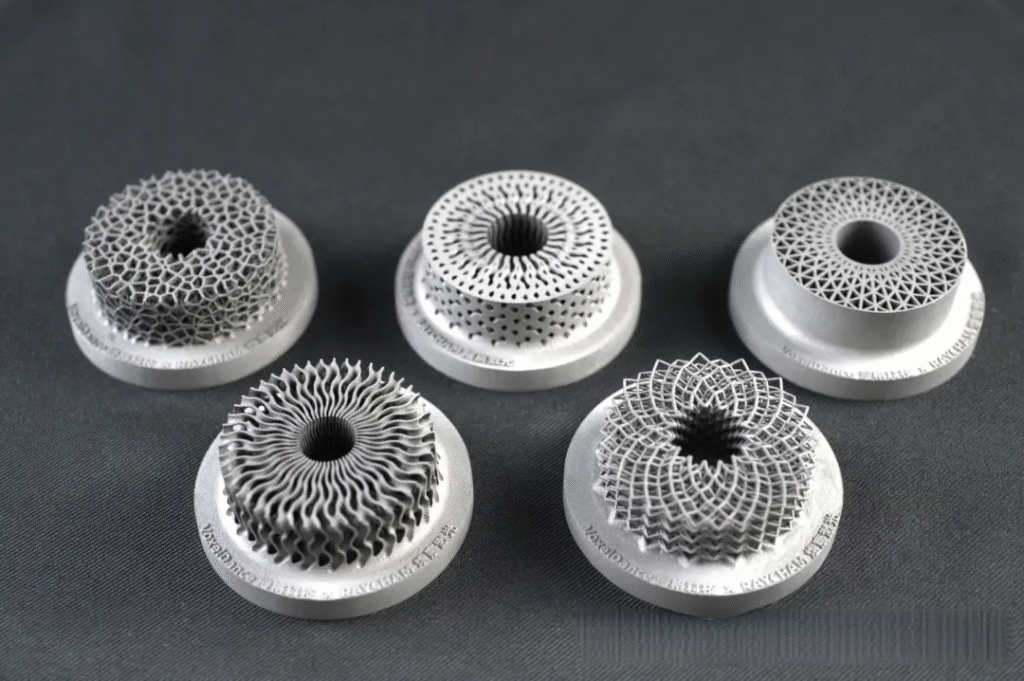
The geometry of TPMS structures is defined implicitly by mathematical equations, giving engineers the ability to “program” the material’s internal architecture with exceptional precision.
Key parameters such as porosity, unit cell size, and cell type can be finely adjusted to meet specific thermal demands.
In high heat flux regions, porosity can be reduced and the structure densified to enhance heat transfer.
In low heat generation areas, porosity can be increased and the structure simplified to reduce flow resistance.
This customizable design flexibility enables thermal solutions to be perfectly tailored to each device’s requirements—maximizing efficiency while minimizing unnecessary performance overhead.
Field-Driven Design for Performance Breakthroughs
Recent research has introduced field-driven design methods for optimizing TPMS-based heat exchangers. For example, engineers can intelligently adjust local porosity based on the temperature distribution field of the heat sink surface —
Lowering porosity in high-temperature zones to enhance heat transfer, and
Increasing porosity in cooler regions to reduce flow resistance.
Studies show that TPMS channels optimized using this approach can reduce inlet–outlet pressure drop by up to 90% compared to uniform-porosity structures, while maintaining excellent thermal performance — representing a major leap in overall efficiency.
Multifunctional Integration and Lightweight Design
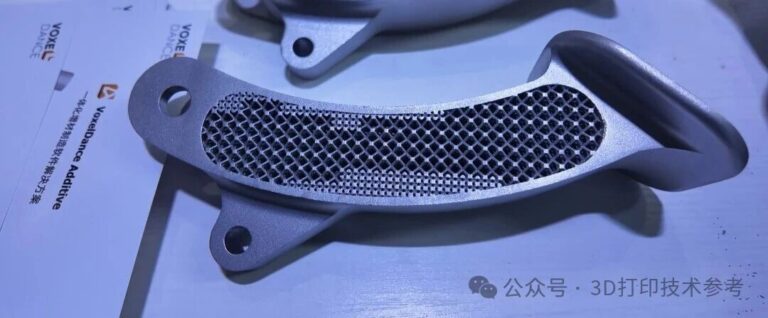
Thanks to their inherently high specific strength, TPMS structures deliver outstanding heat dissipation while achieving significant weight reduction. This makes them an ideal multifunctional structural material for applications in aerospace, advanced electronics, and next-generation energy systems.
In the future, TPMS-based components could enable integrated “structure + thermal management” designs, where mechanical support and heat dissipation are realized in a single, seamless part.
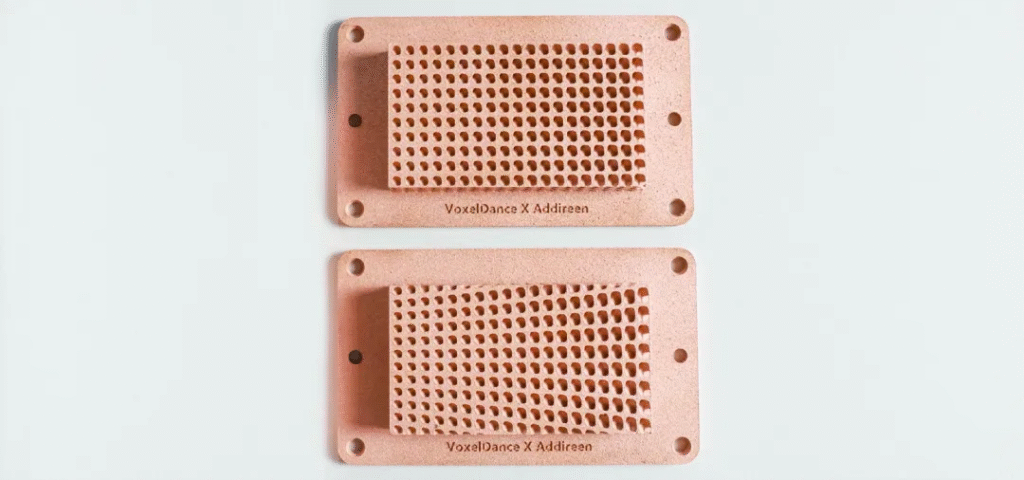
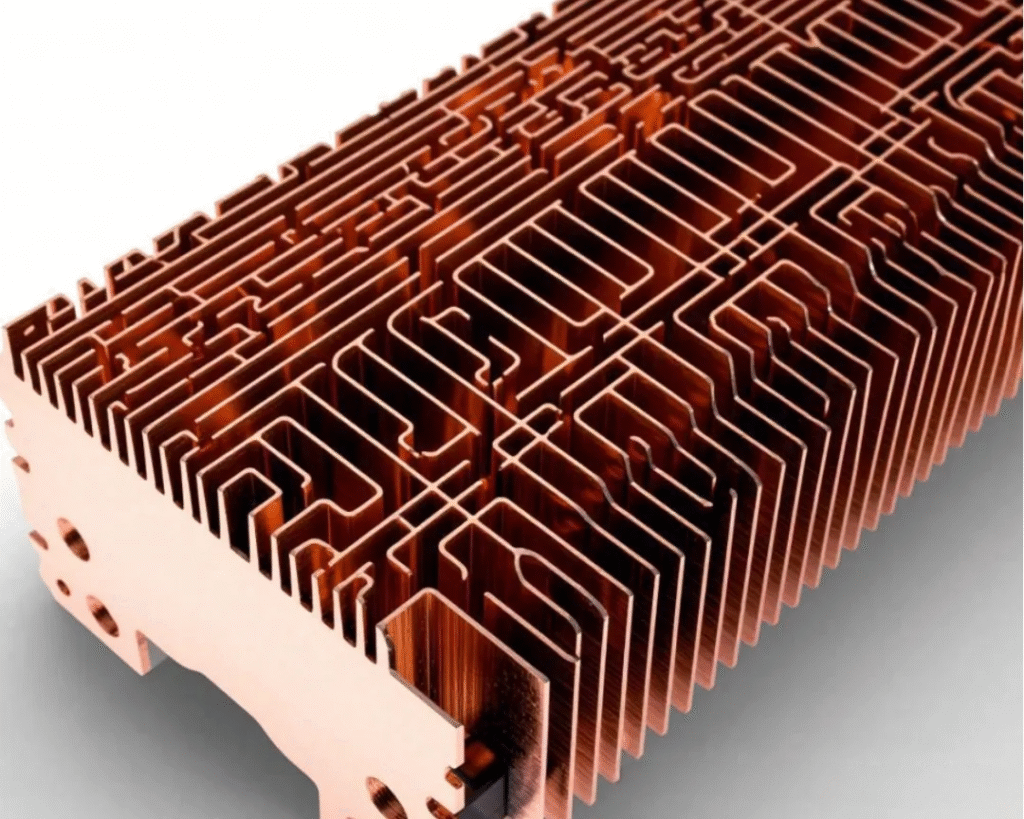
Pure Copper Heat Sink Base
VoxelDance Design: Advanced Implicit Modeling Empowering TPMS Innovation
While TPMS structures offer outstanding advantages, their design and manufacturing complexity has long been a major challenge in the industry. Traditional CAD tools struggle with multi-objective co-optimization, such as blending multiple TPMS geometries to balance thermal efficiency, fluid dynamics, and structural strength. This often results in high computational costs and poor structural continuity, severely limiting practical adoption.
VoxelDance’s self-developed design platform — VoxelDance Design (VDD) — demonstrates exceptional performance in implicit modeling and field-driven processing. It not only enables precise single-TPMS modeling, but also allows smooth blending of multiple TPMS structures, freeing designers from complex geometry calculations and empowering rapid, customizable thermal design.
Taking a typical electronic device cooling structure as an example, VDD simplifies the process into just three streamlined steps:
Step 1: Import the device’s original housing geometry and define the regions to be filled with thermal structures — establishing clear design boundaries.
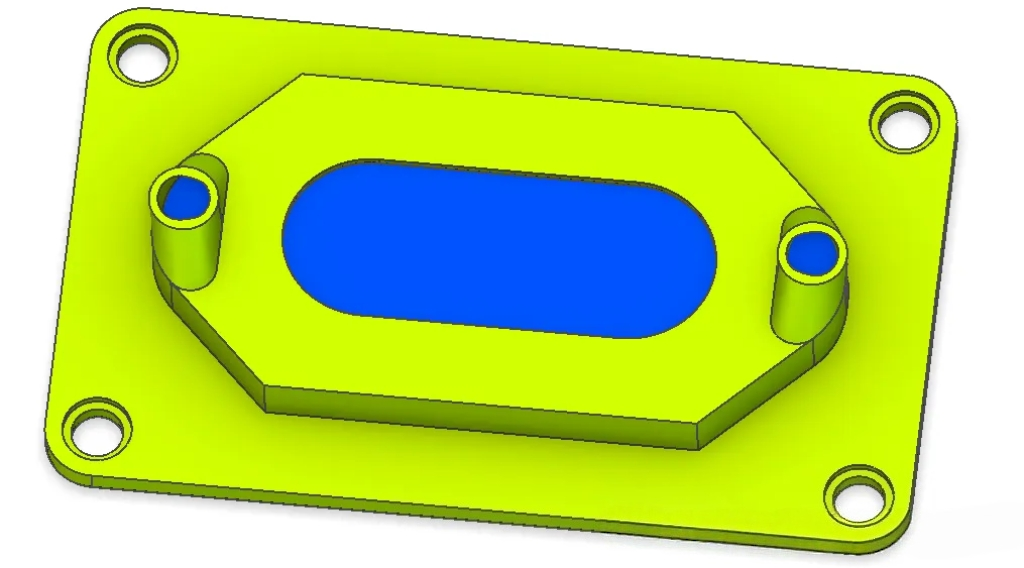
Original Device Housing and Thermal Structure Fill Region
Step 2: Fill the core heat-generating areas with multiple TPMS structures. Select appropriate cell types based on the thermal requirements of each region, and use field-driven optimization to intelligently adjust structural parameters — enabling smooth transitions between different TPMS geometries and achieving optimized thermal and mechanical performance.
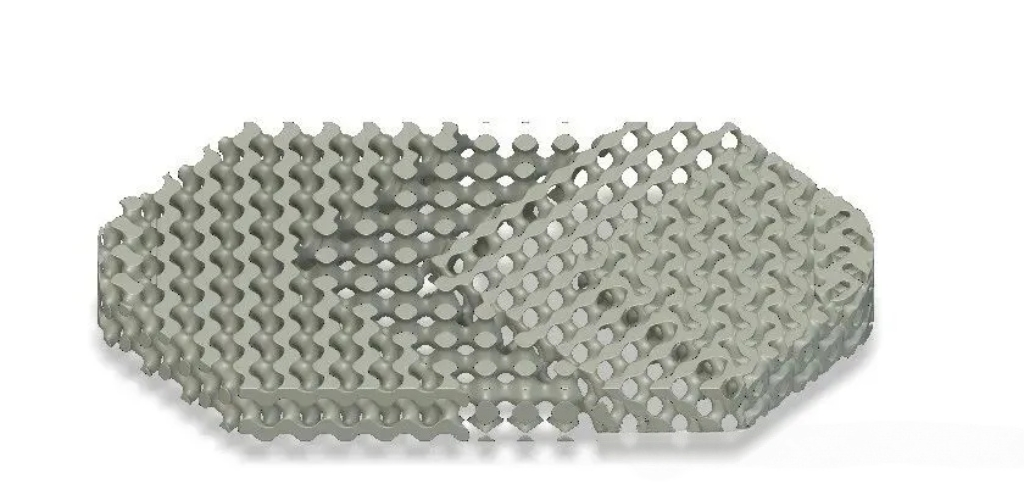
Multiple TPMS Structure Integration
Step 3: Combine the optimized thermal structure with the overall housing to complete an integrated design — achieving seamless fusion between the cooling structure and the device shell for enhanced thermal performance and structural integrity.
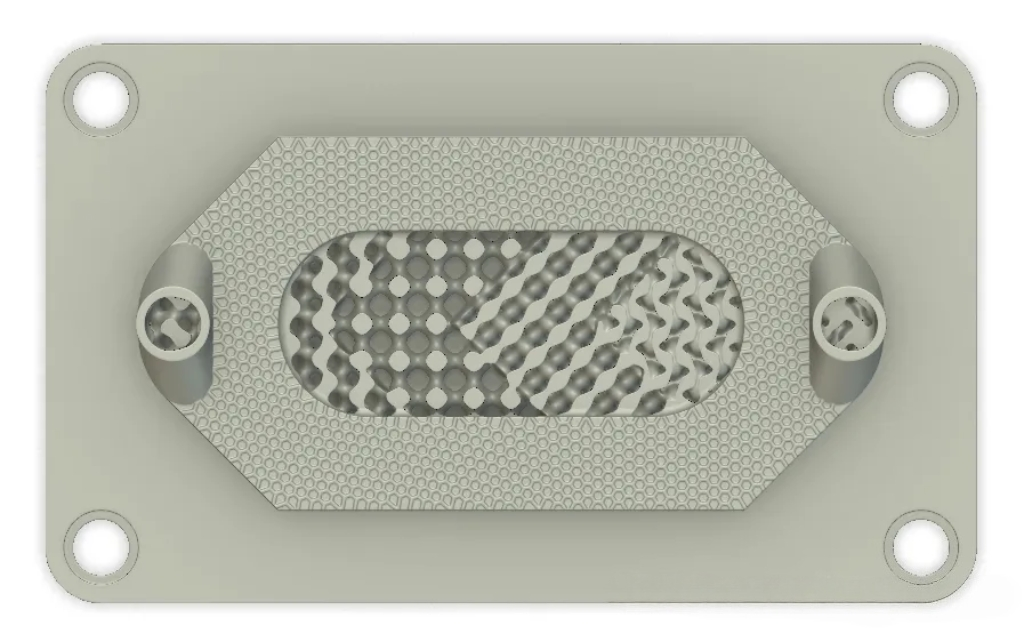
Final Design
More notably, VoxelDance Design (VDD) adopts a parametric scripting logic, meaning that once the design is completed, there’s no need to save massive, data-heavy geometric files. Instead, engineers can simply export a lightweight design script — often thousands of times smaller in size — enabling effortless reuse, modification, and version iteration.
This dramatically reduces data storage and transmission costs, while simplifying multi-scenario adaptation and accelerating R&D efficiency.
When geometry becomes a design language and algorithms become the engine of innovation, the future of thermal management is no longer bound by traditional forms.
TPMS structures are driving heat dissipation design from experience-based fabrication toward intelligent generation.
VoxelDance Design aims to collaborate with engineers worldwide — to make every degree of heat flow more efficient, lighter, and smarter.