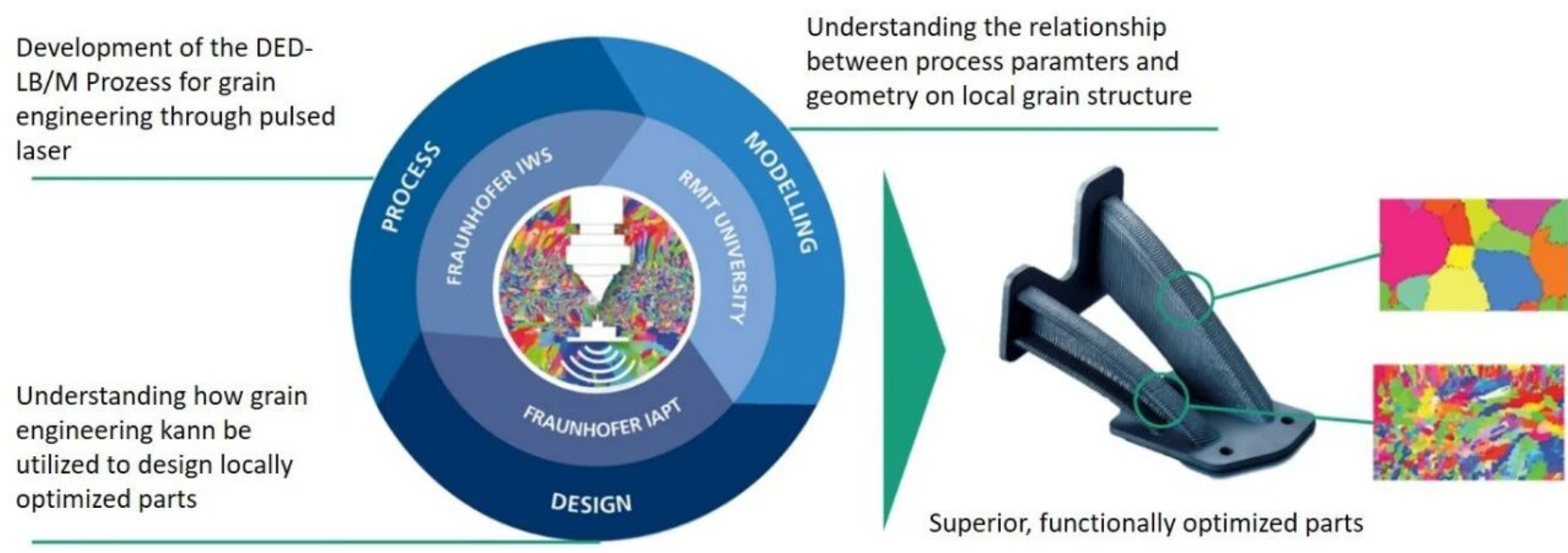
On February 28, Fraunhofer Society announced a major new breakthrough in 3D printing research. An international research project conducted in collaboration with Australian partners has demonstrated that, during the laser metal deposition (LMD) process, the microstructure can be locally and selectively adjusted.
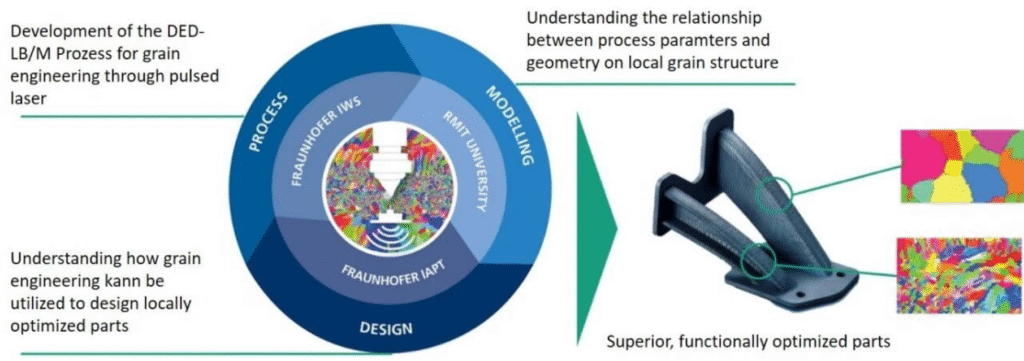
The project, named UltraGRAIN, involves the Fraunhofer Institute for Material and Beam Technology IWS, the Fraunhofer Institute for Additive Production Technologies IAPT, and RMIT University. It focuses on a key challenge in additive manufacturing: how to produce components whose internal microstructure precisely matches their intended functional performance.
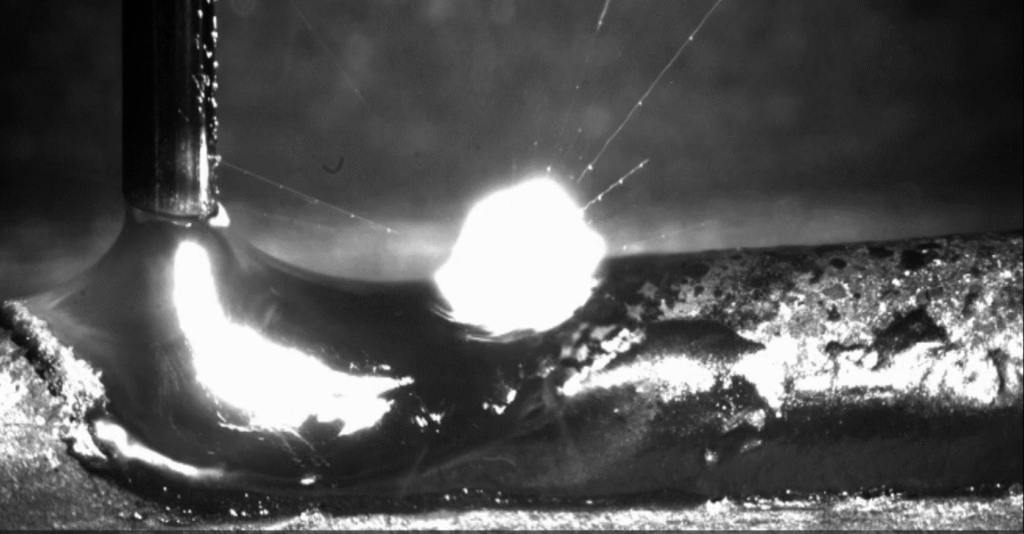
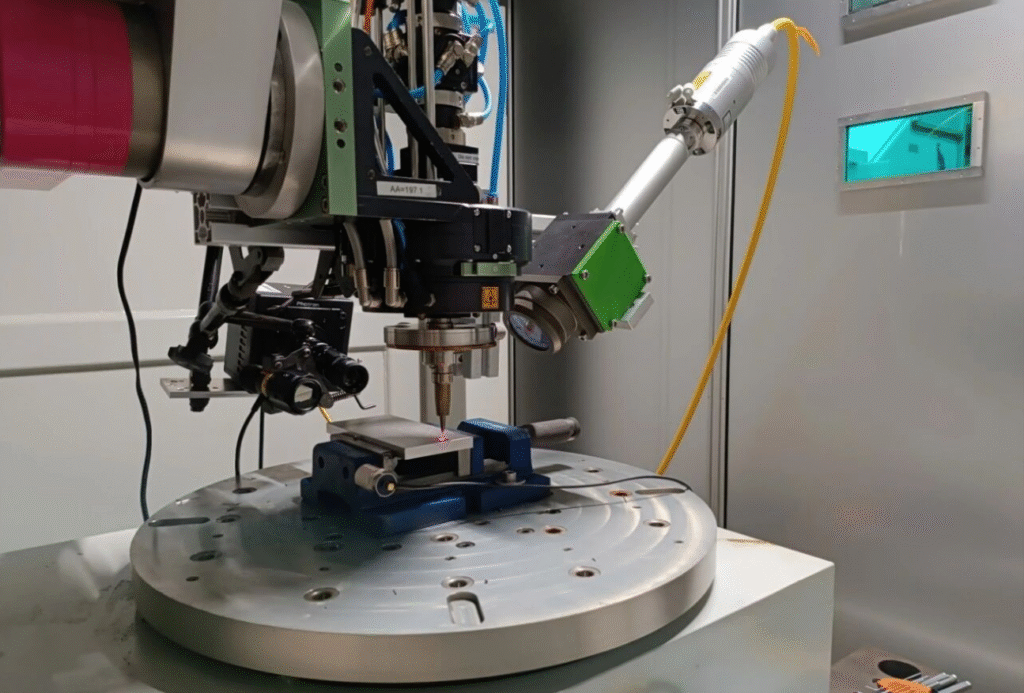
High-speed imaging captured the laser-directed energy deposition (DED-LB) process, as well as the pulsed laser–induced plasma dynamics.
The project demonstrated a practical method that moves beyond allowing microstructure to be solely determined by the process itself. Instead, it enables precise definition of microstructures in critical regions where strength, service life, or load-bearing capacity are essential. The project concluded following the final partner meeting held on February 25, 2026.
A Major Transformation in Process Control
For industrial users, this development opens up new degrees of freedom in the design of additively manufactured metal components. The UltraGRAIN project initially explored the use of ultrasound to influence grain formation before transitioning to pulsed laser excitation.
This method is contactless, applicable to components of any geometry, and suitable for industrial environments. The pulsed laser–induced melt pool excitation technique can be integrated into existing laser-directed energy deposition (DED-LB) systems, making it highly compatible with current manufacturing infrastructure.
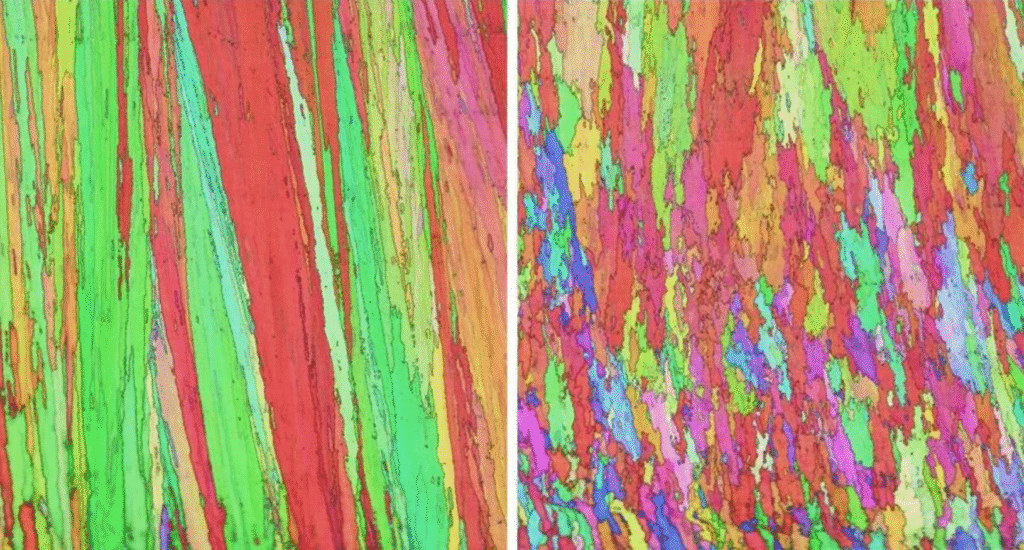
Electron backscatter diffraction (EBSD) orientation maps revealed clear differences before and after pulsed laser–induced melt pool excitation (left and right images, respectively).
Compared with conventional ultrasonic methods, this approach offers superior scalability and maintains stability even for complex geometries. In demonstration components, the project achieved dimensional reductions of up to 75%. For the first time, the technology enables the direct creation of microstructure-controlled and functionally optimized regions during the manufacturing process itself.
“We deliberately chose a solution that is already viable in industrial environments,” explained Jacob-Florian Mätje, research associate at the Fraunhofer Institute for Material and Beam Technology IWS and the project’s primary contact. “The laser-based excitation technology allows us to precisely tailor the microstructure exactly where it truly impacts component performance.”
A Multidisciplinary Closed-Loop Technology
A key feature of UltraGRAIN lies in the tight integration of laser processing, simulation, design methodologies, and materials development. The Fraunhofer Institute for Material and Beam Technology IWS integrated the pulsed laser–induced melt pool excitation technology into a real-world laser-directed energy deposition (DED-LB) system and validated the approach under industrially relevant conditions.
The Fraunhofer Institute for Additive Production Technologies IAPT developed methods for segmentation, path planning, and parameter allocation tailored to components with locally modified microstructures. Meanwhile, RMIT University contributed multi-scale modeling, simulation-based process design, and optimization concepts under the framework of Integrated Computational Materials Engineering (ICME).
Dr. Andrey Molotnikov, Director of the Additive Manufacturing Centre and Professor at RMIT University, emphasized: “The strong collaboration among project partners has been a major highlight of this initiative.”
UltraGRAIN integrates digital modeling with real-world manufacturing, forming a continuous, closed-loop methodology. The close coupling of simulation-driven process design with additive manufacturing has accelerated the transition of the technology toward industrial applications and strengthened international collaboration in advanced manufacturing.
Practical Significance for Industrial Applications
The research outcomes of the UltraGRAIN project hold significant value for industries with extremely high demands on mechanical performance and component service life. These sectors include mechanical engineering, aerospace, energy technology, turbomachinery, automotive manufacturing, and tool and mold making.
By precisely matching the microstructure to the load conditions and functional requirements of a component, performance can be significantly enhanced, delivering substantial benefits to companies. This approach not only reduces material usage and extends service life but also improves overall component performance.
The UltraGRAIN project has demonstrated that its manufacturing process enables precise and targeted control of microstructural characteristics, paving the way for more reliable and performance-optimized industrial applications.
Prof. Christoph Leyens, Director of the Fraunhofer Institute for Material and Beam Technology IWS, explained:
“UltraGRAIN demonstrates how Fraunhofer IWS continuously develops innovative manufacturing technologies from concept to industrial application. The results provide important scientific insights and lay a solid foundation for future industrial implementation.”