In November 2025, Indian space startup Agnikul Cosmos announced that it had raised approximately $17 million in a new funding round, pushing the company’s valuation to $500 million.
The round attracted participation from several notable investors, including Advenza Global Limited, Atharva Green Ecotech LLP, and HDFC Bank, along with family offices such as Artha Select Fund, Prathithi Ventures, and 100X.VC.
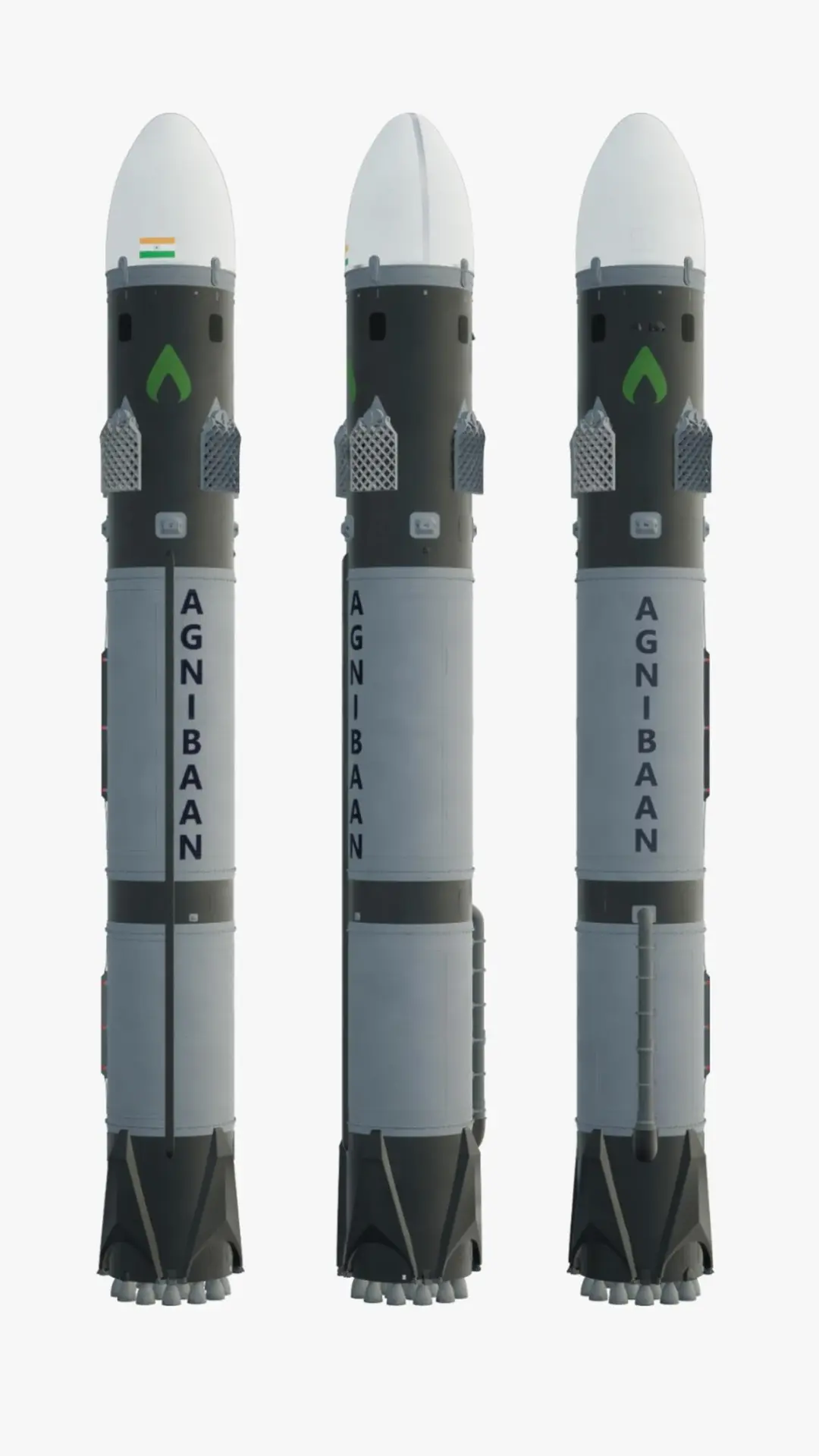
Agnikul Cosmos is focused on developing a fully 3D-printed, single-piece rocket engine and providing end-to-end space transportation solutions. The company stated that the newly raised funds will be used to scale up the production of aerospace and rocket components, advance its reusable rocket stage recovery program, and accelerate the construction of its integrated space campus.
Located on a 350-acre site allocated by the government of Tamil Nadu, the campus is expected to become a state-of-the-art facility for manufacturing and testing launch vehicle systems.
Srinath Ravichandran, CEO and co-founder of Agnikul Cosmos, said:
“With the support of ISRO and IN-SPACe, we have successfully carried out a controlled ascent mission, validating all our patented technologies. This round of funding will help us expand our strategic roadmap, advance the development of lower-stage recovery and upper-stage life-extension technologies, and significantly improve the economics of our launch services. Our focus now is on increasing launch frequency and contributing to India’s emergence as a global hub for space technology.”
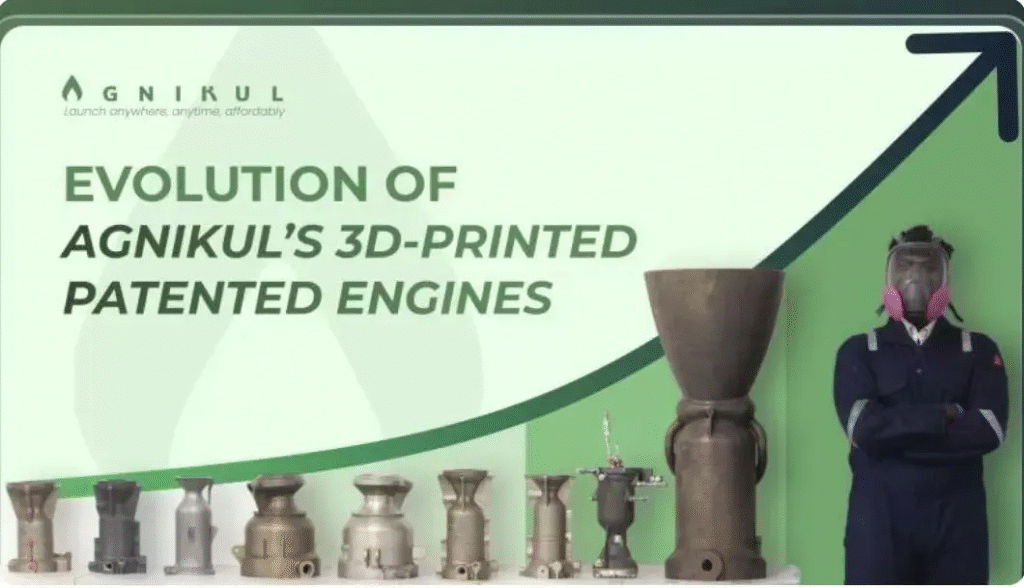
Agnikul’s one-meter-long, single-piece 3D-printed nickel-alloy rocket engine is accelerating the company’s path toward reusable launch systems and faster market deployment.
The company plans to use the newly secured funding to strengthen its reusable launch architecture and further develop its recently patented upper-stage life-extension technology. This innovation opens new avenues for efficient and cost-effective access to orbit, marking a significant step toward Agnikul’s goal of delivering a fully reusable small-satellite launch vehicle.
Co-founder and COO Moin SPM added:
“With global customer demand continuing to rise, scaling our operations has become a natural requirement. We are building localized infrastructure near our new launchpad to ensure on-schedule mission execution and meet the market’s expectations for rapid-response launch services.”
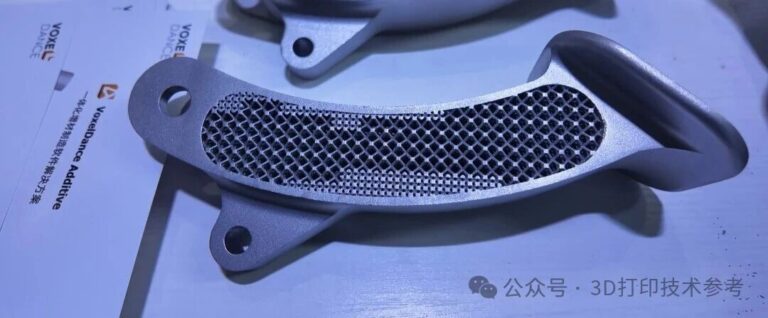
Agnikul Cosmos currently serves customers across India, West Asia, and Australia, enabling globally distributed launch capabilities. The company recently announced the establishment of a large metal additive manufacturing division, leveraging 3D printing to produce not only engines but multiple subsystems—driving innovation and efficiency in spacecraft manufacturing.
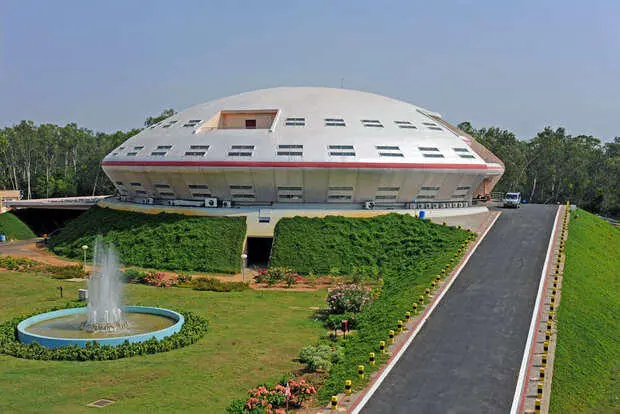
Agnikul Builds India’s 3D-Printed Space Supply Chain
Founded in 2017 and incubated at the Indian Institute of Technology Madras (IIT Madras)—a public research university and technological institute located in Chennai—Agnikul Cosmos has rapidly advanced through multiple rounds of investment and commercial agreements. In 2023, the startup achieved a major breakthrough by 3D-printing a fully flight-ready rocket engine.
This September, the company officially opened its large-scale additive manufacturing facility—the first in India dedicated specifically to aerospace applications. Equipped with advanced systems supplied by its partner EOS Germany, the plant features a flagship metal 3D printer capable of producing components up to one meter in length, marking a significant leap from the previous 400-millimeter printing capability.
The new facility offers an end-to-end workflow, covering everything from design to final machining. By enhancing integrated large-part production and improving manufacturing efficiency, the factory aims to accelerate the development and fabrication of space transportation systems and rocket engines.