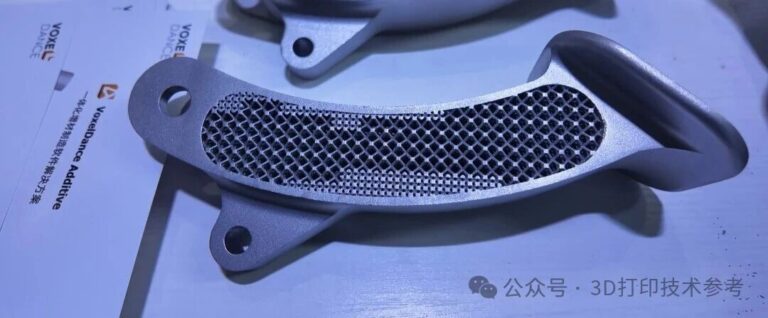
Indian Team Octane Racing Electric showcases 3D printed hub motor housings, with EOS beam shaping and Smart Fusion technologies advancing metal additive manufacturing from racetrack to road applications.

The Indian team is using 3D printing technology to create custom housings for a new high-power-density permanent magnet synchronous hub motor, achieving efficient thermal management. The housing dimensions are strictly controlled at 90 mm inner diameter, 120 mm outer diameter, and 105 mm length. The motor housing is integrated with a conformal cooling system into a single component, maximizing structural integrity and heat dissipation within the limited space.
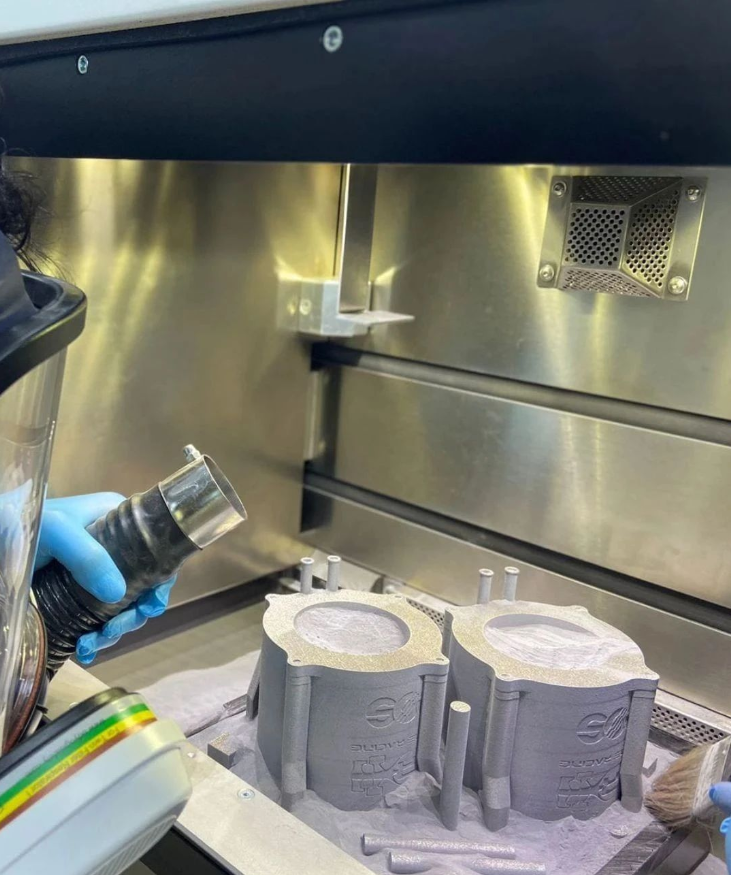
Traditional manufacturing methods such as machining or casting cannot provide the design freedom required for complex internal helical cooling channels. Achieving the necessary performance with these methods would likely result in a much heavier, bulkier component with poor material efficiency (around 25–30%).
To overcome this, the team collaborated with EOS and utilized metal 3D printing technology with F357 aluminum alloy (offering strength and ductility comparable to AA6061). The custom-designed housing integrates conformal cooling channels, maximizing the contact area between cooling pathways and heat-generating motor parts, thereby enhancing heat absorption. This integrated design also eliminates potential leakage points associated with multi-part assemblies, resulting in a highly compact and simplified motor housing.
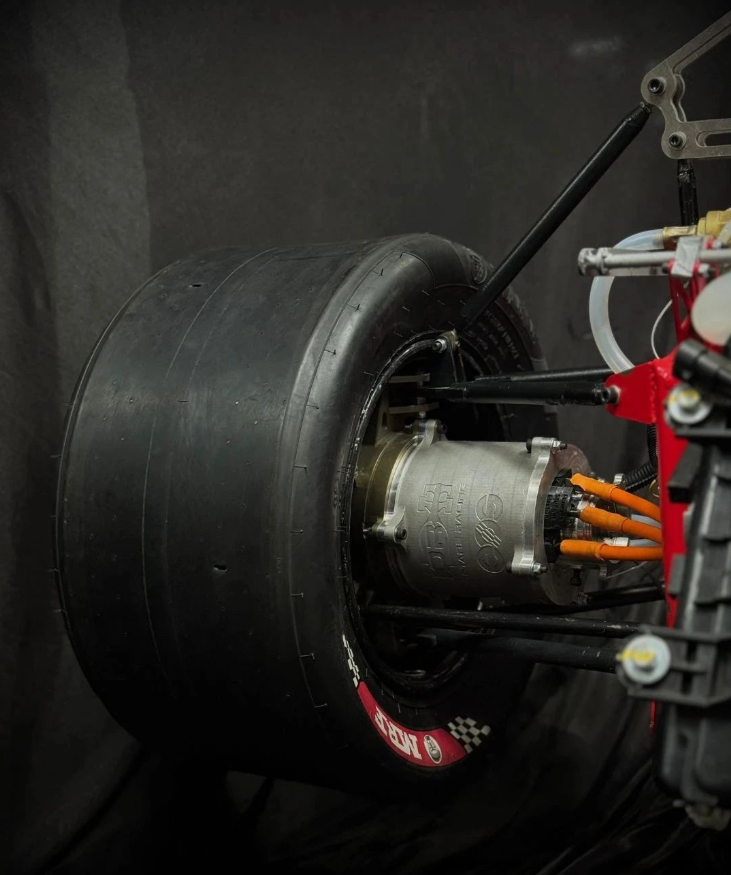
The additively manufactured hub motor casing weighs only 1.3 kg, which is nearly half the weight of a comparable conventionally machined component (at least 2.5 kg).
In addition, the 3D-printed part successfully meets all structural strength requirements, surpassing the performance of 6061 forged aluminum (with a tensile strength of ~300 MPa and elongation above 10%).
Compared to traditional manufacturing, additive manufacturing not only delivers equivalent or superior performance but also provides significantly greater design freedom, enabling both lightweight construction and efficient thermal management.