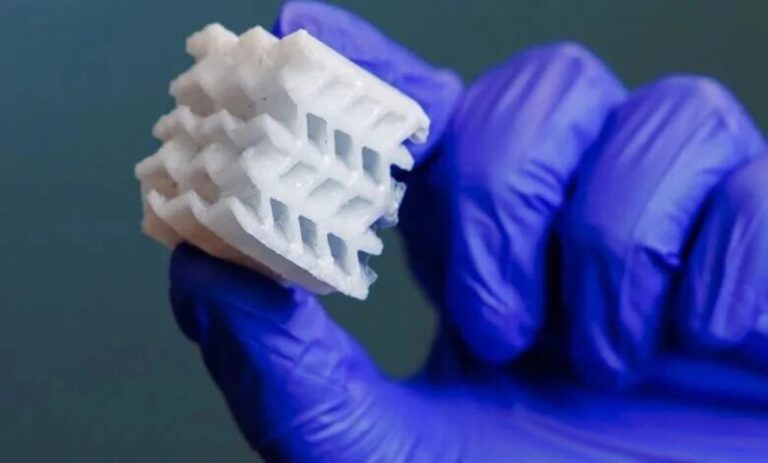
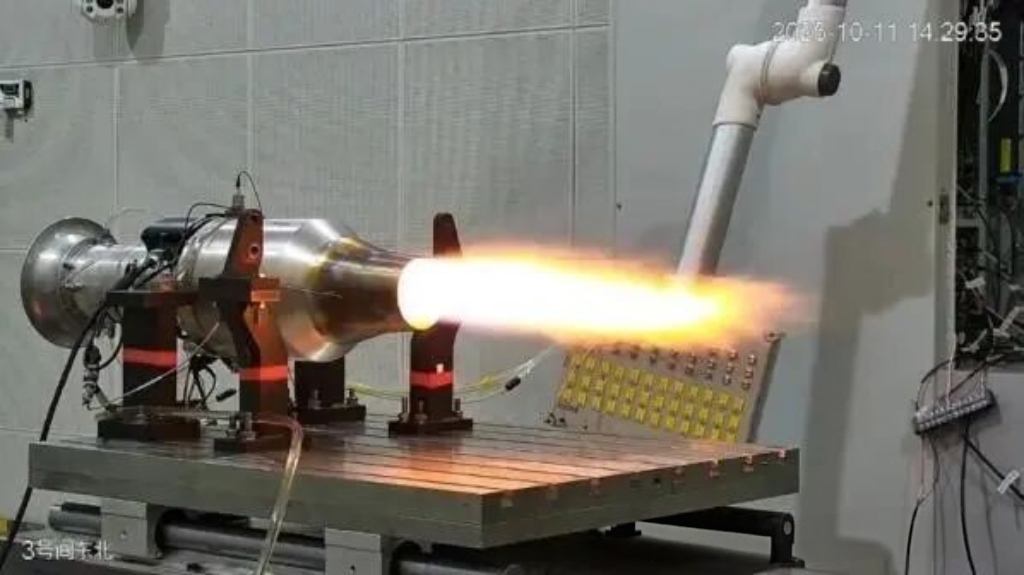
On January 20th, China Science and Technology Network published an article pointing out that the integrated turbine blade, manufactured using multi-metal 3D printing by the Institute of Engineering Thermophysics, Chinese Academy of Sciences, has successfully passed the ignition test run evaluation for the first time.
This is a significant breakthrough in the field of 3D printing, mainly because it is the first reported case globally where a high-speed rotating component made with multi-material metal 3D printing has passed a test run. This also represents China’s leadership in the application of multi-material metal 3D printing.
For a long time, multi-material metal 3D printing has been a key research focus for leading global institutions. Researchers need to address core issues such as how to connect dissimilar materials and what form these connections should take. Most of the currently reported applications involve parts that do not require high-speed motion, and are relatively static working components, such as heat exchangers, rocket engine combustion chambers, and so on. However, the turbine blade is different—it requires high-speed motion.
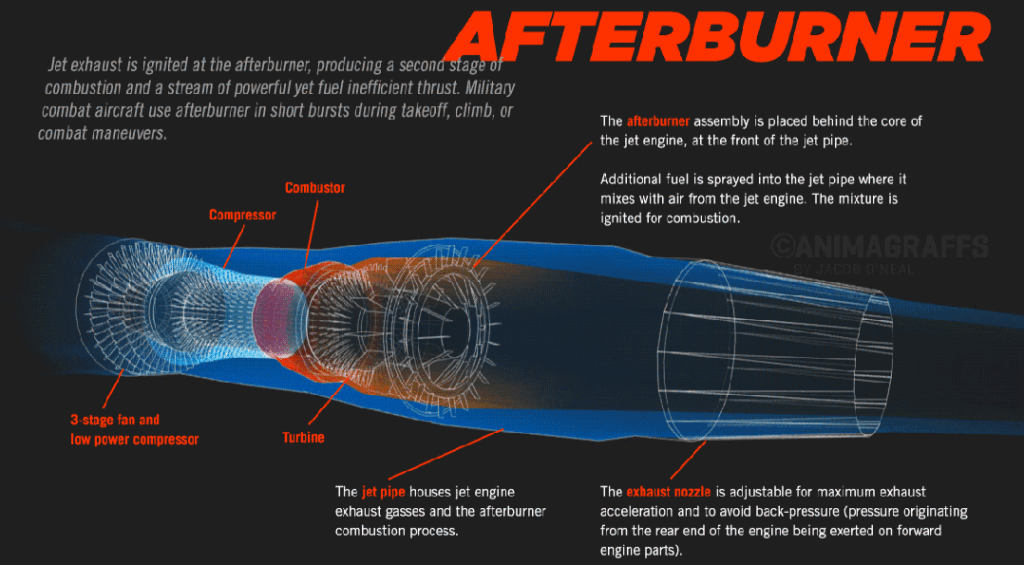
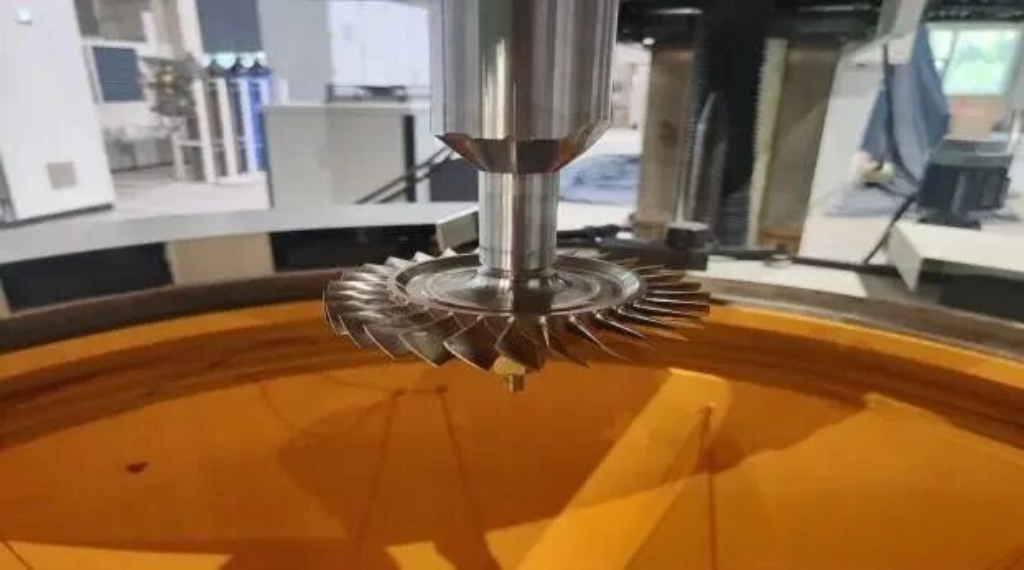
The report states that the turbine blade tested in this trial was made using two materials—high toughness material for the disk core and high-temperature resistant material for the blades, all integrated through 3D printing technology.
The turbine blade was installed in a 100-kilogram thrust turbojet engine and successfully passed dynamic balancing tests, overspeed tests, and full engine ignition trials. It operated stably for 60 seconds at a speed of 30,000 RPM, with all performance indicators meeting the evaluation requirements. The significant achievement lies in the fact that this marks the first time multi-metal additive manufacturing has been used for an ignition test of rotating components in the hot section of an aircraft engine. It provides preliminary verification of the stability and reliability of the multi-metal 3D printed integrated turbine blade.
Although the report does not specify the exact 3D printing method used, theoretically, it could involve techniques such as LPBF + DED, LPBF + cold spraying, or single LPBF. However, I believe the most likely method is that it was produced using single laser powder bed fusion (LPBF) technology.
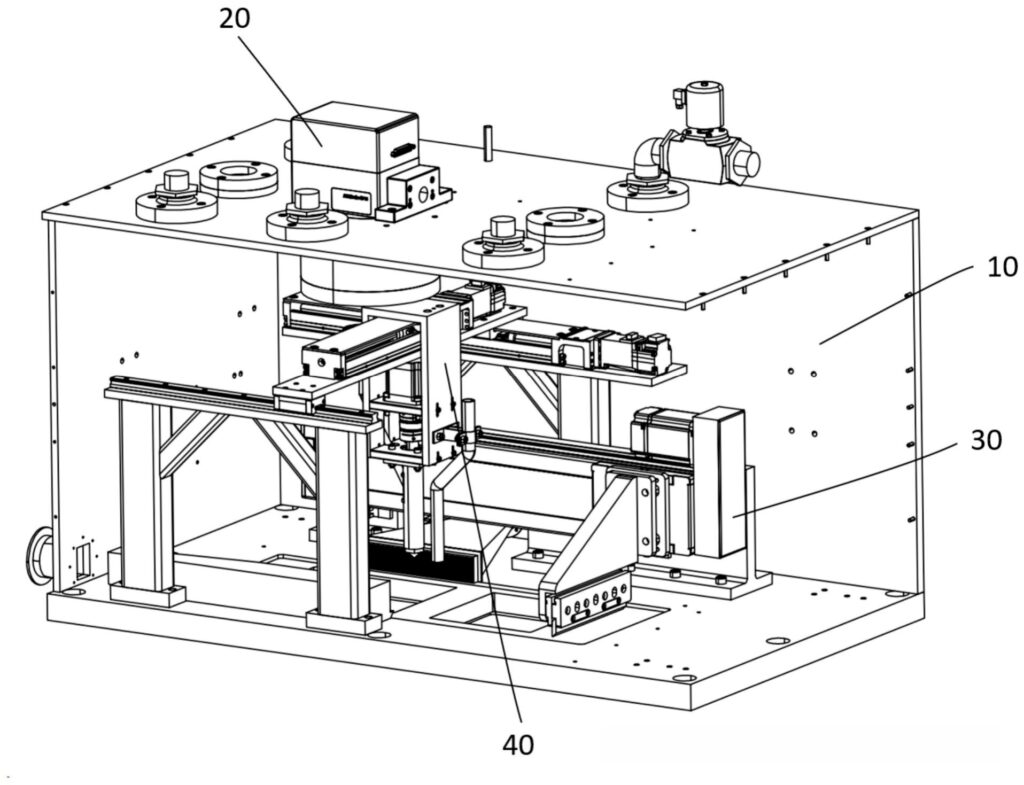
To further investigate, I specifically looked into the patents held by the Institute of Engineering Thermophysics, Chinese Academy of Sciences, regarding multi-material metal 3D printing, and I was pleasantly surprised by the findings. The institute has already obtained multiple patents for laser powder bed fusion (LPBF) multi-material 3D printing, covering methods for powder feeding path planning, powder feeding trajectory planning, and integrated additive manufacturing systems.
Solving the Challenges of Low Manufacturing Efficiency and Small Size in Multi-Material Metal 3D Printing
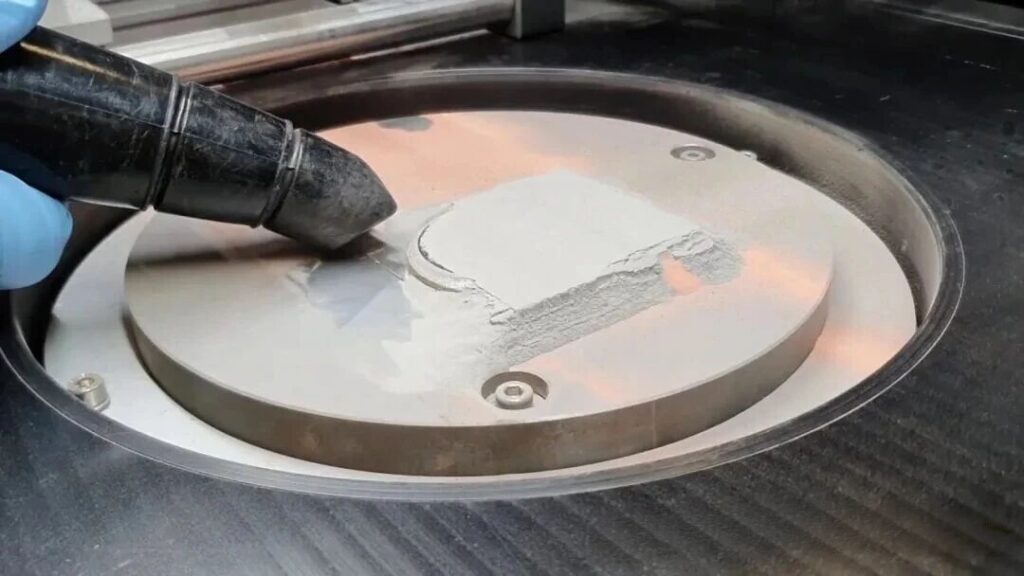
For LPBF multi-material metal 3D printing, the most challenging aspect in terms of materials is the transition between different materials, while the most difficult issue with equipment is the mixing of powders. Currently, the mainstream approach to powder mixing is to use “independent powder feeding + independent powder collection,” but in practice, not every company is able to execute this method effectively.
This challenge arises because achieving a consistent and controlled mix of powders during the printing process is crucial to ensuring proper material bonding and avoiding defects in the final product. Improving this process would lead to better material transitions, more efficient production, and the ability to print larger, more complex parts with multi-material properties.
Powder Mixing Issues in LPBF Multi-Material 3D Printing
The relevant patents from the Institute of Engineering Thermophysics, Chinese Academy of Sciences, mention that the main drawback of existing technologies is low forming efficiency. This is due to the need for fine powder feeding nozzles and vacuum powder collection nozzles to lay down and recover powders of multiple materials, which increases operational complexity and reduces efficiency. Additionally, the device struggles to achieve 3D manufacturing of large-sized parts.
There is still room for improvement and demand in existing multi-material additive manufacturing technologies. The institute has improved the equipment for multi-material metal 3D printing, enabling the simultaneous powder spreading and powder collection, significantly improving the forming efficiency. Additionally, the powder feeding device has also been upgraded to enable continuous forming of large-sized parts. Furthermore, the equipment is equipped with a visual camera to assist in the spreading and collection of the second powder material, achieving the goal of precise powder spreading and recovery.