3D printing of rocket thrust chambers has reduced the weight of the thrust chamber by 30% compared to traditional manufacturing methods. In space launches, every kilogram of weight reduction can save tens of thousands of dollars in launch costs.
From a material standpoint, this is a significant breakthrough. Niobium-tungsten alloy, a second-generation high-temperature niobium-based alloy, has a melting point as high as 2500°C, and its strength is more than twice that of traditional niobium-hafnium alloys, making it an ideal material for extreme environments.
However, the high melting point of the material also presents significant processing challenges. Even with metal 3D printing, it’s no easy feat. The rocket thrust chamber, measuring in meters, features nearly a hundred cooling channels that require ±0.1mm precision, increasing the manufacturing difficulty exponentially.
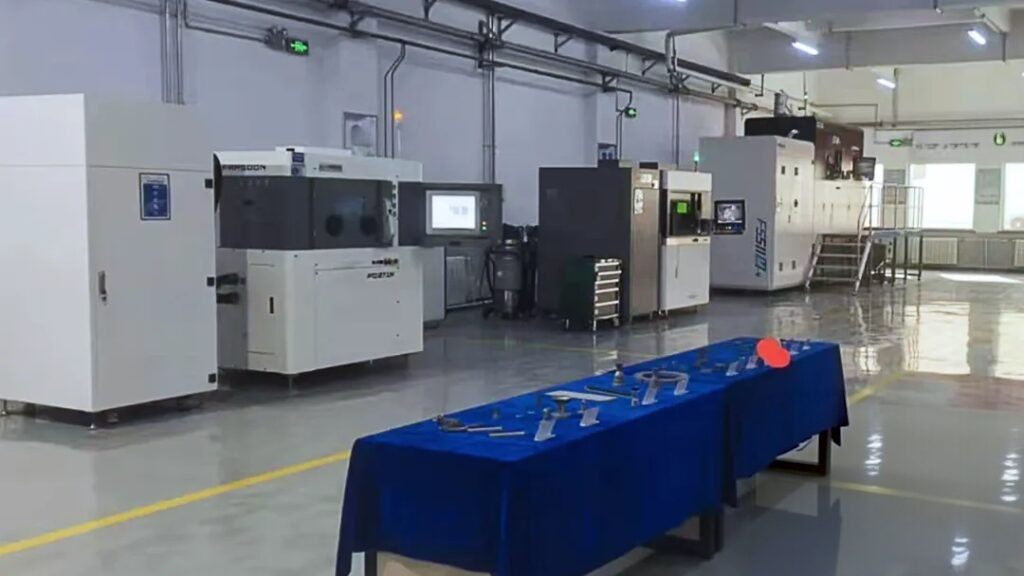
Dongfang Intelligence Manufacturing tackled these challenges through deep understanding of material properties, aerospace standards, and multiple technical iterations. The research team successfully overcame issues such as 3D printing of high-melting-point materials, precise control of complex structures, and stress balancing.
Niobium alloys are being considered as a potential alternative to nickel-based superalloys. The mechanical stability limit of nickel-based superalloys is approximately 1050°C, beyond which their performance deteriorates. In contrast, niobium alloys maintain their strength even under extreme thermal loads, making them an ideal material for components such as engine nozzles, satellite thrusters, and control surfaces.
3D printing technology allows the creation of lightweight and complex geometries that are difficult to achieve through traditional forging or casting methods. As a result, the 3D printing of niobium alloys has gained significant attention from international peers.
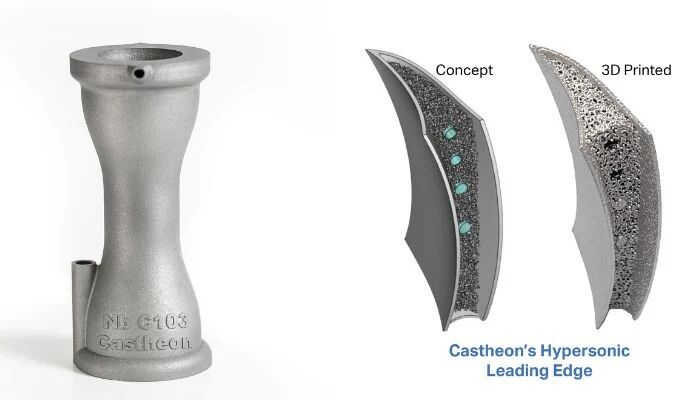
Castheon, a company specializing in 3D printing, has successfully printed Nb C103 thrust chamber components. However, to use niobium alloys in 3D printing, it’s essential to optimize the material’s composition and powder characteristics to ensure stable and reliable 3D printing. The microstructure of the products must be stable, and their performance consistent, all while meeting the rigorous standards required for space certification.
In 2024, the U.S. Manufacturing Institute allocated $6 million in funding to support 6K Additive in developing the performance of niobium alloys for powder bed fusion and directed energy deposition applications.
A recent study at NASA’s Glenn Research Center assessed the mechanical properties of additively manufactured niobium alloys, including C-103, FS-85, and Cb-752, with a particular focus on their tensile strength and creep resistance in high-temperature environments. The results revealed that FS-85 and Cb-752 exhibited higher mechanical strength and better creep resistance at elevated temperatures compared to C-103. These two materials therefore show significant potential for use in high-thermal stress propulsion and thermal protection systems.
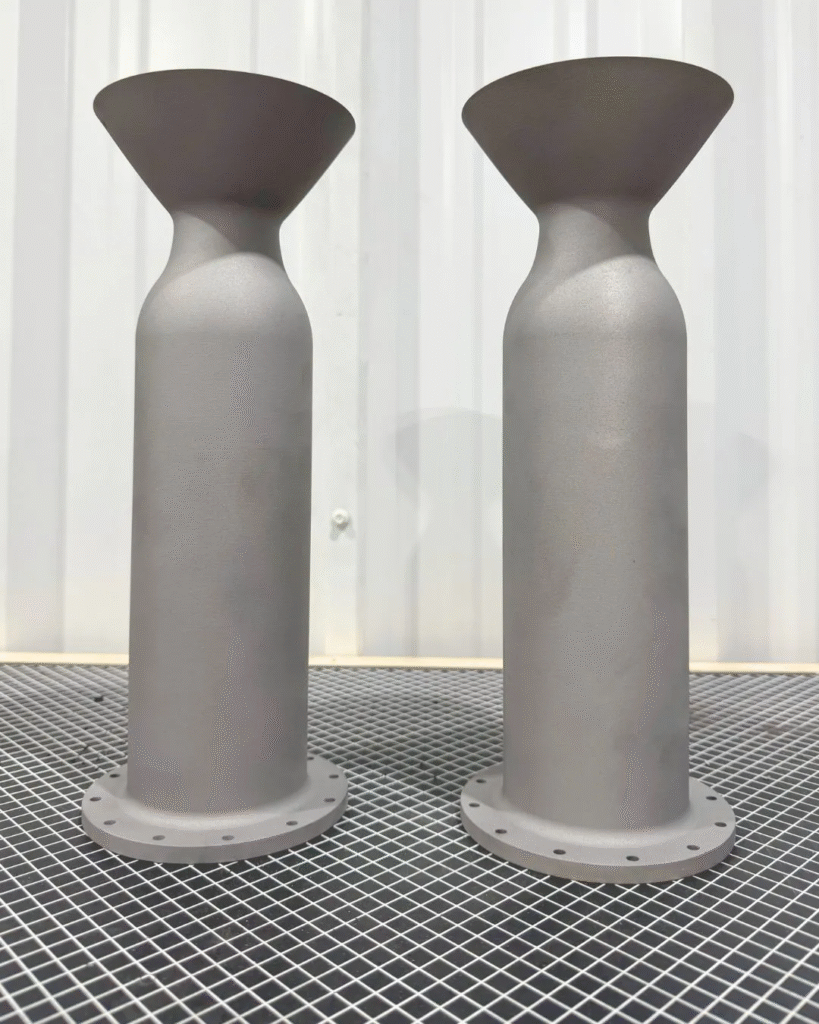
The C103 niobium alloy 3D printed by Nikon SLM Solutions.