A research team from Lawrence Livermore National Laboratory (LLNL) has recently achieved a breakthrough in reversible resin 3D printing. They introduced a system based on Digital Light Processing (DLP) technology, along with a new type of material capable of partially reversing the photopolymerization process.
Traditionally, 3D printing with photosensitive resins is a one-way process—parts are built layer by layer with little possibility for correction afterward. However, the team developed a dual-wavelength photosensitive resin. Under 405 nm blue light, the material undergoes polymerization, forming a crosslinked solid. When exposed to 365 nm ultraviolet light, the resin generates acidic species that selectively break down the crosslinked network, turning previously cured polymer back into a flowable state.
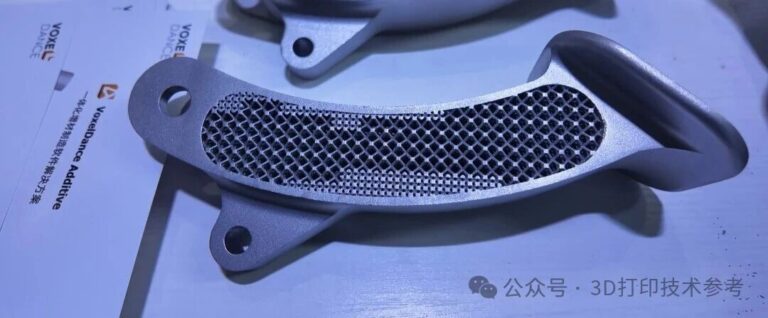
In the field of metal 3D printing, it is common to perform secondary machining—such as CNC—on critical areas of printed parts, which is a typical hybrid additive–subtractive manufacturing approach. However, hybrid manufacturing techniques for photosensitive resin had not been previously reported.
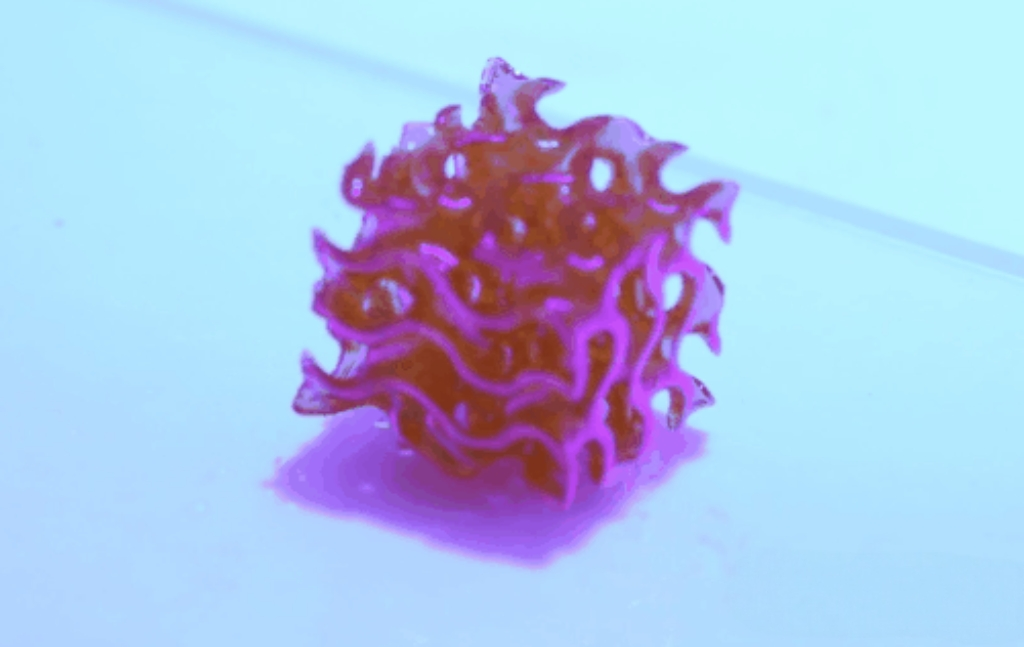
This study introduces a hybrid manufacturing method that integrates polymerization and degradation by leveraging dual-wavelength exposure. When an error is detected during the printing process, it can be corrected in real time. The system developed by the researchers is capable of both adding and gradually removing material, offering excellent spatiotemporal control. Using this technology, they can fabricate 2D photolithography patterns with resolutions as fine as 50 micrometers, as well as complex 3D structures with soft elastomeric properties.
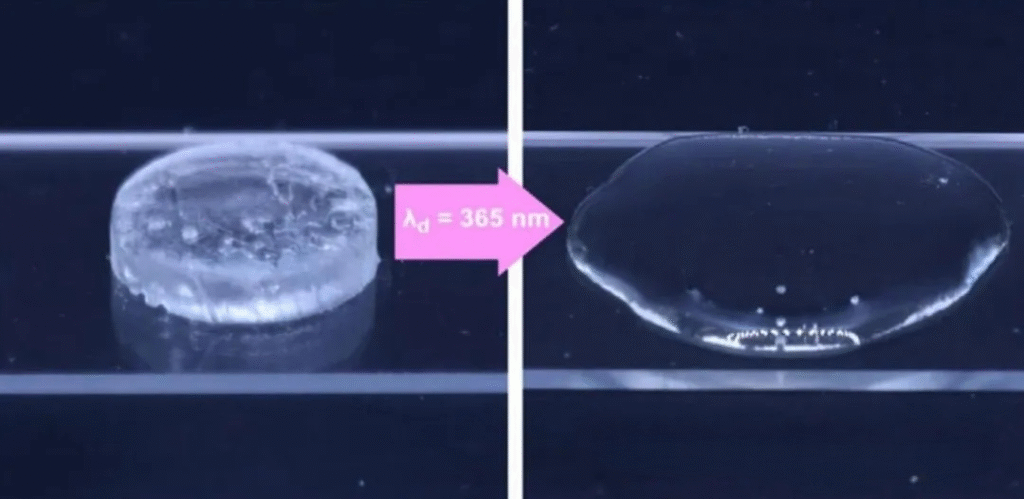
Researchers at Lawrence Livermore National Laboratory (LLNL) stated, “In theory, if a printed part has defects or requires modification, users no longer need to reprint an entirely new piece. They only need to expose the existing part to another wavelength of light to make adjustments. This approach is both practical and resource-efficient.”
In the laboratory, the research team validated this method on a microfluidic device that initially had two separate channels. With UV-induced degradation, the two channels were subsequently connected.
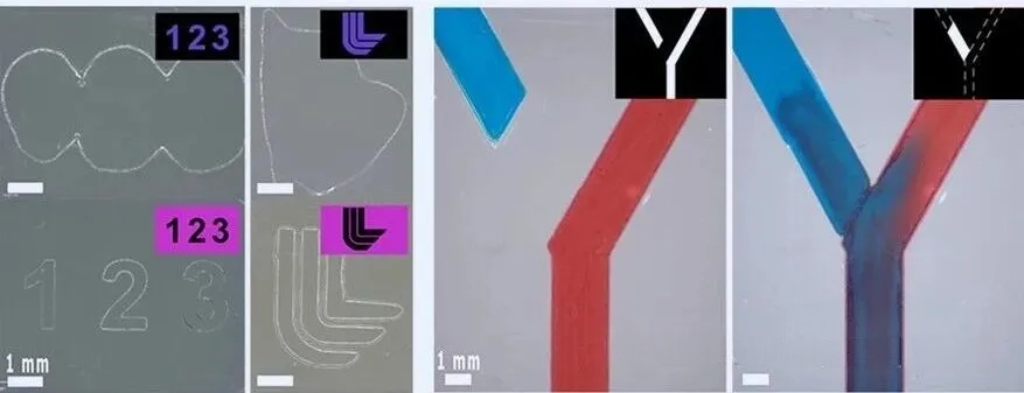
The researchers stated, “We designed it this way on purpose. But if this were caused by a real channel-connection failure, the entire print would normally need to be redone. Now, with just a very simple correction, the part can be used again.”
Next, the team plans to integrate an onboard measurement system with a feedback loop to automatically detect deviations during printing and correct the projected images in real time.
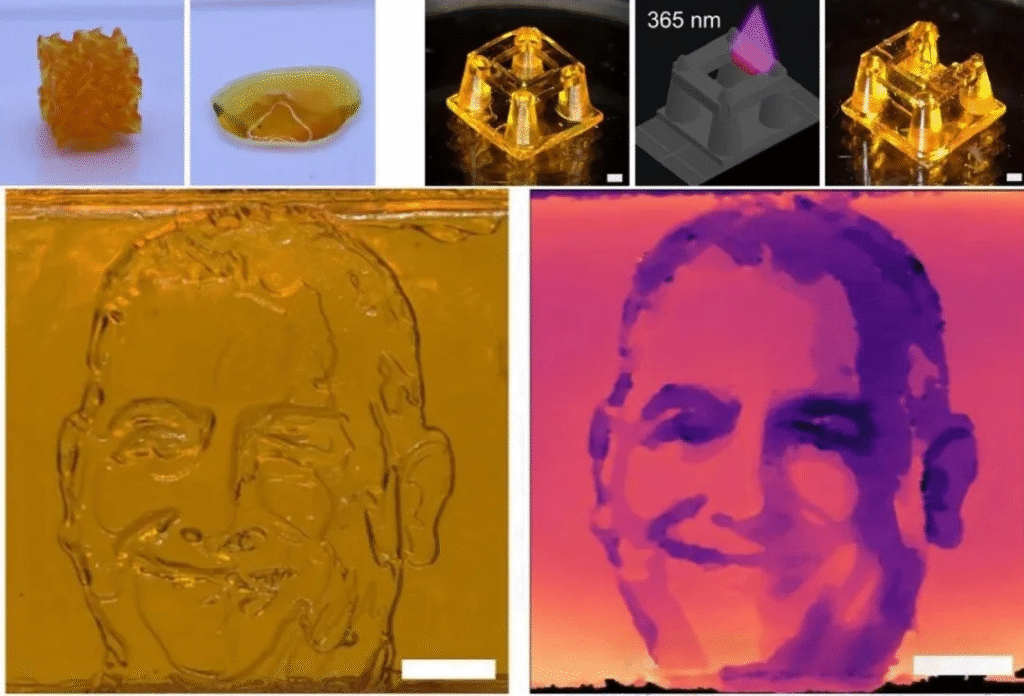
The paper’s author, Liliana Dongping Terrell-Pérez of Lawrence Livermore National Laboratory, stated, “If a printing error is detected, the system can adaptively modify the projection image to correct those mistakes in real time, enabling truly adaptive manufacturing. Beyond DLP printing, we also plan to extend this approach to volumetric additive manufacturing, a much faster additive technology that breaks away from traditional layer-by-layer printing.”
This research, published under the title “Hybrid Additive and Subtractive Manufacturing of Dual-Wavelength Photopolymer Thermosets” in Advanced Materials Technologies, provides a detailed description of the resin formulation as well as the processes of 3D printing and error correction.