Important Updates on Metal 3D Printing in Space Aboard the International Space Station
Samples produced on the International Space Station were returned to Earth around February 2025, but the subsequent testing has taken much longer than initially expected. The in-space printing campaign lasted several months and resulted in multiple samples, including three tensile test specimens and three bending strength test specimens, thin-walled structures, a compliant mechanism (which failed), as well as a mirror mount sample developed by the Technical University of Denmark.
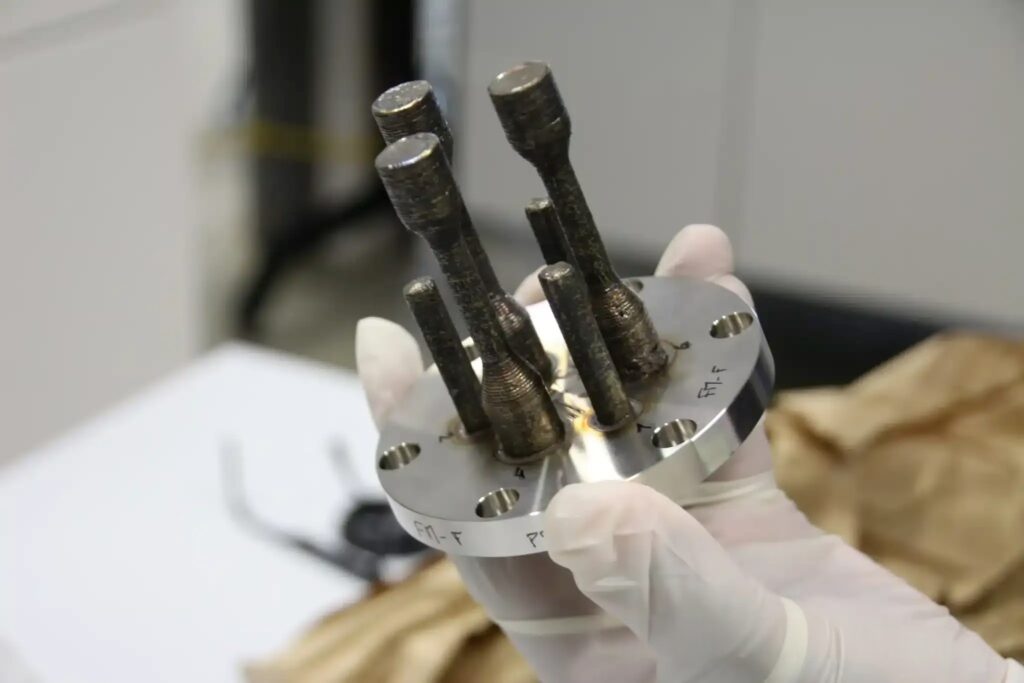
Strength test specimens produced by in-space 3D printing
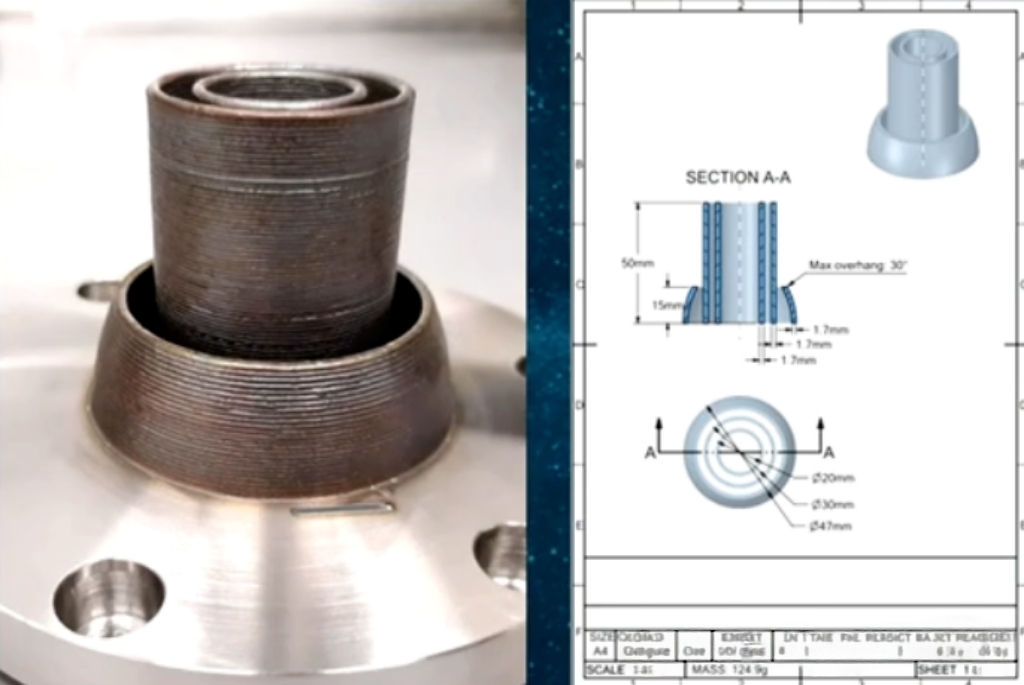
Thin-walled specimens produced by in-space 3D printing
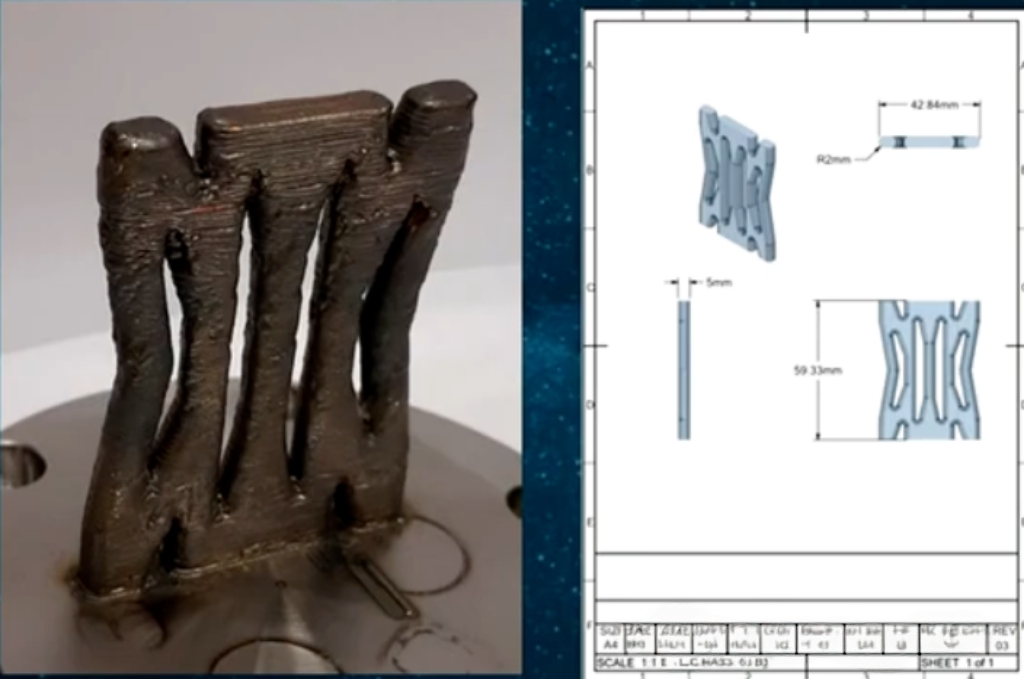
Mechanism printed in space (printing failure)
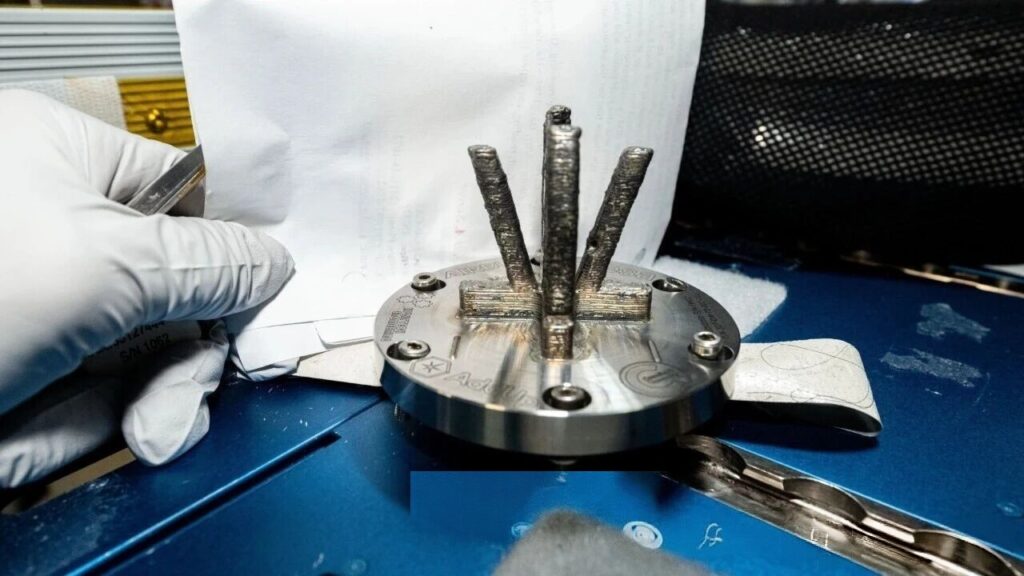
Samples from the Technical University of Denmark
One sample was sent to the European Astronaut Centre (EAC) in Germany, two samples were sent to ESA’s European Space Research and Technology Centre (ESTEC), and the final sample (the mirror mount) was delivered to the Technical University of Denmark for thermal performance studies.
◆ Key conclusions
- Laser directed energy deposition successfully achieved 3D printing using stainless steel wire
- The mechanical properties of the samples are consistent with those manufactured on Earth; engineers expect only minor differences between in-space and terrestrial manufacturing
- The samples show poor dimensional accuracy and very rough surface quality, requiring post-processing; the equipment is inconvenient to operate, only semi-automated, and wire jamming occurred frequently
Materials and Equipment
In terms of material selection, the International Space Station used stainless steel wire with a diameter of 0.6 mm. Advenit Makaya, Senior Manufacturing Engineer at the European Space Agency (ESA), explained that high-profile metals such as titanium and aluminum alloys were not chosen because oxidation must still be considered even on the space station. The 3D printer was installed inside the ISS; if argon shielding gas were used, any leakage would pose a direct threat to crew safety, whereas nitrogen is much safer. This safety consideration was the primary reason for selecting stainless steel.
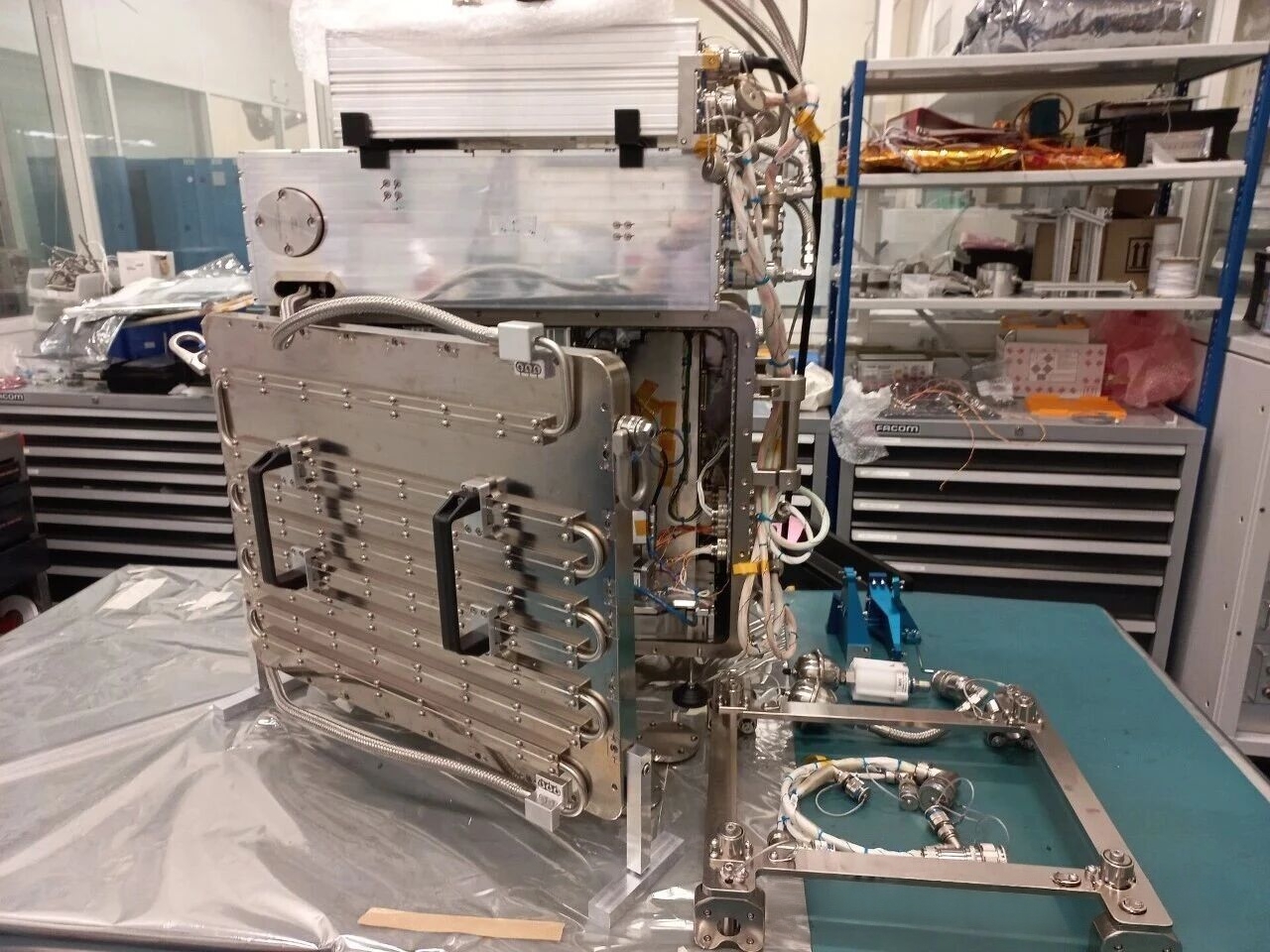
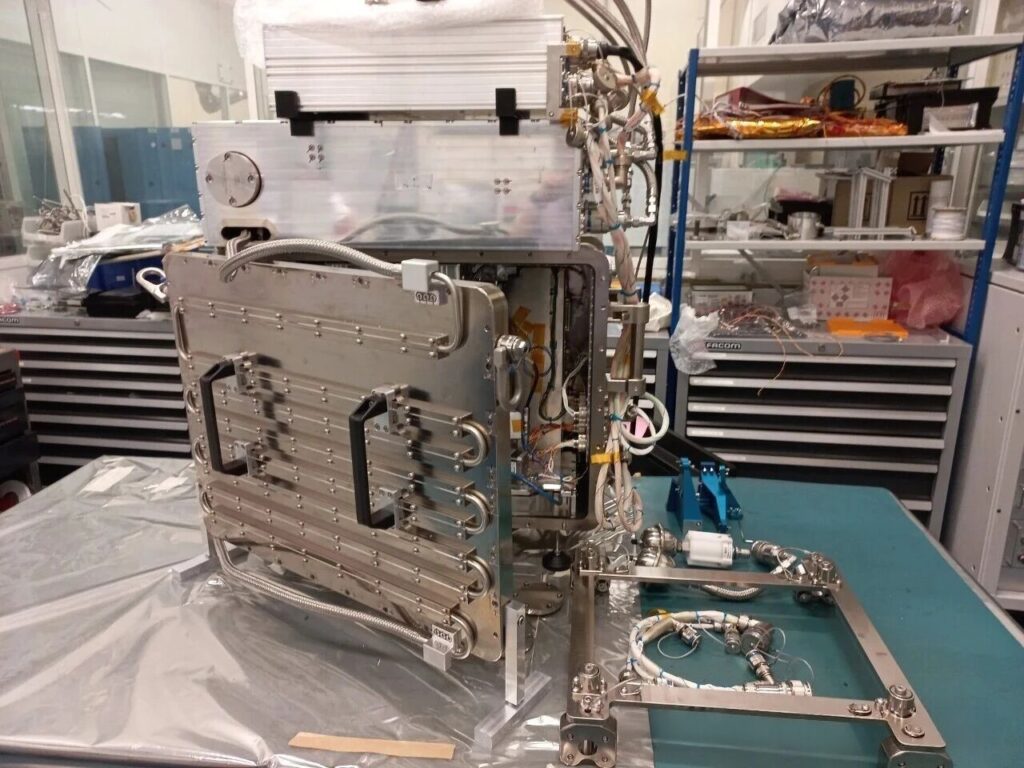
Regarding the equipment, the laser directed energy deposition 3D printer installed on the ISS measures approximately 80 × 70 × 40 cm and operates with a laser output power of 300 W. The wire-feeding system carries 1 kg of stainless steel wire. Because the printing process generates spatter and metal vapor, the printer is equipped with an integrated filtration system. This filter becomes clogged after printing about 1 kg of metal, which is why the total amount of metal material flown for this mission was limited to 1 kg.
Space–Ground Collaboration
Most of the printer configuration and the commands to initiate printing were completed on the ground as much as possible. Astronauts only needed to install the machine in place, remove the printed parts after completion, and load new substrates. If a malfunction occurred, they were only required to pay minimal attention and take simple actions—this essentially covered all astronaut involvement.
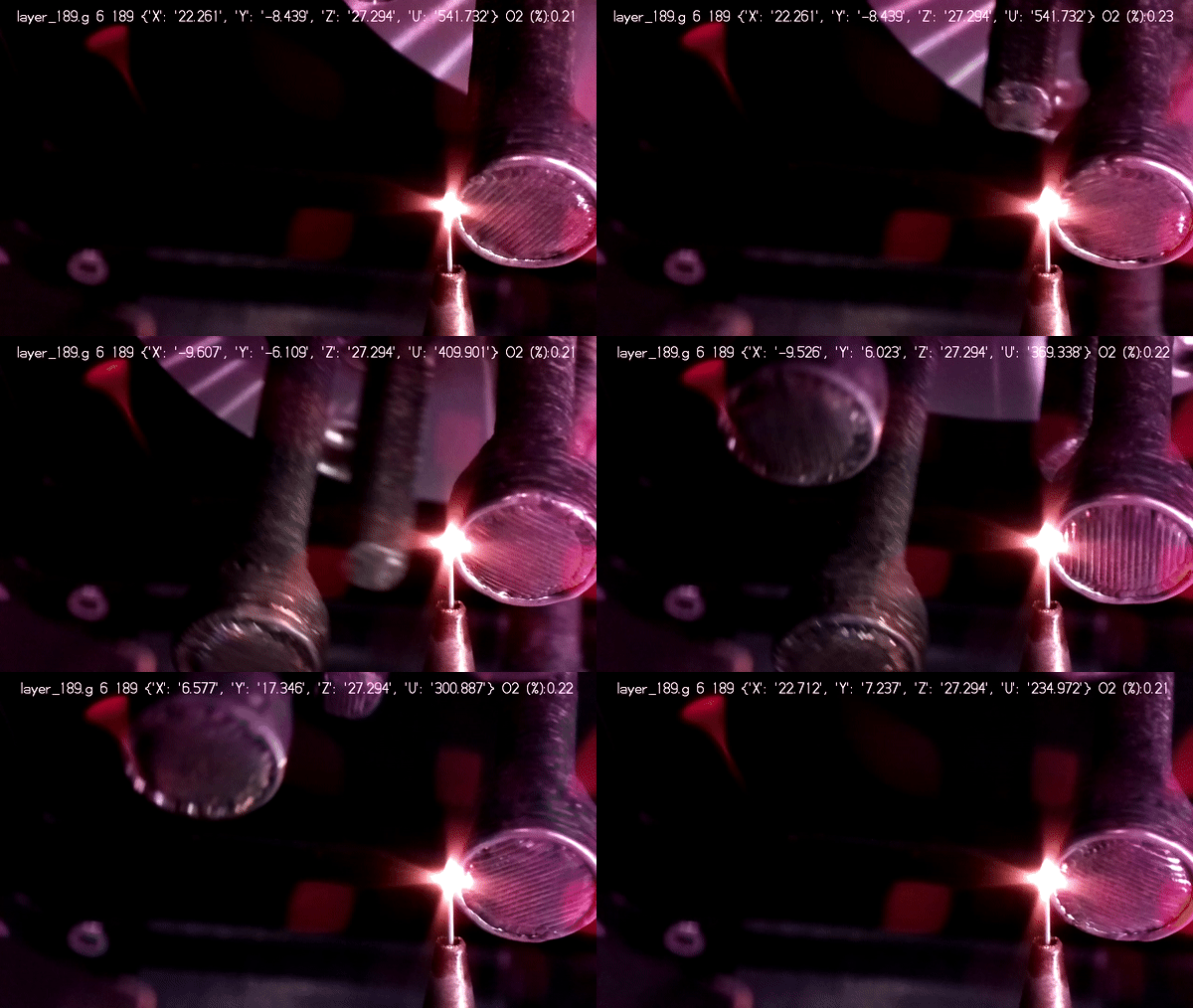
A ground-based monitoring center continuously supervised the process. Researchers checked various parameters using the printer’s onboard sensors, including the shape and contour of the printed parts, the internal temperature of the machine, and oxygen concentration levels. Advenit Makaya noted that ground teams reviewed every printed layer; if a layer appeared “unusual,” they adjusted the process parameters to ensure improved results in subsequent layers. In addition, the printer generates significant noise during operation, and ISS regulations limit its daily operating time to just four hours. As a result, the entire project extended over several months.
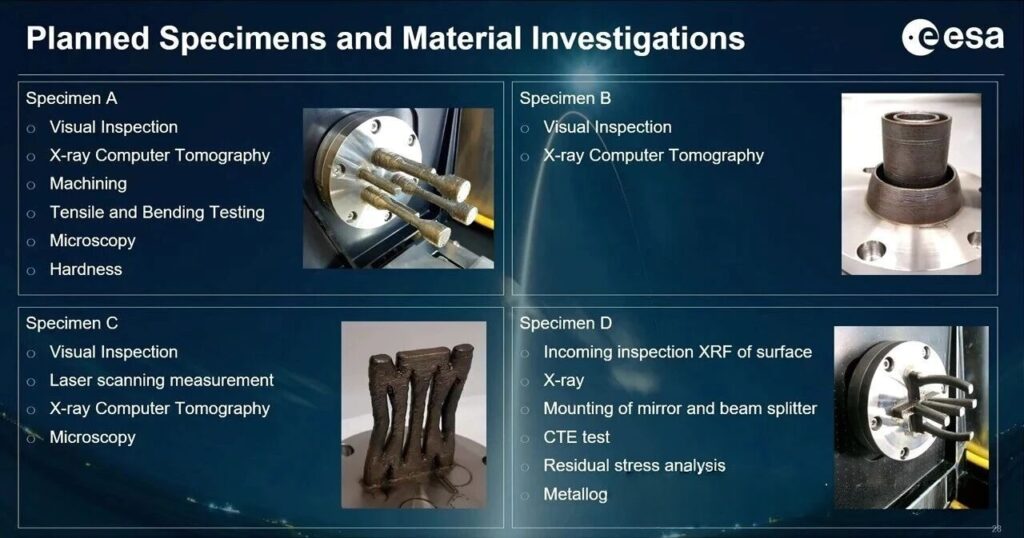
After returning to Earth, these parts underwent mechanical strength testing, bending tests, and microstructural analysis, and were compared with samples manufactured on the ground.
Preliminary results show a strong correlation between the printing history and the observed defects. The mechanical properties are consistent with those of 316L stainless steel produced by ground-based DED 3D printing, and the porosity distribution is closely linked to the printing strategy. Advenit Makaya also stated that the related findings will be published in the form of a scientific paper in 2026.
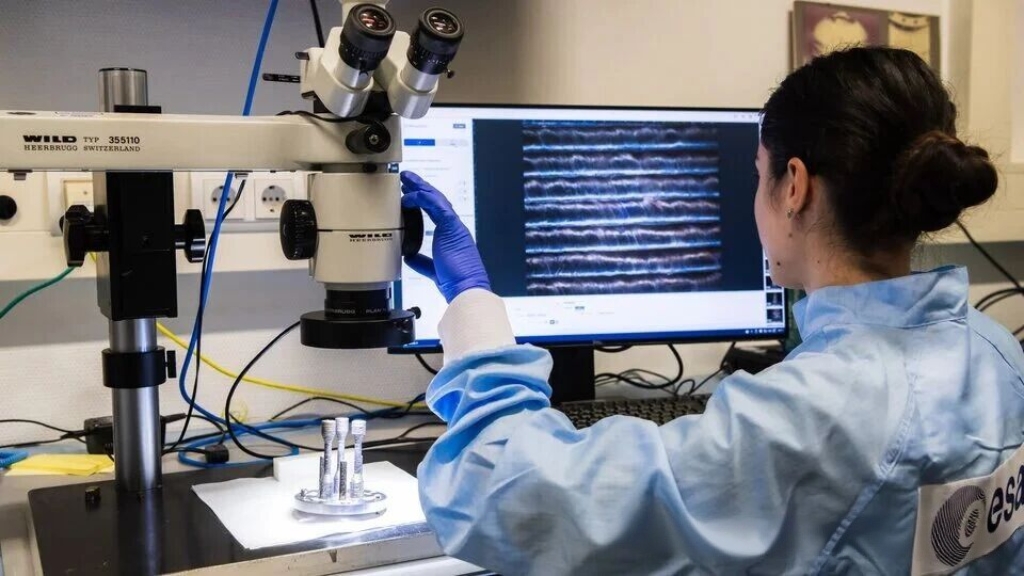
Ridge-like structures on the metal surface observed under a microscope; CT scanning of the samples; tensile testing of the samples; paint speckles applied to the samples.
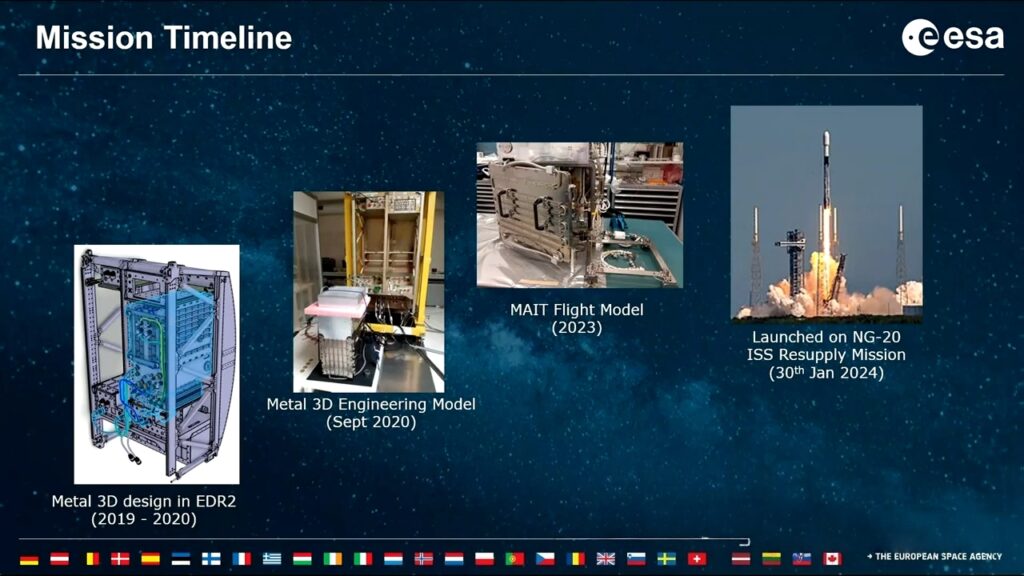
The project was initiated in 2017. The design of the printer itself took place from 2019 to 2020, followed by a series of tests and refinements, and it was finally sent to the International Space Station in early 2024.