

People in the jewelry industry often ask whether it is now possible to 3D print gold, platinum, and other precious metal jewelry. From a technical standpoint, the answer is yes. However, from an economic perspective, challenges remain: the cost of precious metal powders is extremely high—hundreds of dollars per gram, with even a small container of powder valued in the millions. During the printing process, powder waste and incomplete recycling are common, making direct 3D printing not significantly cheaper than the current wax-casting method. As a result, the global gold and silver jewelry industry has yet to truly commercialize precious metal 3D printing products.

The Tùsaire series was designed by artist Maeve Gillies and produced in collaboration with Italian company ProGold.
PGI Unveils World’s First Commercial Platinum Jewelry Collection Made with Metal 3D Printing
On July 3, 2025, the Platinum Guild International (PGI) officially launched the Tùsaire Collection, marking a historic breakthrough in the world of fine jewelry. Designed by Scottish-American artist Maeve Gillies and realized through cutting-edge 3D printing technology, the Tùsaire Collection represents the first-ever commercially released platinum jewelry line created using direct metal 3D printing. This milestone highlights the immense potential of additive manufacturing in advancing craftsmanship, expanding design freedom, and supporting sustainability within the precious metals industry.
Drawing inspiration from the mythology of Scotland’s mystical Caledonian Isles, the Tùsaire Collection reimagines the legend of the “Lost Caledonian Jewels” through a modern lens. Each piece intertwines storytelling with contemporary artistry, transforming every jewel into more than just a wearable treasure—it becomes a vessel of emotion, heritage, and cultural narrative.
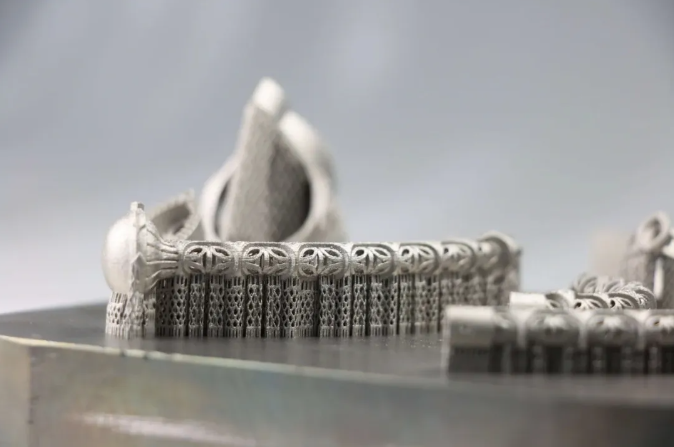
As a globally renowned jewelry designer with over 30 years of industry experience, Maeve Gillies is celebrated for her innovative approach to design. She founded the jewelry brand MaeVona and has collaborated with prestigious names such as Highland Park and Ardbeg. Throughout her career, Gillies has remained committed to fusing traditional craftsmanship with modern innovation, with a particular mastery in working with platinum.
A passionate advocate for platinum in both bridal and high jewelry, Gillies has a profound understanding of the metal’s resilience and natural luster. This expertise proved critical in leveraging laser powder bed fusion (LPBF) technology to optimize platinum’s performance, enabling the creation of shapes and finishes once thought impossible.

Through collaboration with Italian company ProGold and the research led by PGI, the technological barriers to platinum 3D-printed jewelry have been successfully overcome.
Pioneering High Jewelry with Platinum 3D Printing
Unlike other precious metals, platinum is notoriously difficult to print due to its high melting point and exceptional strength. The Tùsaire project, which spanned several months, overcame these challenges through repeated calibration, iterative design, and deep collaboration in the field of materials science—ultimately achieving high-precision 3D printing in platinum.
Compared with traditional casting, 3D printing not only significantly reduces material waste, but also takes advantage of platinum’s low reflectivity and excellent thermal control properties, which enhance laser printing efficiency. This breakthrough not only advances technical performance but also reinforces the vision of sustainable luxury in fine jewelry.
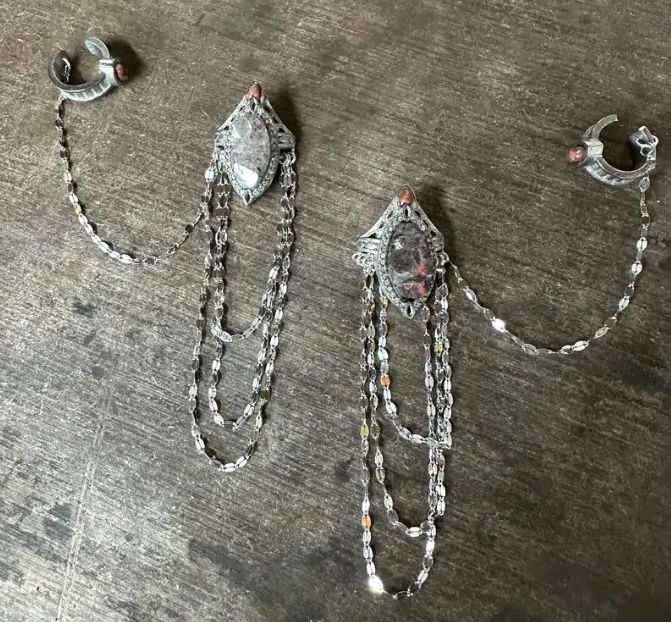
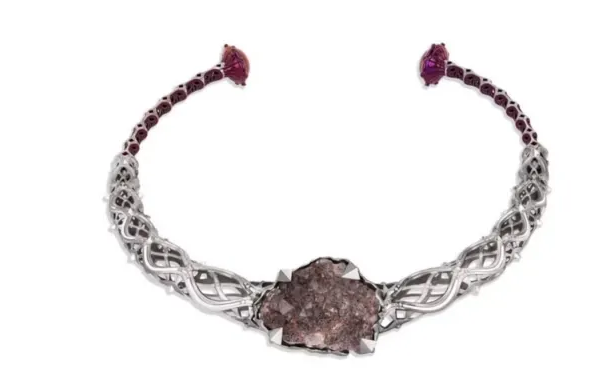
The Tùsaire Collection showcases hollow structures, interlocking lattices, and exquisite detailing that push beyond the physical limits of traditional craftsmanship. Through 3D printing, platinum—once regarded as a dense and unyielding material—has been transformed into a fluid medium for creative expression.
With the customization capabilities of additive manufacturing, Tùsaire enables adjustable sizing, modular design elements, and bespoke finishes enhanced with anodized titanium accents, offering consumers a heightened sense of personalization and engagement.
At the 5th ORIGINALLUXURY Roundtable, Tim Schlick, CEO of PGI, stated:
“Additive manufacturing technology is vital to the future of the jewelry industry, as it opens up many new possibilities.”
Margot Stuart, Co-founder of ORIGINALLUXURY, added:
“Cross-sector collaboration is the key to redefining the role of platinum in modern luxury.”
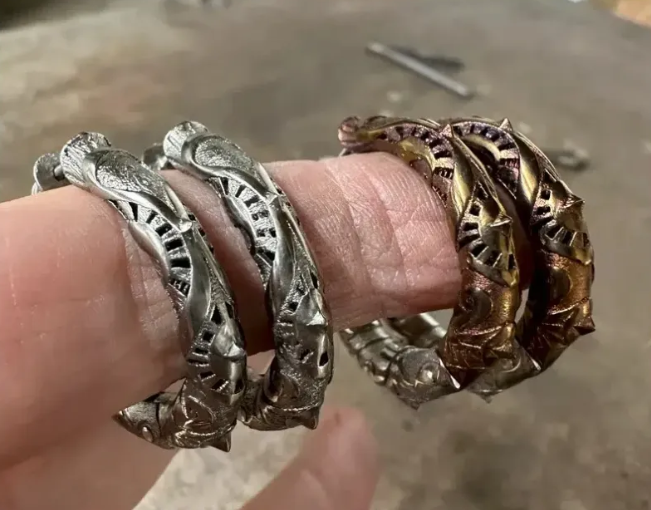
Platinum 3D-Printed Jewelry
It is worth noting that platinum is currently more affordable than gold, making platinum jewelry more accessible to consumers. Unlike other precious metal 3D-printed pieces that remain confined to the experimental stage, the Tùsaire Collection represents the first large-scale commercial venture using direct platinum 3D printing. This achievement transforms theory into a viable market product, setting an important benchmark and a valuable commercial case study for the future of high jewelry design and manufacturing.
Precious Metal 3D Printer
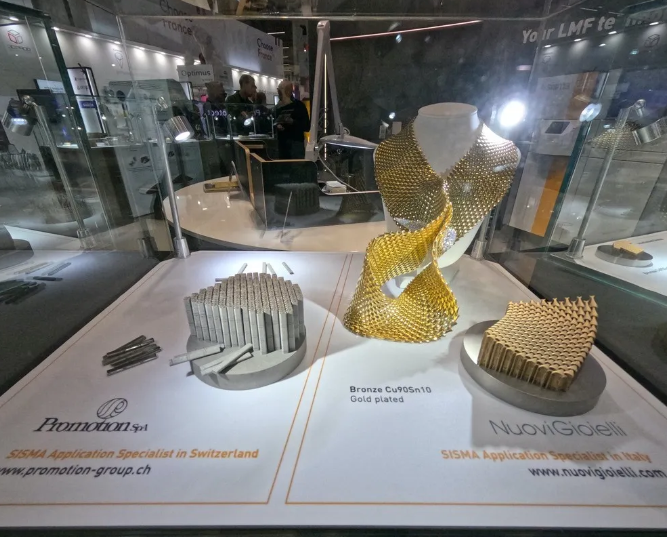
Italian metal 3D printer manufacturer Sisma has already made significant progress in the field of precious metal printing, showcasing numerous jewelry applications at the Formnext 2024 exhibition in Germany.
In Shenzhen, China, XiHe Additive has introduced a compact precious metal 3D printer using green laser technology, capable of efficiently printing materials such as gold and platinum.
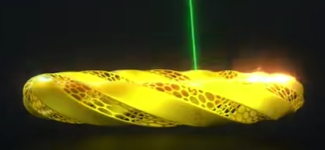
Precious Metal Jewelry 3D Printer
In August 2024, XiHe Additive launched the XH-M100G Green Laser 3D Printer, specifically designed for the precious metals and research sectors. By integrating multiple innovations in optics and structural design, the printer fully leverages the unique advantages of green laser technology.
The XH-M100G features a build volume of φ100 × 100 mm and is equipped with a self-developed 532 nm single-mode continuous green fiber laser. Its unique optical system enables high-precision printing, while the innovative top-feed powder system and convenient powder recycling design minimize operating costs and reduce material loss.
The machine is compatible with precious metals such as gold, platinum, and sterling silver (Ag925), while also supporting high-reflectivity, refractory, and composite materials. This makes it an ideal tool for new material testing and development.