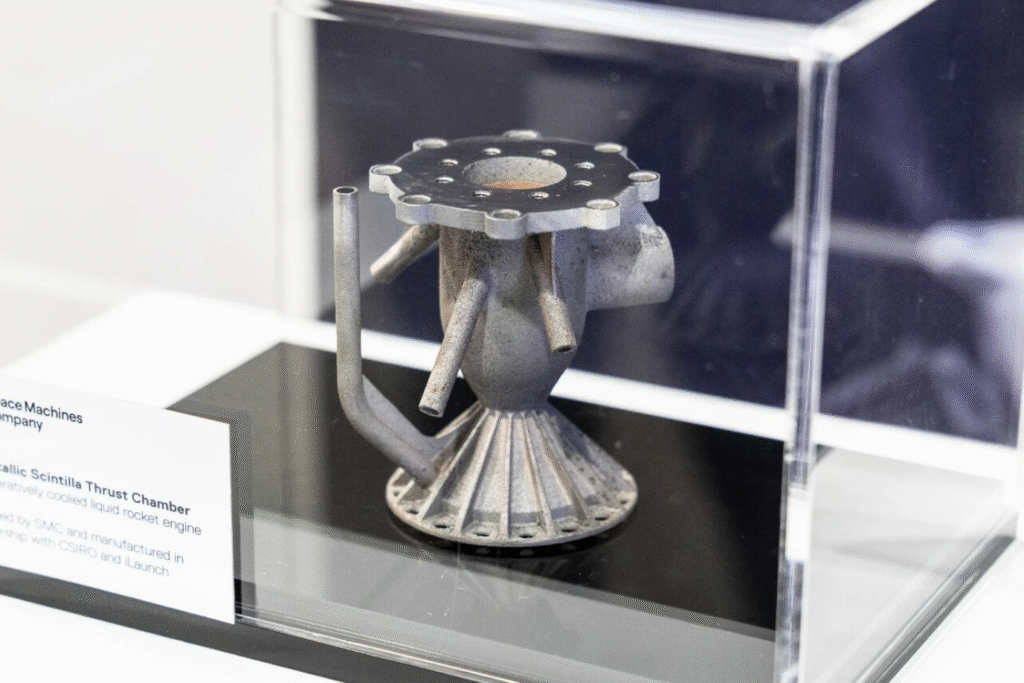
In 2025, Australia announced the successful 3D printing of the country’s first bimetallic rocket thruster, which will power an Optimus Viper spacecraft developed by Space Machine.
The thruster was manufactured at Lab22, the large-scale 3D printing facility of Australia’s national science agency, using a Nikon SLM Solutions SLM 280 system. It integrates two high-performance metals in a single print: high-strength steel for the outer shell to improve structural strength, and copper alloy to enhance thermal conductivity.
This combination allows the thruster to withstand extreme temperatures while remaining lightweight, strong, and durable—a design rarely seen in conventional single-metal rocket propulsion systems.
Traditional vs. Multi‑Material 3D Printing for Rocket Thrust Chambers
The conventional approach—machining cooling channels into a copper liner and brazing it to a steel jacket—is expensive, slow, and prone to failure. Multi‑material 3D printing eliminates these issues by printing both metals in a single process, lowering complexity, cost, and time while enhancing design flexibility and durability. The copper alloy’s regenerative cooling allows the thruster to endure repeated firings and extended burns, and the steel jacket preserves structural integrity under pressure.
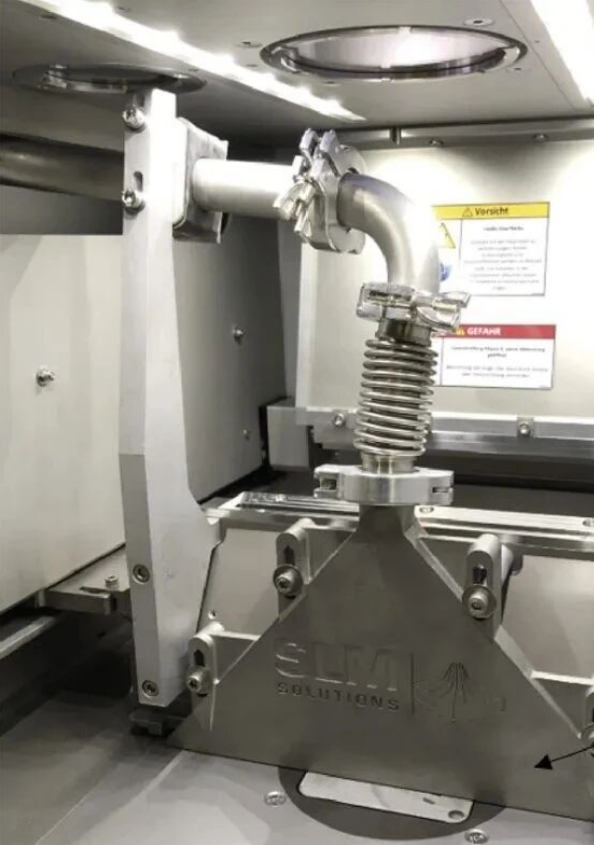
Inside the SLM® 280 2.0
“This achievement demonstrates the potential of multi‑material AM for complex, high‑performance components,” said Dr. Cherry Chen, Senior Research Scientist. “By placing each material exactly where needed, we enhance functionality, reduce waste, and unlock new design possibilities across many industries.”
Schaeffler’s Multi‑Material 3D Printed Heat Sinks & Injection Molds
At TCT Asia 2026, the author saw Schaeffler exhibiting its multi‑material 3D printing results, mainly heat sinks and injection molds. Very few companies globally are developing multi‑material metal 3D printing, but Schaeffler has been conducting R&D in this area for years.
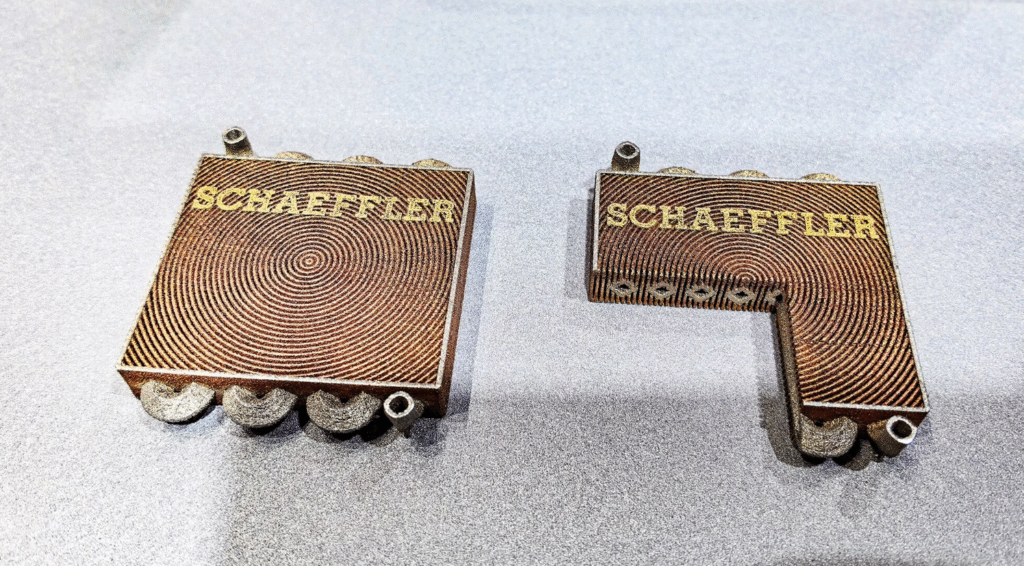
Multi‑Material Heat Sink Example
3D printing enables complex internal flow channels unattainable by traditional methods. The CuCrZr copper alloy delivers rapid heat conduction, and the copper lattice/TPMS structures greatly expand the heat exchange area. The 316L stainless steel shell provides high strength, corrosion resistance, and pressure resistance. This monolithic design ensures reliable mechanical performance and lightweight optimization.
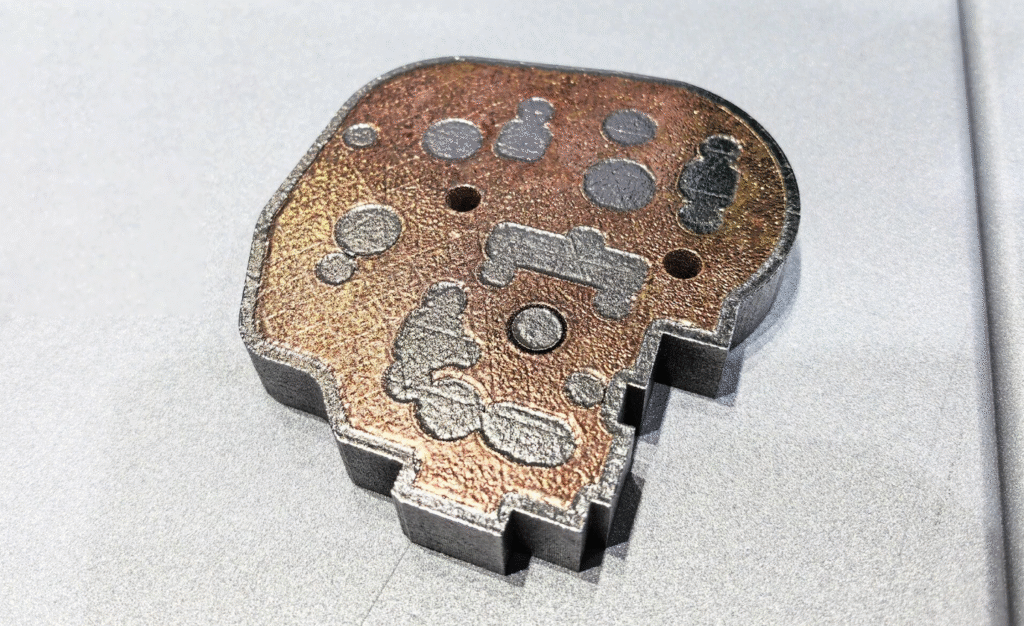
Multi‑Material Injection Molds
The copper alloy’s superior thermal conductivity allows faster heating and cooling, reducing cycle times and boosting productivity. The outer steel layer greatly enhances wear resistance and structural strength, extending mold life while maintaining efficiency. Such customized molds can also tailor the performance of injection‑molded parts, improving their functional characteristics.