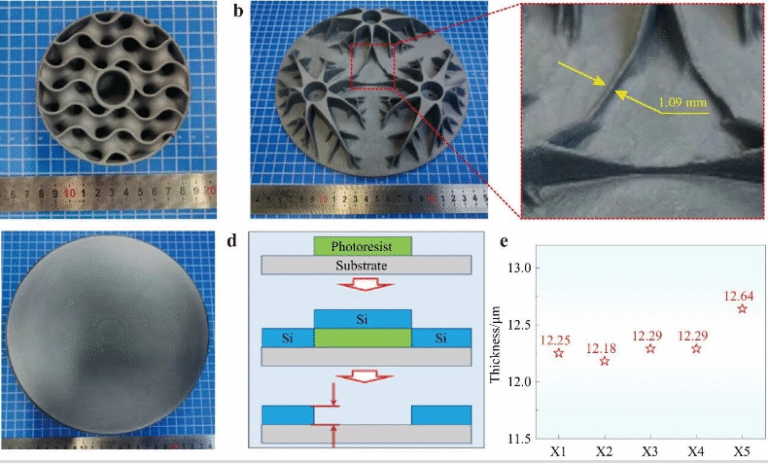
LPBF multi-metal 3D printing has long been trapped in the dilemma of being “theoretically feasible but practically insufficient.”
Most people focusing on powder bed metal 3D printing have approached it with either curiosity or skepticism, but they have continued to follow its development.
In reality, the number of players in this technology remains quite small so far. Although it is far from mature, applied explorations have already made substantial progress.
In the aerospace sector in particular, multiple reports since 2025 have hinted that the application deadlock of this technology is being broken, and LPBF multi-metal 3D printing has reached a critical inflection point.
In January 2026, China Science Daily reported that an integrated turbine blisk manufactured by the Institute of Engineering Thermophysics, Chinese Academy of Sciences (IET, CAS) using multi-metal 3D printing had passed a hot-firing test. The accompanying image indicated the testing occurred in October 2025.
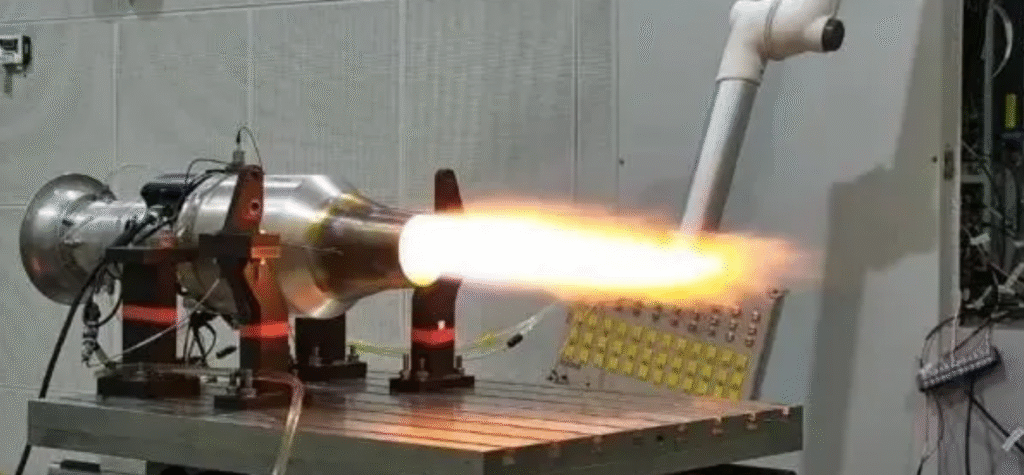
Integrated Turbine Blisk Hot-Firing Test
The disk core of this component is made of a high-toughness material, while the blades are made of a high-temperature resistant material, with integrated manufacturing achieved through 3D printing technology.
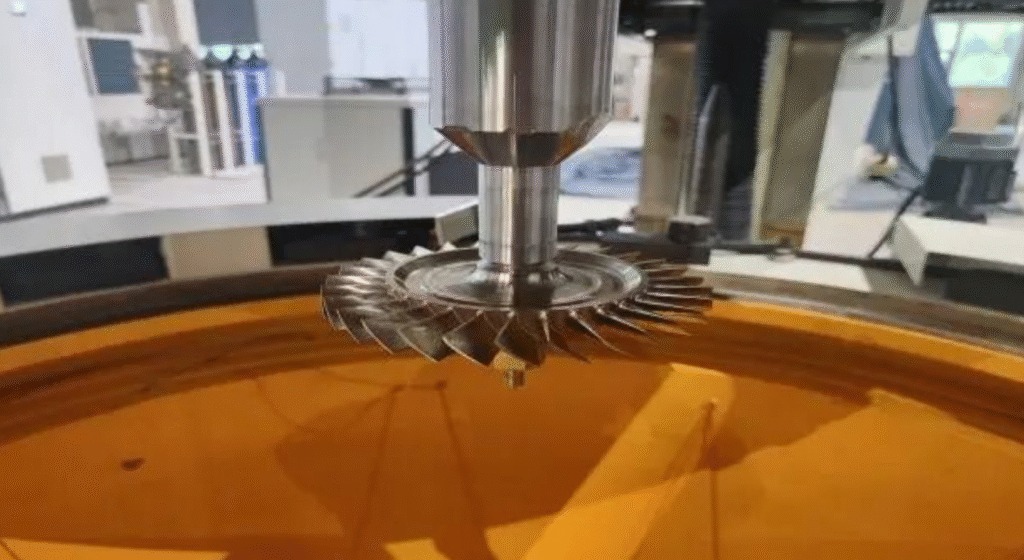
Integrated Turbine Blisk Overspeed Test
This test marks the first successful hot‑firing validation of a multi‑metal additively manufactured hot‑section rotating component for an aero engine, preliminarily demonstrating the stability and reliability of the multi‑metal 3D‑printed integrated turbine blisk.
Fraunhofer IGCV Multi-Material 3D Printed Rocket Engine Components
In the field of multi-metal 3D printing, researchers at the Fraunhofer Institute for Casting, Composite and Processing Technology (Fraunhofer IGCV) are among the first to showcase innovative results and truly revolutionary applications.
In March 2026, Fraunhofer IGCV announced that it is driving forward the development of next-generation Ariane rocket engines using multi-material LPBF metal 3D printing.
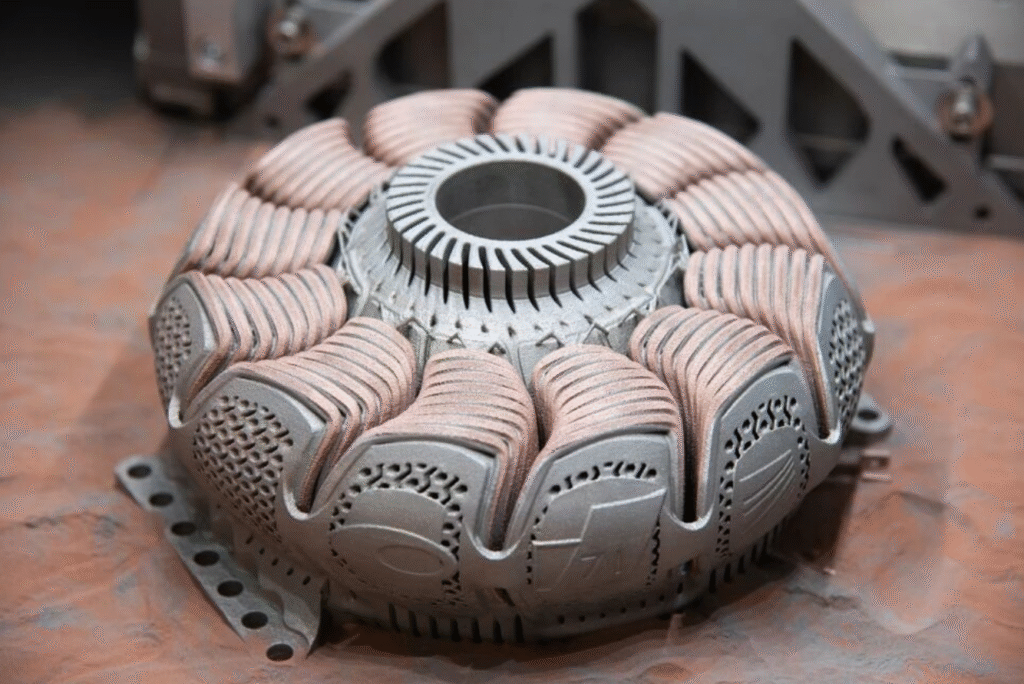
Multi-Material 3D Printed Stator for Electric Motors
This is part of a major EU project, and they have already manufactured multi-material validation components. Among them, valve components made of alternating magnetic and non-magnetic steel alloys help the rocket maintain a stable attitude during flight.
Researchers are now directly comparing their 3D printed prototypes with conventionally milled and welded versions, demonstrating the advantages of the next-generation Ariane engine in terms of functionality, efficiency, cost, and cycle time.
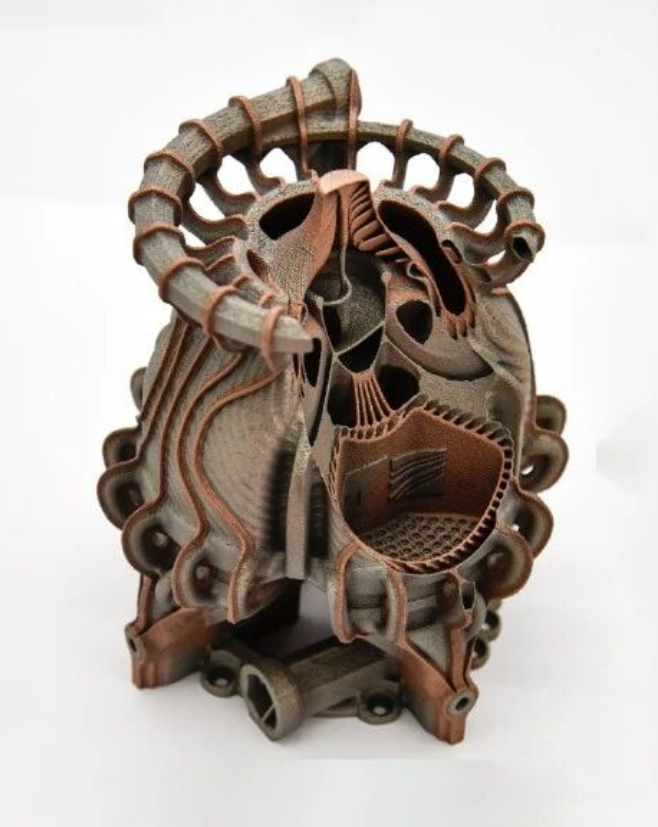
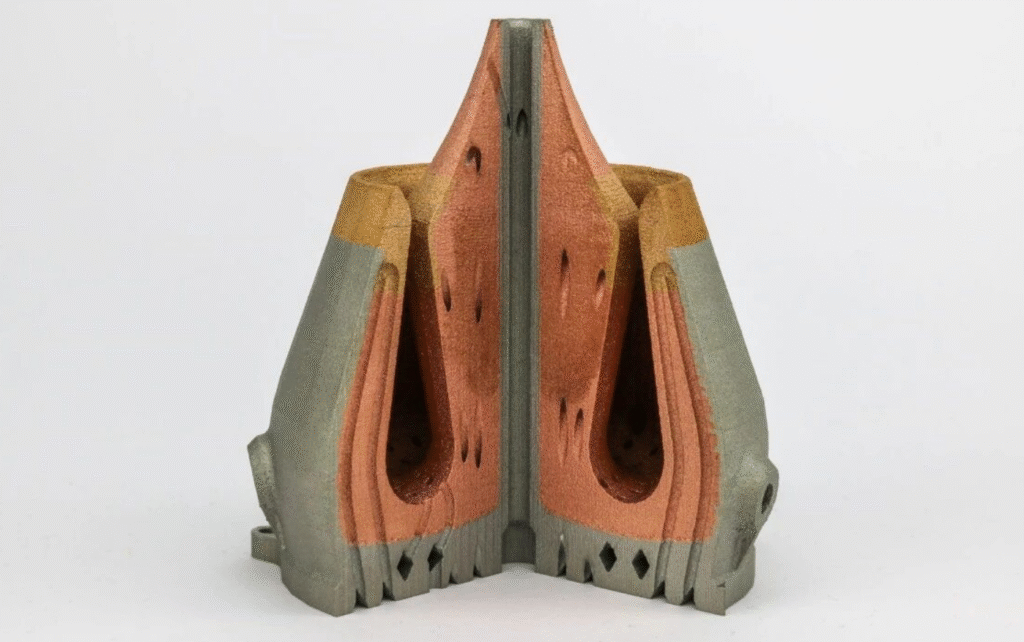
The entire engine area exposed to high temperatures is made of copper, which provides additional thermally conductive connections to less hot regions. On the other hand, the parts of the aerospike engine that bear high structural loads are made of high-strength steel. The aerospike engine is fully integrated, with external copper fins serving as both cooling and structural elements. This design philosophy gives the engine a more futuristic appearance than conventional rocket engines.
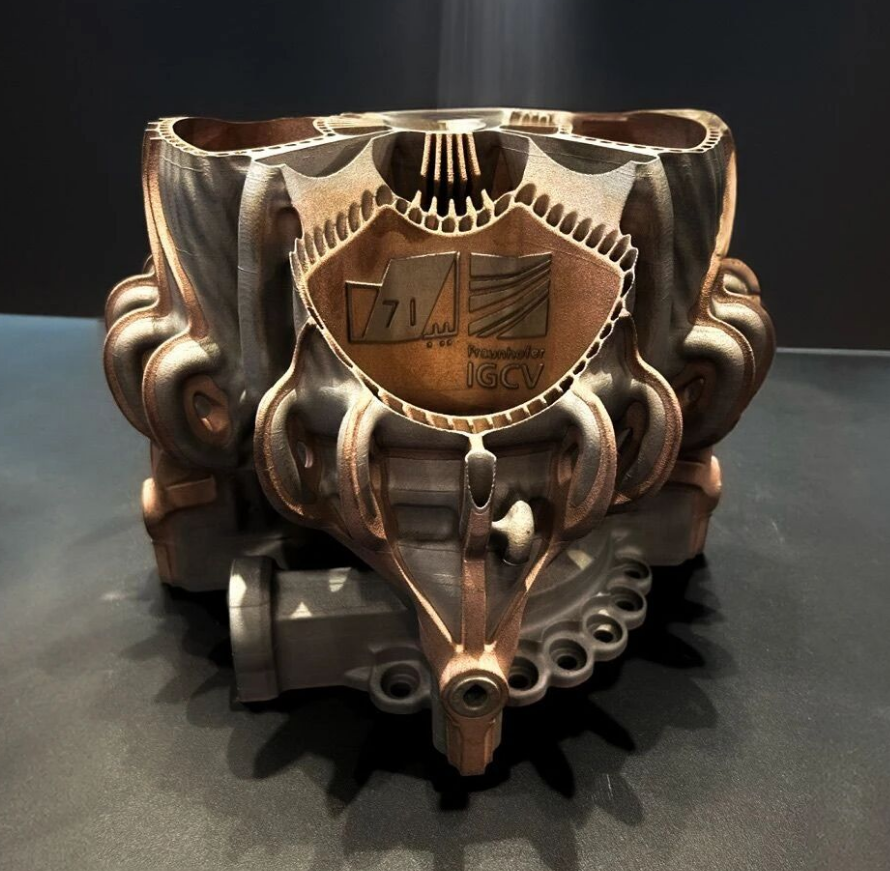
In addition, Fraunhofer IGCV demonstrated a combustion chamber demonstrator component integrally 3D printed from nickel-based superalloy and copper alloy several years ago.
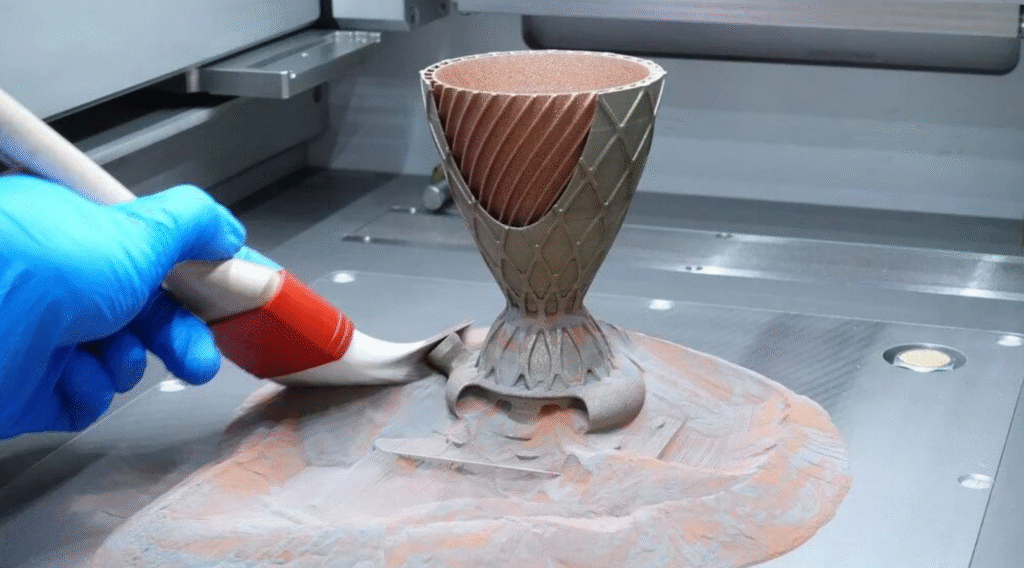
The equipment used by Fraunhofer IGCV is the SLM 280 from SLM Solutions, one of the few commercial systems in the industry capable of multi-material integrated 3D printing. Its users include leading institutions such as Fraunhofer IGCV, CellCore GmbH, ASCO, and the VTT Technical Research Centre of Finland.