

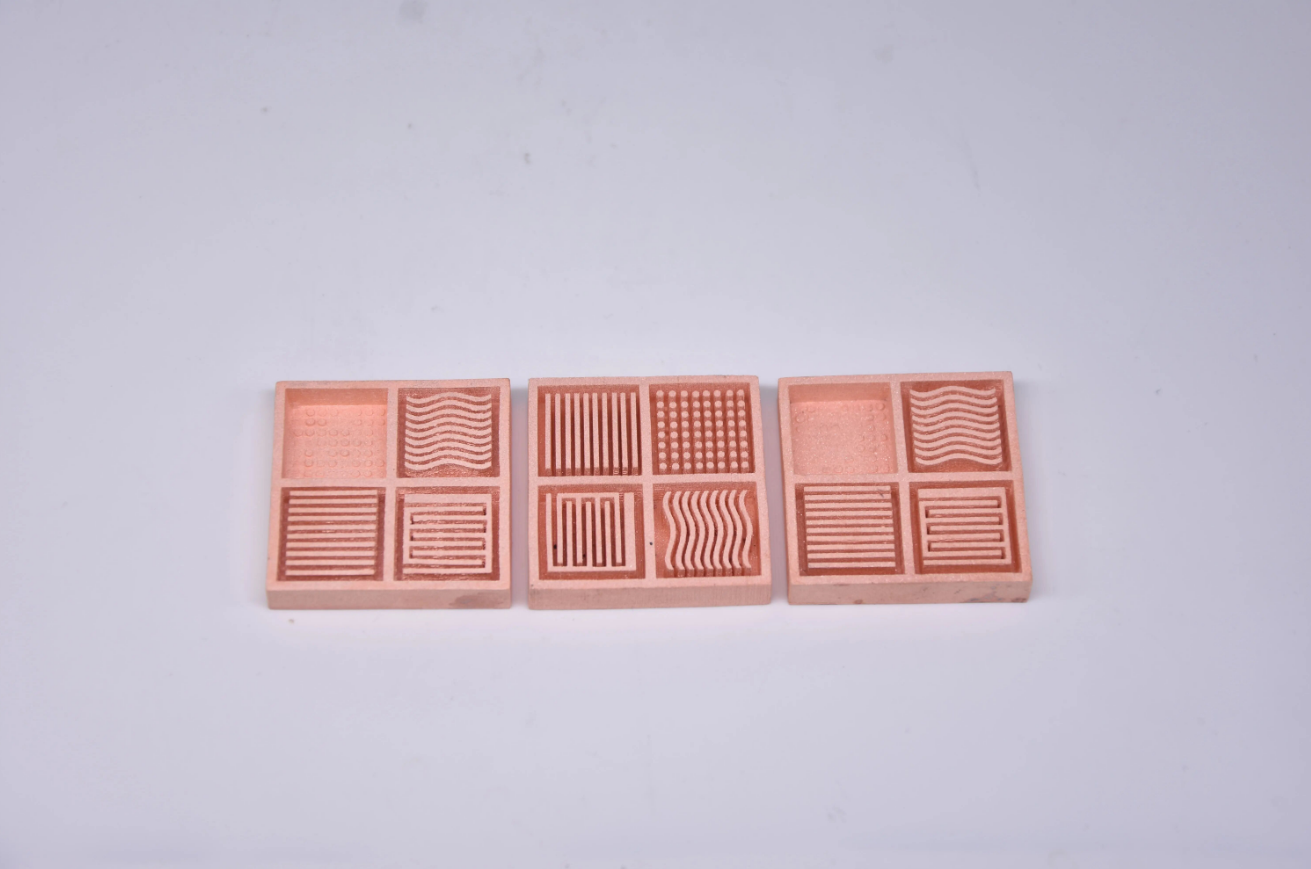
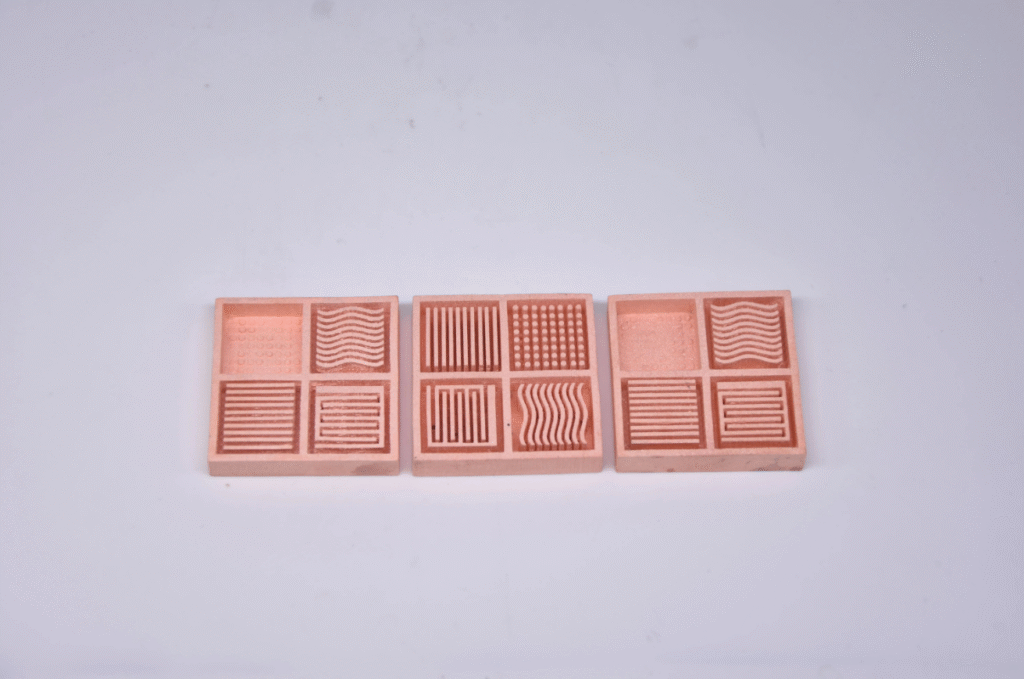
Application background: Surging demand for high-efficiency thermal management across industries
At present, application fields such as AI computing, robotics, ultra-high-power lasers, and large-scale data centers are placing new demands on heat dissipation.
From a product perspective, devices are becoming more integrated, compact, and lightweight. In terms of thermal requirements, the power consumption of a single chip has already exceeded the kilowatt level, pushing traditional air-cooling and liquid-cooling solutions close to their physical limits.
Diamond has become one of the most discussed thermal management materials due to its heat dissipation capability far exceeding that of pure copper. However, its extremely high hardness and brittleness present major challenges. Traditional powder metallurgy can only produce simple structures, while mechanical machining can cause diamond particles to fracture or detach. Laser-based 3D printing is relatively slow and also limits the achievable diamond content. As a result, diamond heat sinks face a dilemma: excellent material properties but difficulty in scaling up for mass production.
Copper–diamond composites, on the other hand, combine the ultra-high thermal conductivity of diamond with the good processability of copper. Their thermal conductivity can reach 600–800 W/m·K—about 1.5 to 2 times that of pure copper—while also offering a coefficient of thermal expansion compatible with semiconductor chips. This makes them widely regarded in the industry as a superior thermal management solution.
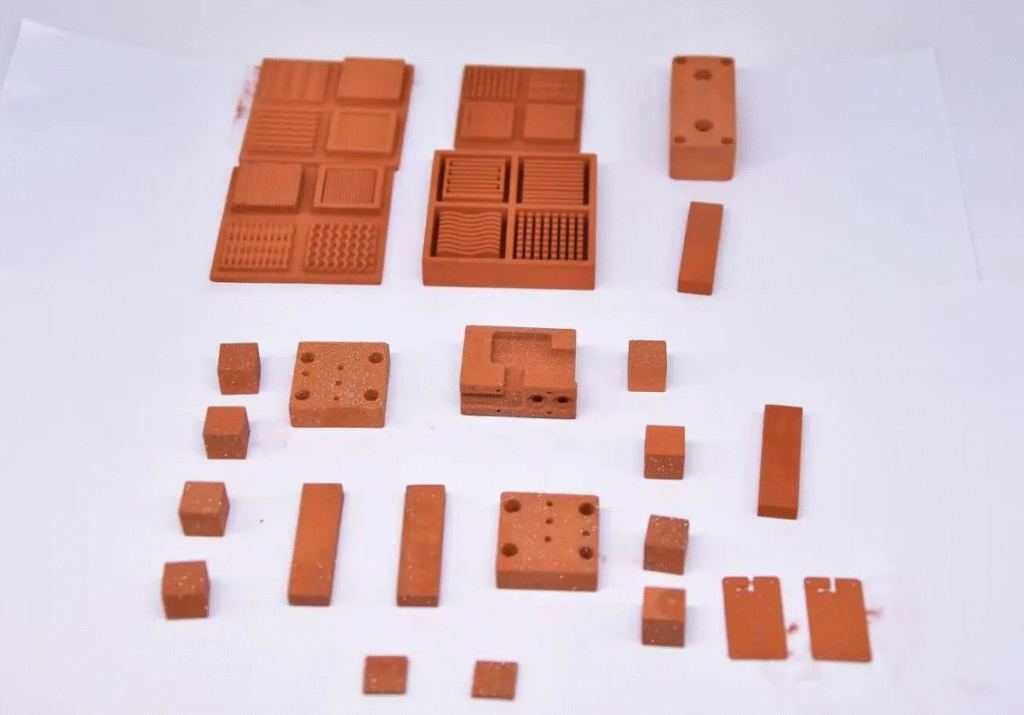
The 3D-printed green part, with the चमकदार particles, is the copper–diamond green body.
Technological breakthrough: Binder jetting (BJ) technology overcomes mass production challenges.
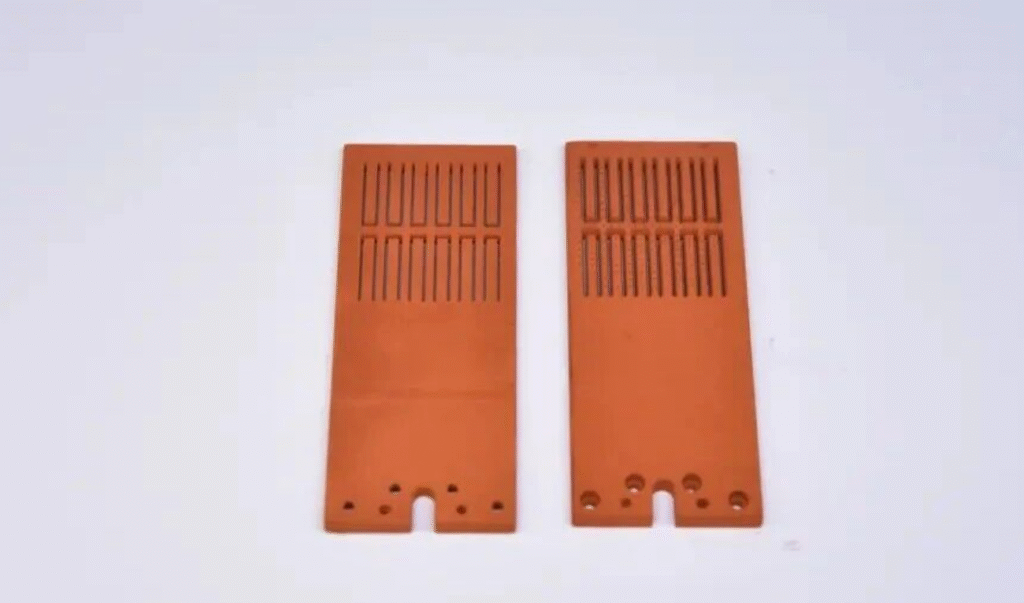
3D-printed green part
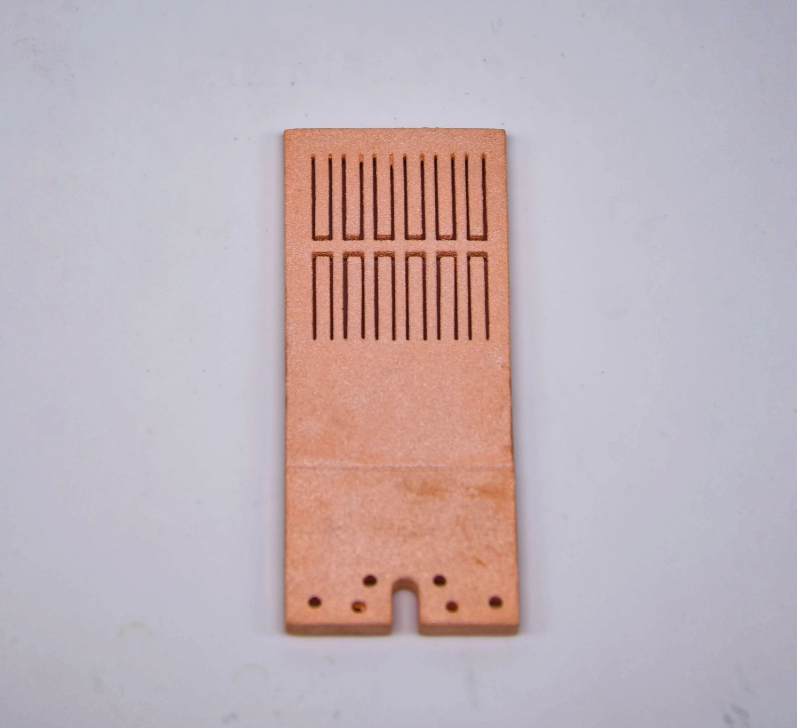
Sintered state
Compared with traditional manufacturing methods, binder jetting 3D printing offers three key advantages:
First, the process does not require molds. Complex geometries—including conformal channels and topologically optimized structures—can be directly formed in a single build.
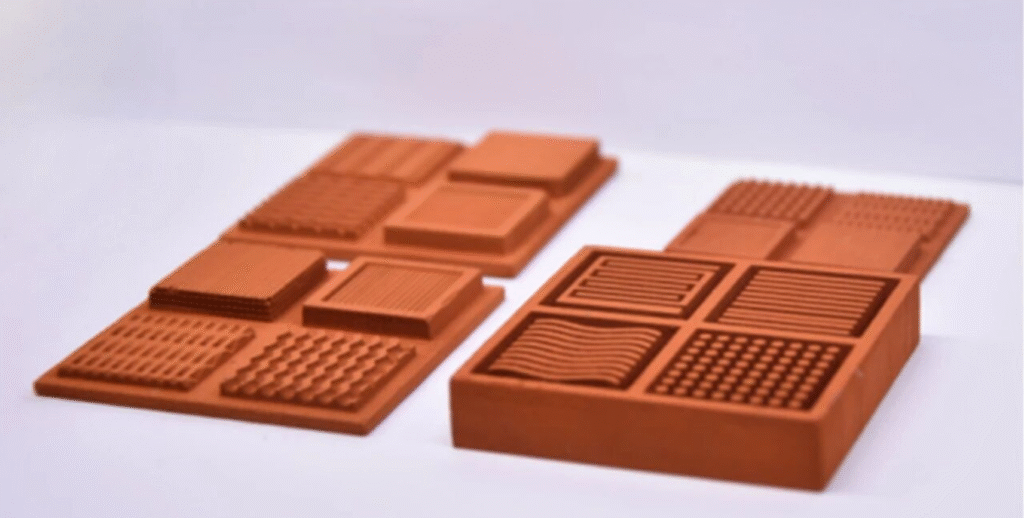
3D-printed green part
Second, it enables precise control over the ratio and mixing state of copper and diamond powders, with diamond content reaching up to 70%. Combined with low-temperature sintering, it effectively prevents graphitization of diamond, ensuring that thermal conductivity meets the design targets and remains stable.
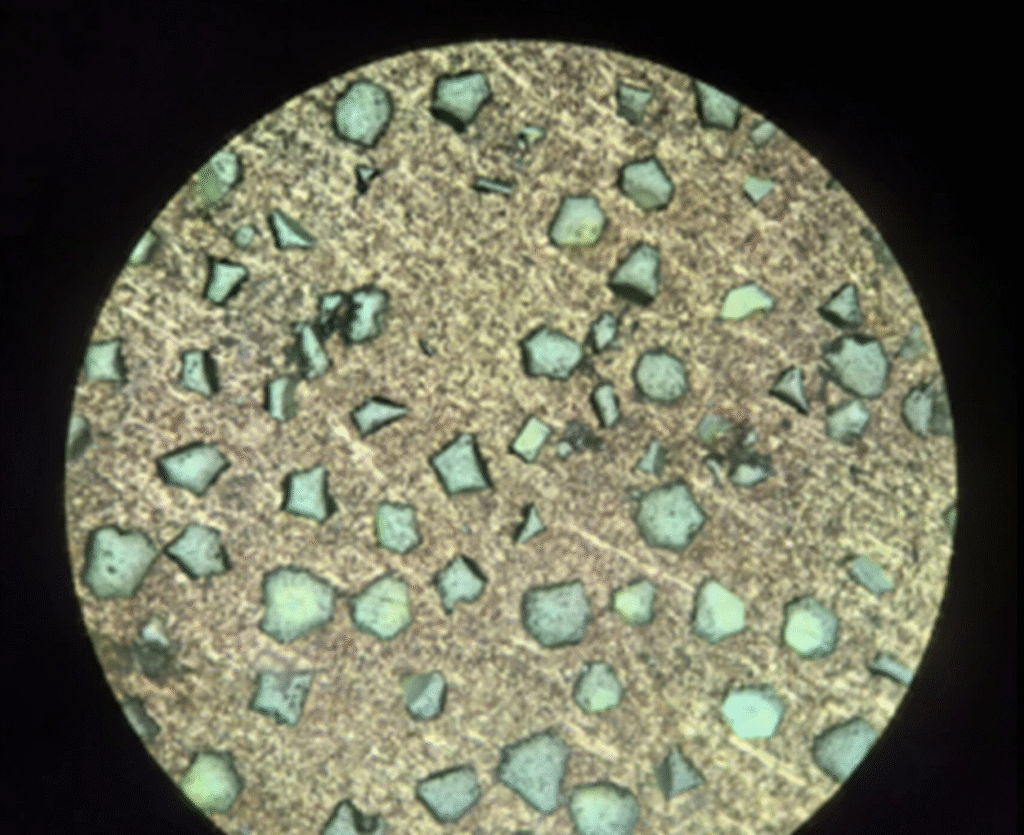
Third, it enables gradient printing of copper and diamond. The outer copper layer can be precisely machined, balancing surface roughness and thermal conductivity. As a result, thermal resistance can be reduced by up to 50% compared to traditional products, effectively doubling heat dissipation performance and supporting rapid, transient cooling of chips.
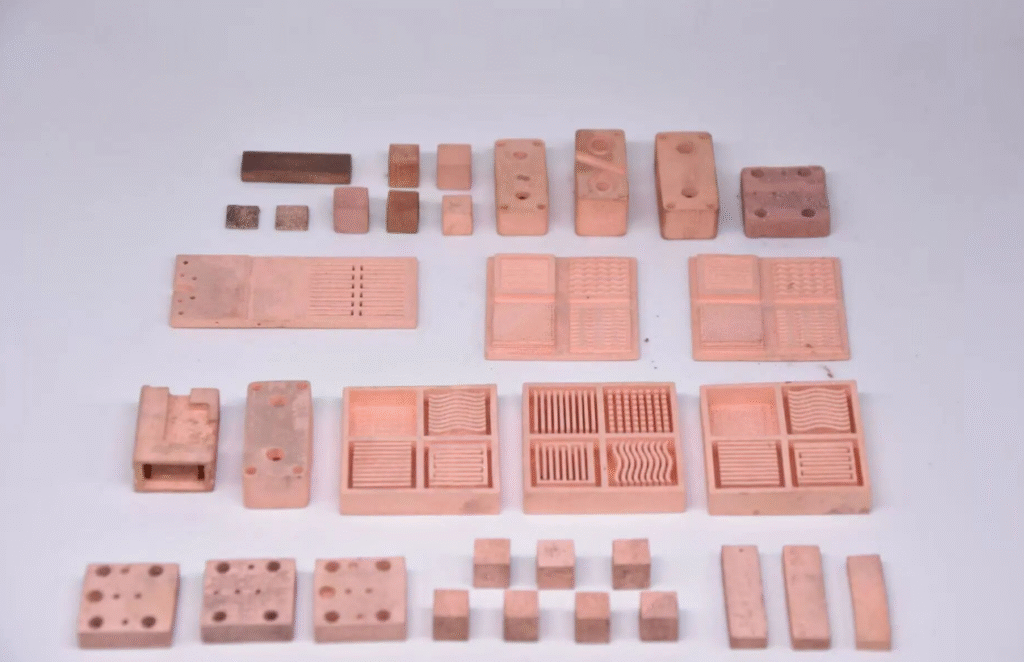
The sintered heat sink component, with the black regions being the copper–diamond composite material.