

Recent progress has been made in research on the fabrication of silicon carbide mirrors using binder jetting 3D printing technology. Researchers have developed a feasible method that enables low-cost, high-efficiency manufacturing of high-performance SiC optical mirrors with complex structures.
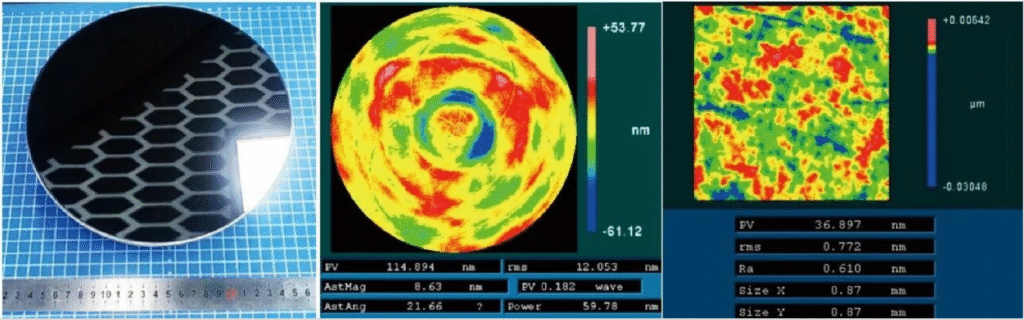
Si/SiC mirrors: after polishing, surface shape accuracy, surface roughness
Silicon carbide (SiC) has become the primary material for high-performance space optical mirrors due to its high specific stiffness, low coefficient of thermal expansion, and high thermal conductivity. However, as optical systems demand greater lightweighting and complex geometries — including triply periodic minimal surfaces (TPMS), topology-optimized structures, and lattice structures — traditional manufacturing methods such as compression molding and slip casting struggle to realize these designs.
Additive manufacturing technology enables the production of complex ceramic structures without the need for molds or extensive machining. For SiC mirrors, this typically involves first fabricating a preform, followed by densification through reaction melt infiltration, ultimately yielding a Si/SiC composite material.
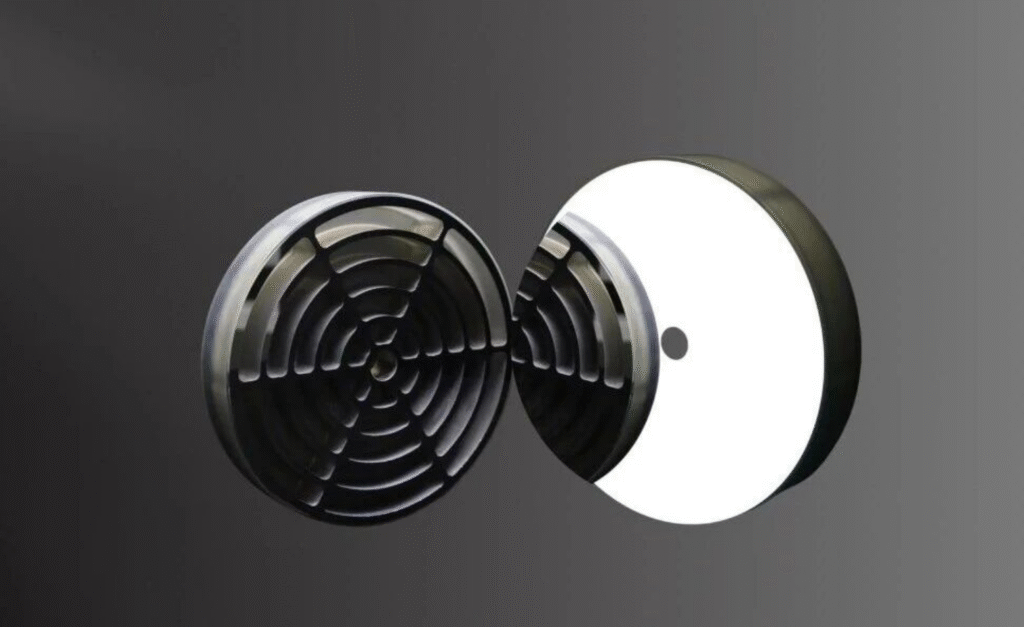
SiC Mirrors
The study first introduces the classification of traditional and additive manufacturing technologies for SiC mirrors. Traditionally, SiC preforms are obtained through powder compression molding, followed by densification via sintering or reaction melt infiltration. In contrast, additive manufacturing offers several process types for the initial forming step, including photopolymerization (e.g., stereolithography), powder bed sintering, binder jetting, and material extrusion deposition.
Photopolymerization processes can produce high-precision Si/SiC ceramics with complex structures, but the issue of poor mechanical performance needs to be addressed. In powder bed sintering processes, the rapid melting and solidification induced by laser heating tend to cause part deformation. Compared with photopolymerization, material extrusion deposition yields Si/SiC components with excellent performance and low residual silicon content; however, this process cannot fabricate overhanging or curved structures, among other geometric features.
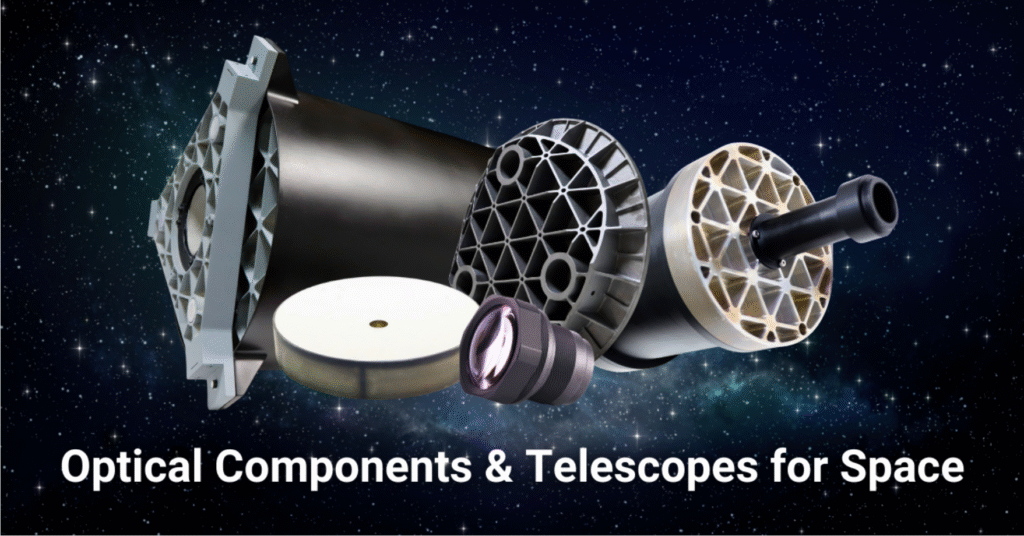
SiC Optical Structures
Among these additive manufacturing technologies, the binder jetting (BJ) process has developed rapidly in recent years due to its high precision and efficiency.
The reaction melt infiltration process involves heating the SiC preform together with excess silicon powder above the melting point of silicon (>1410°C), where liquid silicon infiltrates the porous preform via capillary force, filling the pores. However, SiC preforms fabricated by BJ have high porosity and low density, leading to high residual silicon content after reaction melt infiltration and insufficient overall material properties.
In principle, increasing the carbon content in the reaction can consume the free silicon. One current solution is to use carbon precursor infiltration followed by pyrolysis, but this approach suffers from non-uniform infiltration when applied to BJ-printed preforms and still fails to adequately solve the problem. Another approach is to first improve the pore structure of the preform (e.g., pore size or reduce porosity) in a step prior to the aforementioned method, by optimizing the characteristics and particle size distribution of the SiC powder. However, this is still far from practical application.
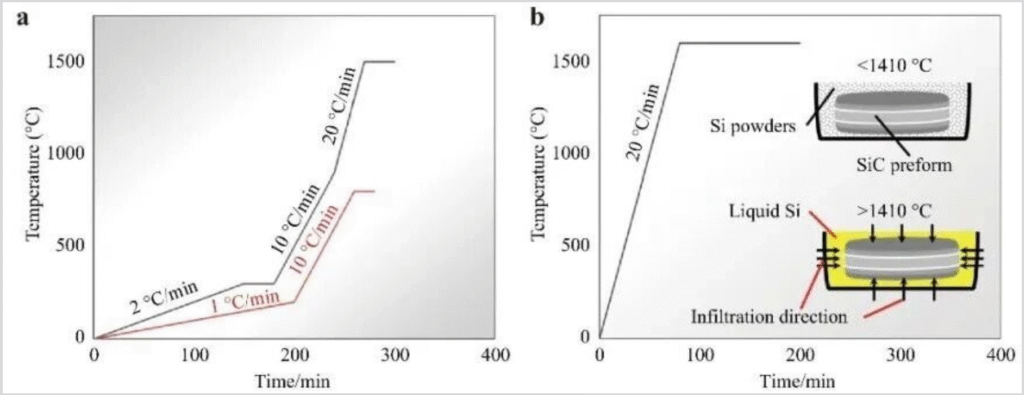
Sintering process: a) debinding and carbon precursor infiltration + pyrolysis; b) reaction melt infiltration
The focus of the research is to reduce residual silicon by increasing the carbon content in the preform.
Although carbon precursor infiltration and pyrolysis techniques have previously been used to achieve this goal, the large pore sizes in green bodies printed by the BJ process lead to incomplete reactions and residual carbon, which negatively affect optical performance.
The researchers propose a graphite addition method, incorporating graphite of various morphologies—such as nano-scale, micro-scale, flake, and fibrous—into the silicon carbide powder feedstock. The graphite plays a dual role: on one hand, it improves the flowability of the powder during the BJ printing process; on the other hand, it acts as a carbon source, promoting the conversion of residual silicon into secondary SiC during reaction melt infiltration.
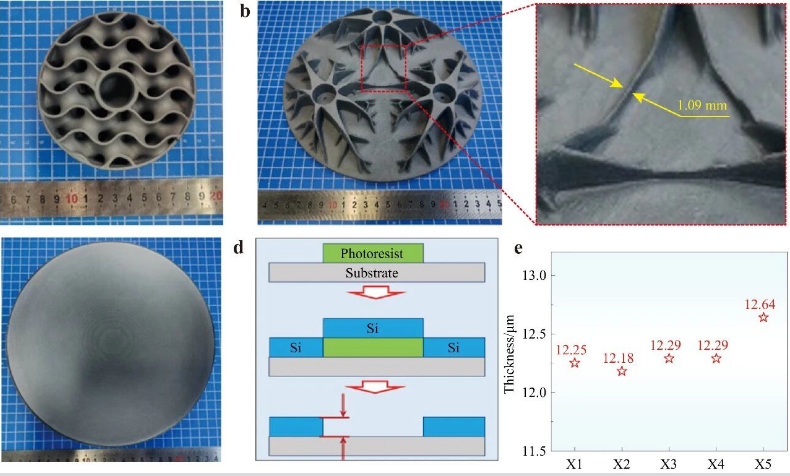
Si/SiC mirrors fabricated by 3D printing technology: a) with TPMS structure; b) with topological structure; c) after grinding; d) schematic diagram of film thickness measurement; e) film thickness measurement results
Among the evaluated graphite types, flake graphite exhibited the best performance. The study indicates that the flowability of the powder was significantly improved, and the density of the preform increased from 1.24 g/cm³ to 1.34 g/cm³.
The increase in preform density led to a more complete reaction during the infiltration process, with residual silicon content reduced by 18.18% and overall density increased by nearly 6%.
Mechanical and thermal properties were also enhanced, achieving a flexural strength of 268 MPa, an elastic modulus of 330 GPa, and a thermal conductivity of 127 W/(m·K).
Optical tests performed on the fabricated mirrors with complex geometries showed that the finished surface had a surface roughness of 0.772 nm RMS and a shape accuracy of 12.05 nm RMS, indicating their suitability for high-performance optical applications.
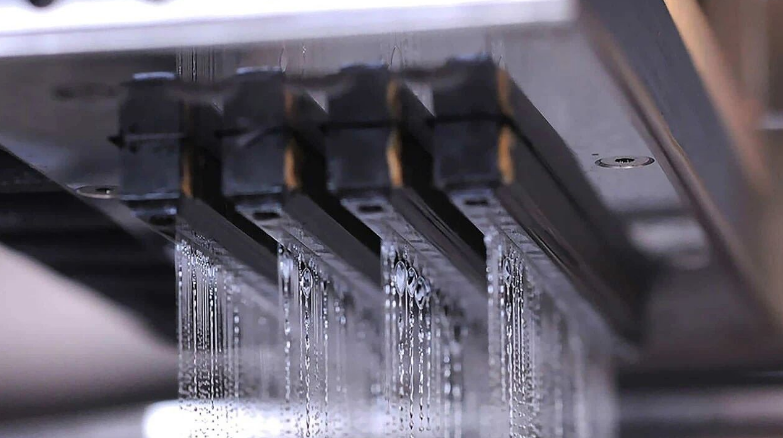
The researchers state that this study provides further evidence that the combination of binder jetting and reaction melt infiltration processes can achieve extremely high dimensional control precision, with a deviation of less than 0.5%, along with consistent porosity levels across samples.