

A joint research team from the Department of Mechanical, Aerospace, and Biomedical Engineering at the University of Tennessee and the Department of Mechanical and Mechatronics Engineering at the University of Waterloo has successfully demonstrated a breakthrough in metal additive manufacturing.
Using the Laser Powder Bed Fusion (LPBF) 3D printing process, the researchers fabricated AlSi10Mg aluminum alloy with highly hydrophobic structures and 4340 steel with fully oil-repellent surfaces.
What is a Hydrophobic Structure?
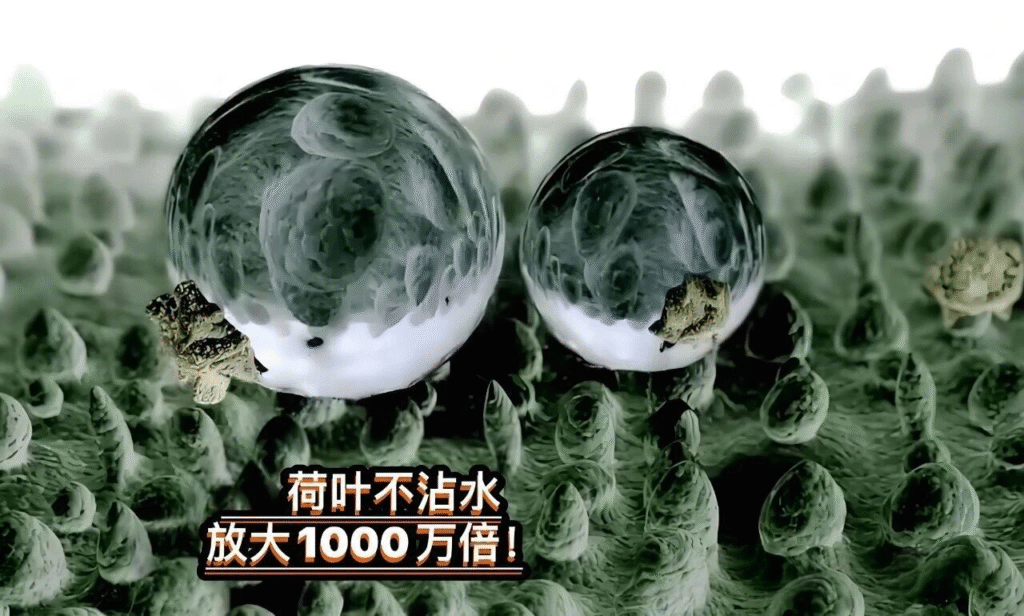
A hydrophobic structure refers to a surface engineered with special micro- or nano-scale patterns or chemical modifications that repel water molecules and resist wetting. Such structures typically feature tiny particles, ridges, or grooves that cause water droplets to bead up into nearly spherical shapes and roll off easily, thereby minimizing the contact area between water and the surface.
Value and Applications of Hydrophobic Structures
Water and oil resistance: Widely used in textiles, consumer electronics, and protective coatings to enhance durability.
Self-cleaning: Prevents dust and liquids from adhering to surfaces, enabling a “lotus effect.”
Anti-bacterial and anti-fouling: Reduces the adhesion of bacteria and contaminants in liquid environments, making it valuable for medical devices and food processing.
Lubrication and anti-corrosion: Applied to mechanical parts and metal surfaces to lower friction, reduce wear, and extend service life..
Emerging applications: Enhances the stability and reliability of flexible electronics, sensors, and implantable medical devices.
The development and application of hydrophobic structures not only improve material functionality but also bring transformative performance and protective benefits to industries such as electronics, healthcare, and aerospace.
Material Selection
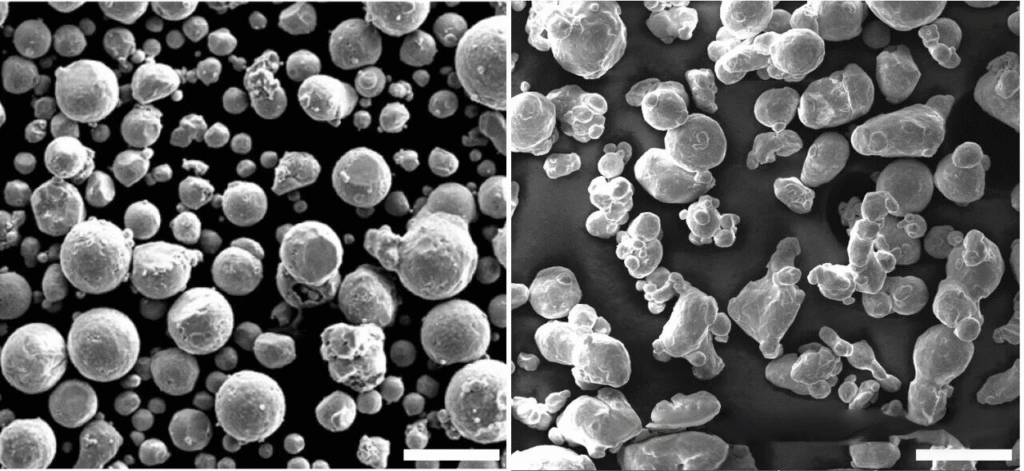
The researchers employed metal 3D printing technology to fabricate surfaces with hydrophobic structures, using gas-atomized AlSi10Mg powder (20–63 µm in diameter, with a median particle size of approximately 44 µm) and water-atomized 4340 steel powder (27–63 µm in size, with a median particle size of approximately 46 µm). Notably, the two powders exhibited significant differences in sphericity.
Surface Texture Structure Design
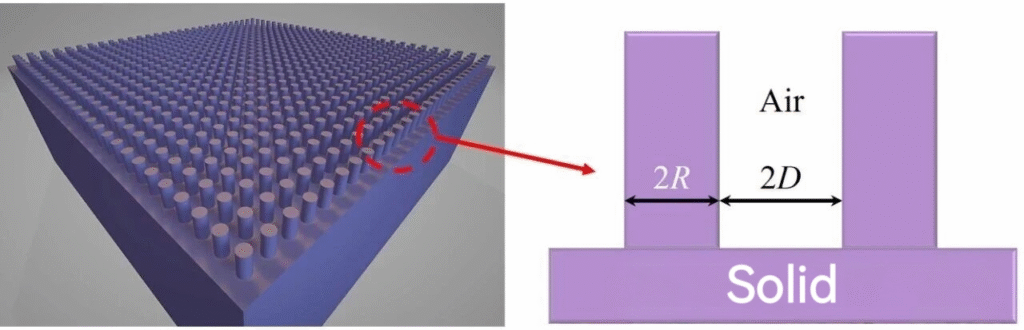
In terms of structural design, micro-pillar arrays with varying pillar sizes and inter-pillar spacing were created using CAD software. The laser scanning path was carefully configured with slicing software to ensure that only two exposure points occurred at each pillar cross-section. This approach generated adjacent melt pools, which subsequently formed the micro-pillars.
Surface Morphology Treatment
The 3D-printed metal surfaces were cleaned sequentially by ultrasonic treatment in ethanol and deionized water, followed by rinsing with deionized water and drying with compressed air. The cleaned samples were then exposed to oxygen plasma for 10 minutes. After plasma treatment, the samples underwent vapor-phase silanization at 110 °C for 1 hour to impart a low solid surface energy.
Morphology of 3D-Printed Metal Surfaces
Micro-pillar arrays with varying pillar sizes and inter-pillar spacing were fabricated from aluminum and steel using the L-PBF technique. The textured micro-pillars on the aluminum alloy surfaces were relatively smooth, whereas those on the steel surfaces exhibited small granular features—in other words, a layered structure.
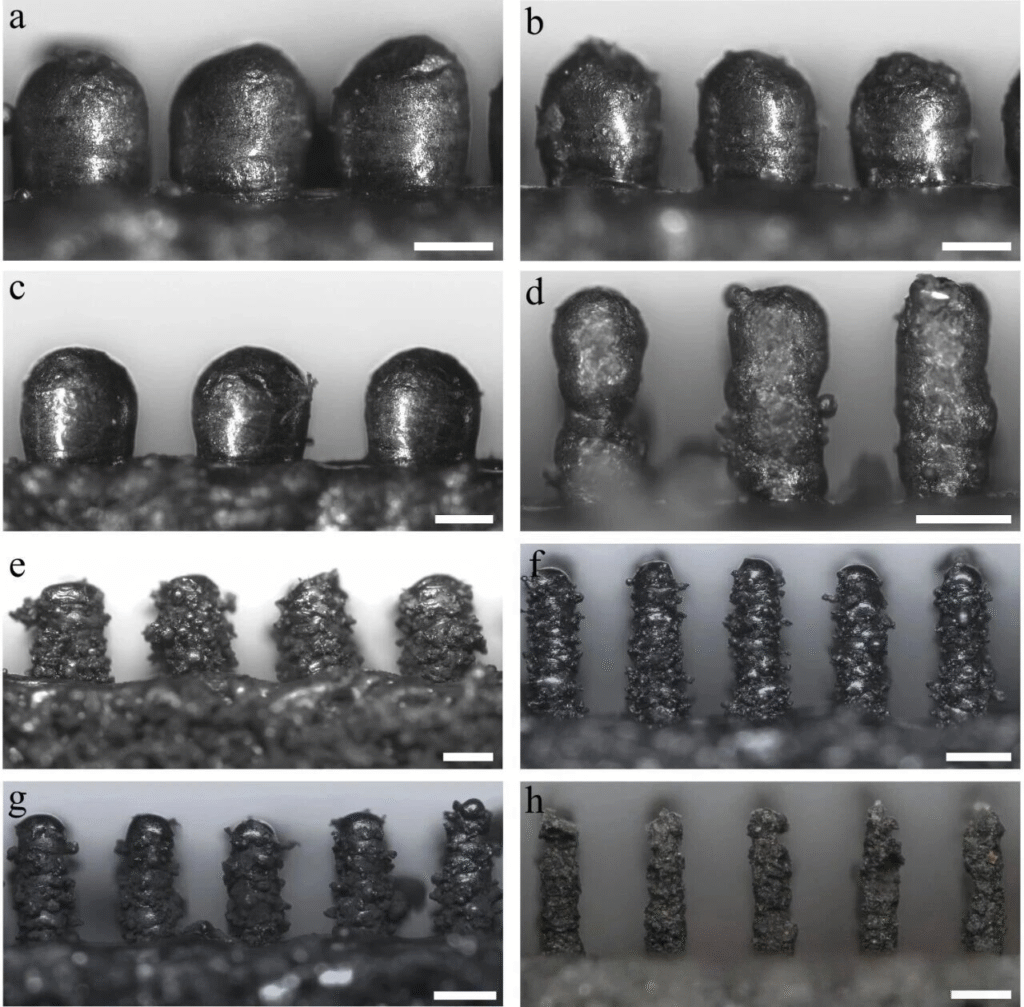
a–d, Aluminum alloy micro-pillars; e–h, Steel alloy micro-pillars
Liquid Repellency Tests
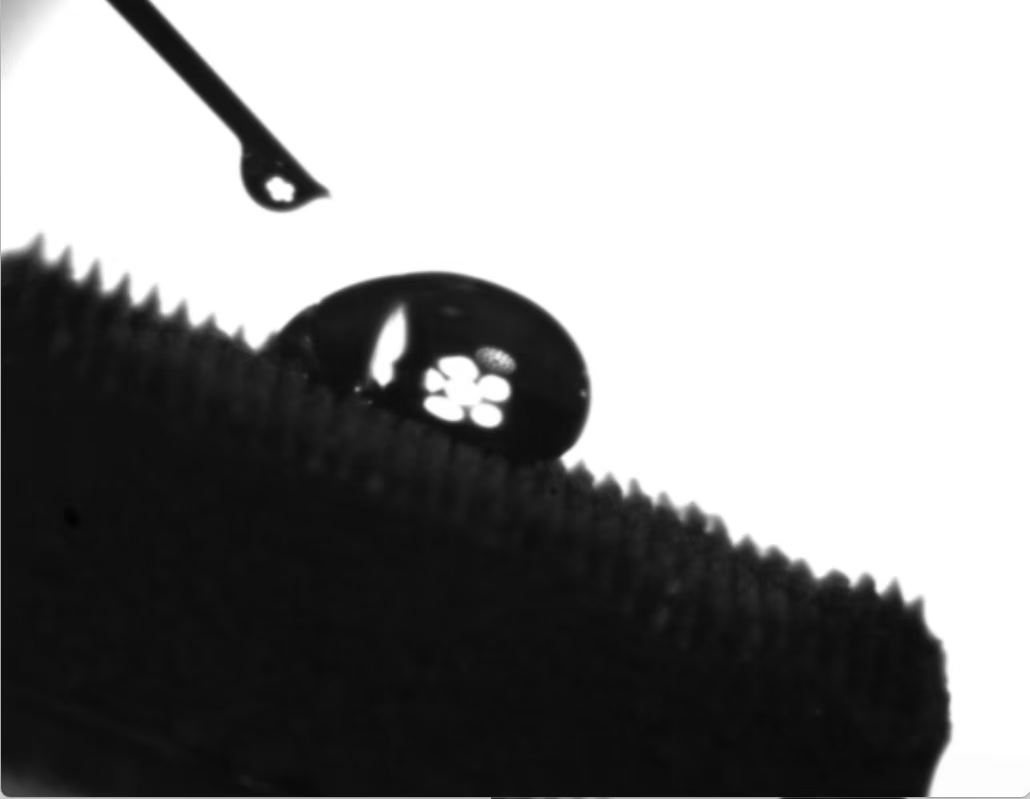
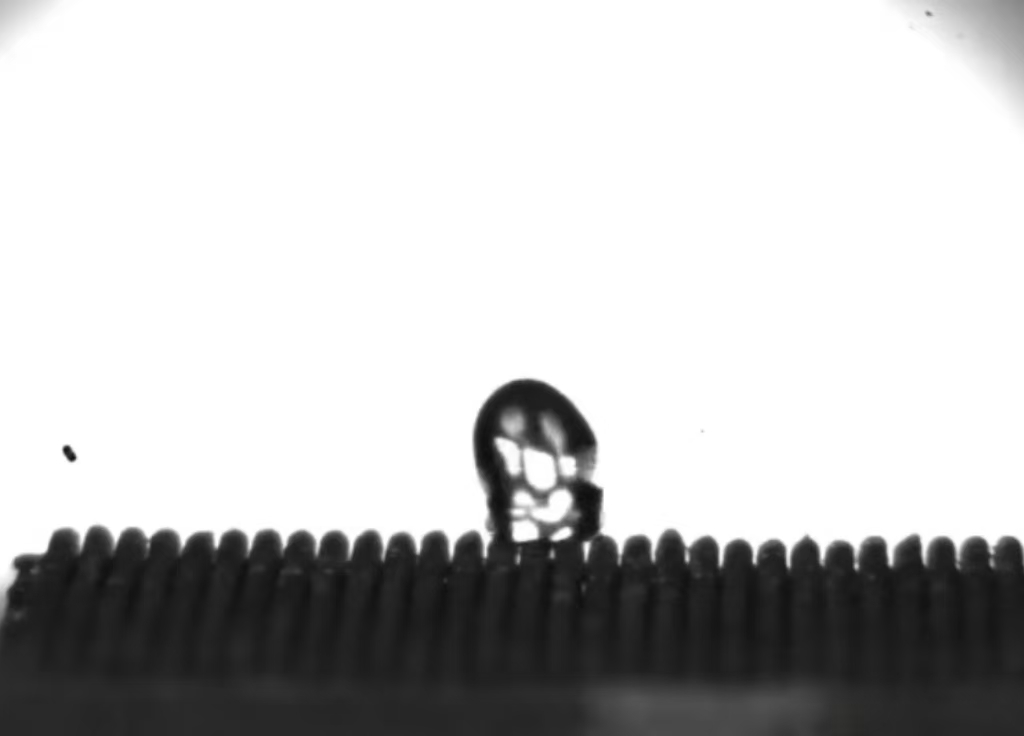
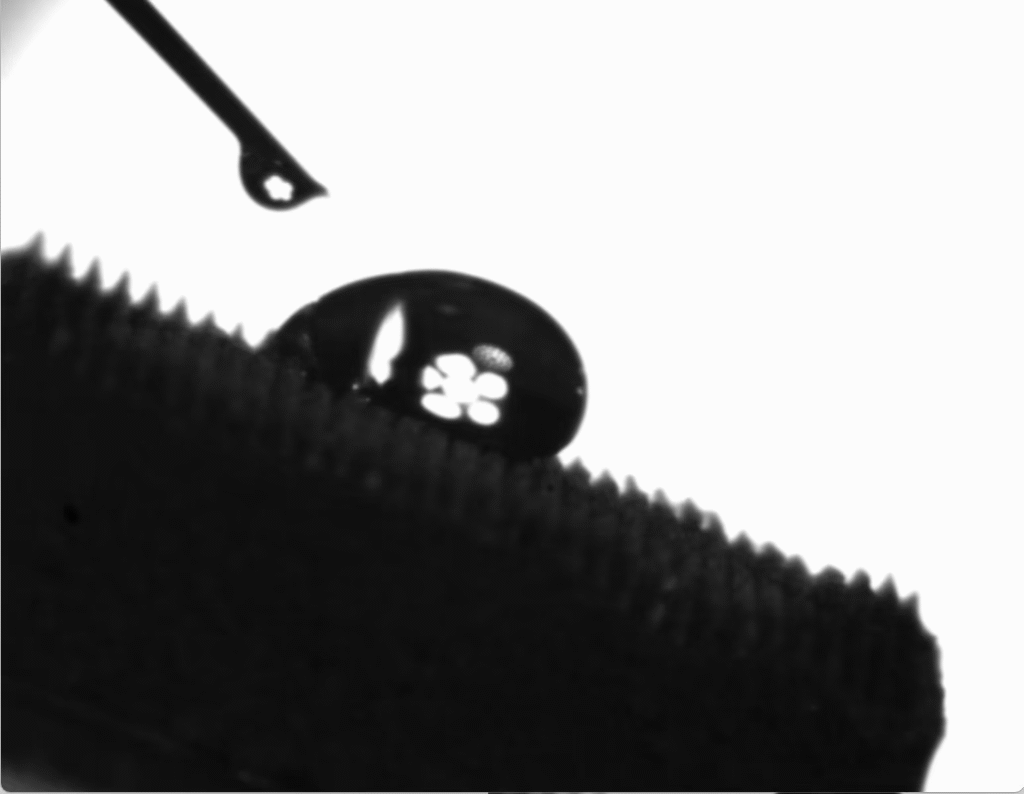
After fluorosilane treatment, the aluminum alloy surface exhibited a high water contact angle, increasing from approximately 138° to about 151°, indicating strong hydrophobicity. Air cavities were observed between the water droplets and the aluminum alloy surface, further enhancing the surface’s hydrophobicity. This state arises from the synergistic effect of the micro-pillar structures and the low-surface-energy coating. Moreover, water droplets could roll off the textured aluminum alloy surface without remaining pinned. However, hexadecane droplets displayed partial wetting on the textured aluminum alloy surface.
In contrast, due to the hierarchical structures, the steel alloy surfaces exhibited omniphobic behavior, repelling both water and oil. On the other hand, the aspect ratio of the micro-pillars also influenced the wetting behavior of the liquids.
The researchers further subjected the metal surface textures to multiple durability tests, including tape-peel tests, ultrasonic cleaning, and sandpaper abrasion. They found that these treatments had almost no effect on the hydrophobicity of the materials (although coarser sandpaper abrasion could induce some changes), demonstrating that the textured structures produced by metal 3D printing hold significant potential for durable applications.
This study represents the first academic report of fabricating metallic structures with functional surfaces using 3D printing technology, providing evidence that such functionalities can indeed be realized, and suggesting that future progress may be achieved in relevant application fields.