

In recent years, the nuclear industry has increasingly adopted 3D printing technologies. Examples include a 3D-printed impeller installed in a Slovenian reactor in 2017; channel fasteners installed by Oak Ridge National Laboratory in a U.S. reactor in 2021; and in 2022, Framatome installed the first 3D-printed stainless-steel fuel assembly component at Sweden’s Forsmark nuclear power plant. Several Chinese additive manufacturing companies, such as Hanbang Laser, have also applied the technology in this field.
On November 29, 2025, Russia’s State Atomic Energy Corporation (Rosatom) announced that the first 3D-printed component for its RITM-200 small modular reactor (SMR) has been approved by regulators.
The first additively manufactured part is a component of the nuclear power plant’s pumping equipment—a terminal box—produced by the I. I. Afrikantov Experimental Design Bureau for Mechanical Engineering, a division under Rosatom’s mechanical engineering arm. The part has been certified by the Russian Maritime Register of Shipping.
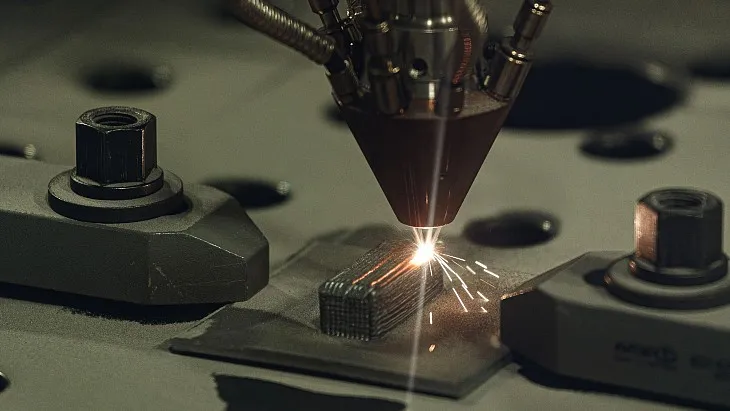
The implementation of the project has enabled the team to gain valuable experience in manufacturing reactor equipment components using additive manufacturing, and it will contribute to the development of regulatory documentation in this field. This, in turn, will support the production of more complex and precise parts for the RITM-200 using 3D printers.
The RITM-200 reactor is currently used in Russia’s nuclear-powered icebreakers and forms the technological basis for planned floating and land-based small modular reactor (SMR) plants. According to Rosatom, these prototype units underwent comprehensive testing prior to receiving regulatory approval.
3D-Printed Components for the RITM-200 Nuclear Reactor
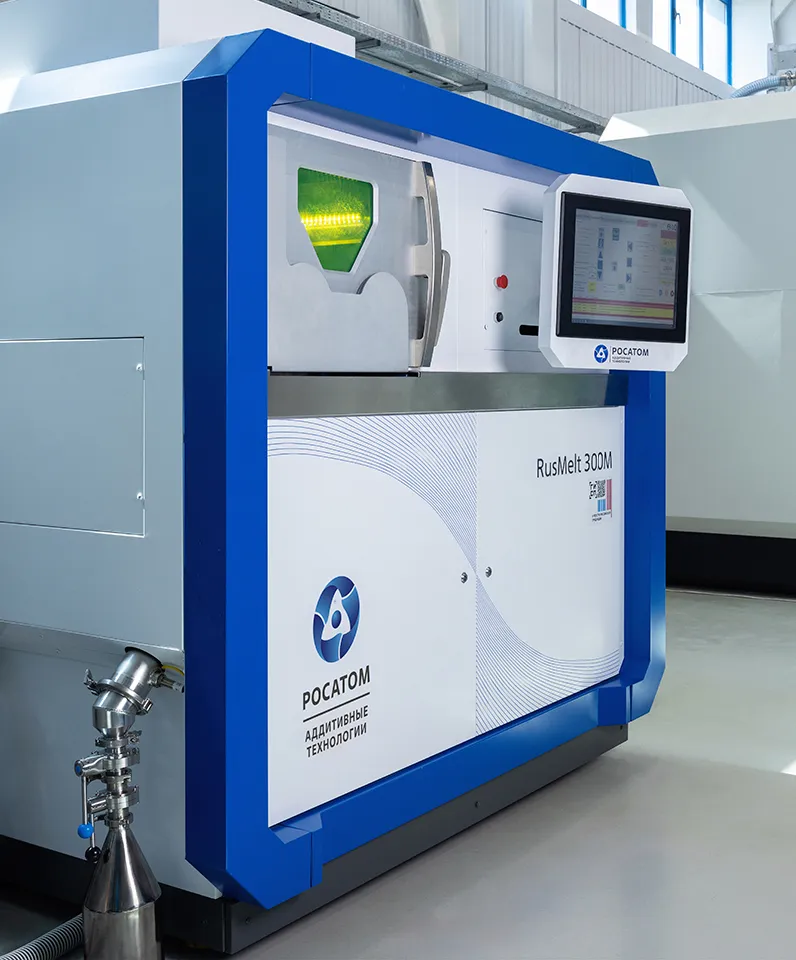
In this case, the RITM-200 pump equipment component was 3D printed using the Ilist-L+ system, jointly developed and manufactured by Rosatom and St. Petersburg State Marine Technical University.
These components were produced at Rosatom’s Additive Manufacturing Technology Center in Nizhny Novgorod, located within the Afrikantov OKBM facility. The center was established in 2023 with the participation of the Additive Manufacturing Technology Business Unit of Rosatom’s Fuel Division.
The development of the RITM-200 reactor unit integrates over 60 years of experience in operating nuclear-powered vessels and incorporates all modern technological achievements, including 3D design, computational programs, and supercomputers. Combining high power, safety, and compactness, the RITM-200 meets the most important criterion for universal nuclear icebreakers—variable draught. This ensures wide applicability, high reliability, strong safety performance, environmental friendliness, and cost efficiency.
In addition to the lead Project 22220 nuclear icebreaker Arktika, the Russian nuclear icebreaker fleet currently operates Sibir, Ural, and Yakutia, while Chukotka, Leningrad, and Stalingrad are under construction—the latter of which was launched on November 18.
The RITM-200 reactor unit has demonstrated high efficiency under the harsh conditions of the Far North and has become the foundation for multiple energy solutions, such as floating power plants and small nuclear power plants, capable of supplying electricity to remote regions both domestically and abroad. A series of floating power units is currently under construction to supply major industrial consumers in Chukotka. Additionally, a Small Nuclear Power Plant (SNPP) equipped with the RITM-200 is being developed in Yakutia and Uzbekistan.
Yuri Vitrenov, Chief Technical Expert at Afrikantov OKBM, stated: “The regulatory approval for the first RITM-200 reactor component manufactured using additive technologies opens the way to further replication of 3D printing and to manufacturing a wide range of equipment for marine nuclear power plants as well as for other types and purposes within the nuclear industry.”
This marks the first time Russia has applied 3D printing technology to reactor components, although additive manufacturing has previously been used for testing equipment and process tooling. Ilya Kavelashvili, Head of the Additive Manufacturing Business Unit at Rosatom’s Fuel Division, stated: “The use of additive technologies in producing RITM-200 components demonstrates the high technological maturity of Russian industry. The application of 3D printing opens new possibilities for design and production. We can manufacture parts with more optimized geometries and improved performance. This not only enhances equipment efficiency and reliability but also reduces weight and lowers costs.”
This is the first instance in which Russia’s nuclear industry has produced a reactor unit component using 3D printing. Previously, additive manufacturing had primarily been applied to desktop equipment parts, process tooling, and prototype models. The adoption of additive technologies in industrial applications can extend product lifespan, improve economic efficiency, and reduce labor costs.