

FDM 3D printing has enormous application potential in both consumer and industrial markets, but issues such as rough surfaces, weak interlayer adhesion, and visible layer lines have limited its use in professional applications.
A new extrusion-based 3D printing technology can fuse and smooth each layer in situ during printing. Parts produced using this method can achieve surface roughness as low as 2 micrometers, delivering surface quality comparable to injection molding, along with lower porosity. According to the company’s founder, this new 3D printing process is capable of producing parts that truly meet injection-molded quality standards.
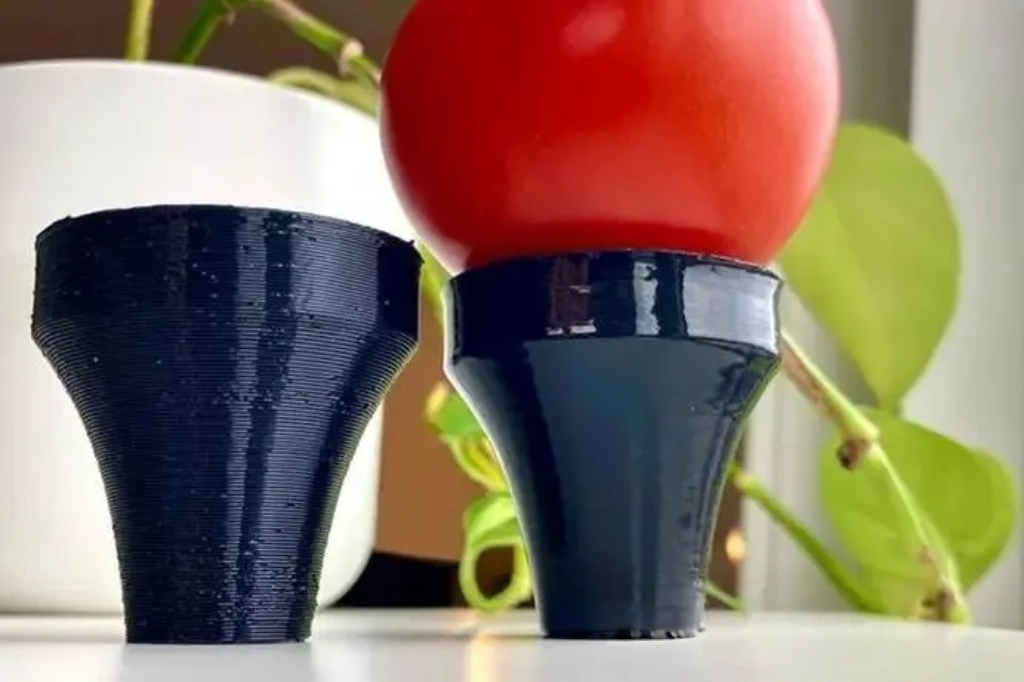
Comparison of Surface Quality Between Parts Manufactured by Traditional FDM and HFD Technology
Surface Roughness Reduced to as Low as 2 μm
Smoother, Denser, and Waterproof
The Hyperflow Fusion Head (HFH) 3D printing technology makes it possible to produce fused filament fabrication (FFF) parts with injection-molding-grade surface quality. During the FFF printing process, HFH uses high-intensity electromagnetic waves to selectively fuse specific regions of the printed layers according to design requirements. These high-intensity electromagnetic waves essentially act as a controllable and reliable heat source.
In addition to delivering smoother surfaces, this technology is also suitable for parts used in autonomous medical devices and cleanroom applications. Compared with the typical surface roughness of about 20 μm in conventional FDM-printed parts, components manufactured using HFH 3D printing technology can achieve surface roughness as low as 2 μm.
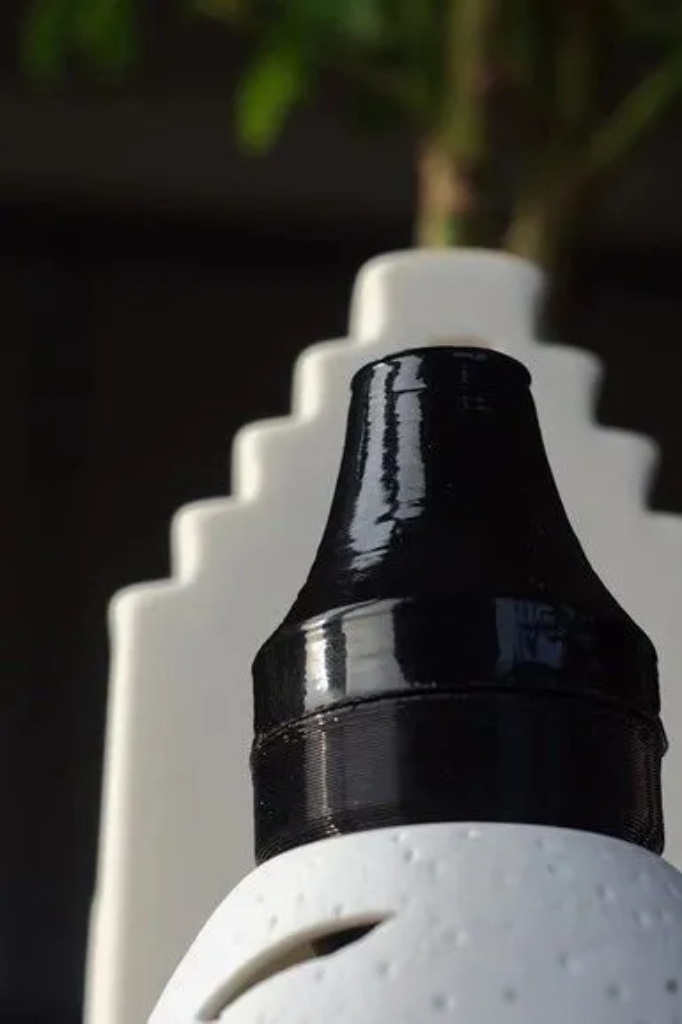
The HFH smoothing function can be applied to the entire part or selectively to specific critical areas.
Using HFH technology increases printing time, mainly depending on the geometry and material, with build times typically rising by 10% to 50%. Even so, this approach is still faster and more cost-effective than performing separate post-processing steps after printing, such as vapor smoothing.
HFH technology not only treats the external surfaces of parts but also smooths internal surfaces simultaneously during the printing process. In terms of material compatibility, the technology already supports mainstream printable materials, including PLA, PETG, ABS, and polypropylene (PP).
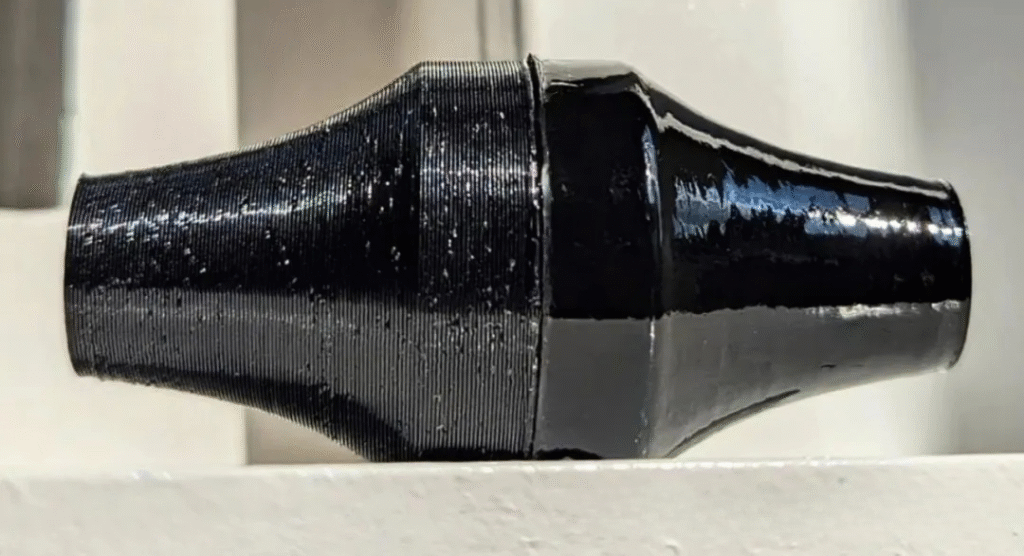
HFH-printed 3D parts exhibit smoother, denser, and more watertight characteristics, with an internal material structure that is closer to isotropic. Components produced using this method are also stronger than those made with conventional FFF printing strategies. According to tensile test results on the company’s PLA samples, material strength in the deposition direction increased by approximately 20%.
In addition, one of the main reasons Hyperflow 4D is interested in this technology is the significant improvement in surface integrity. This enhancement enables many industries to benefit from 3D printing, such as food processing, pharmaceuticals, semiconductors, and other sectors with strict requirements on surface finish and layer lines. However, traditional FDM/FFF technologies pose contamination risks, which have limited their practical adoption in these fields.

Comparison of layer lines between standard FFF and HFH
Adopted by high-end manufacturing industries
Significantly reducing costs
A semiconductor research institute has already adopted HFH technology. In its work, customized fixtures and cleanroom tools are required for acidic chip testing. According to available information, a single customized fixture would normally cost about €650, with a demand of only 10 units. Even when using conventional desktop FDM 3D printers, the parts produced could not meet usage requirements due to visible layer lines.
After switching to a Hyperflow 4D printer, not only did the surface quality meet the required standards, but the cost was reduced to around €20 per part.

In addition, companies usually choose external service providers to manufacture such jigs and fixtures, which can raise data security concerns. By purchasing this new type of machine for in-house use, production can be carried out internally, while the dense and smooth parts produced using HFH can help companies save both time and manufacturing costs.
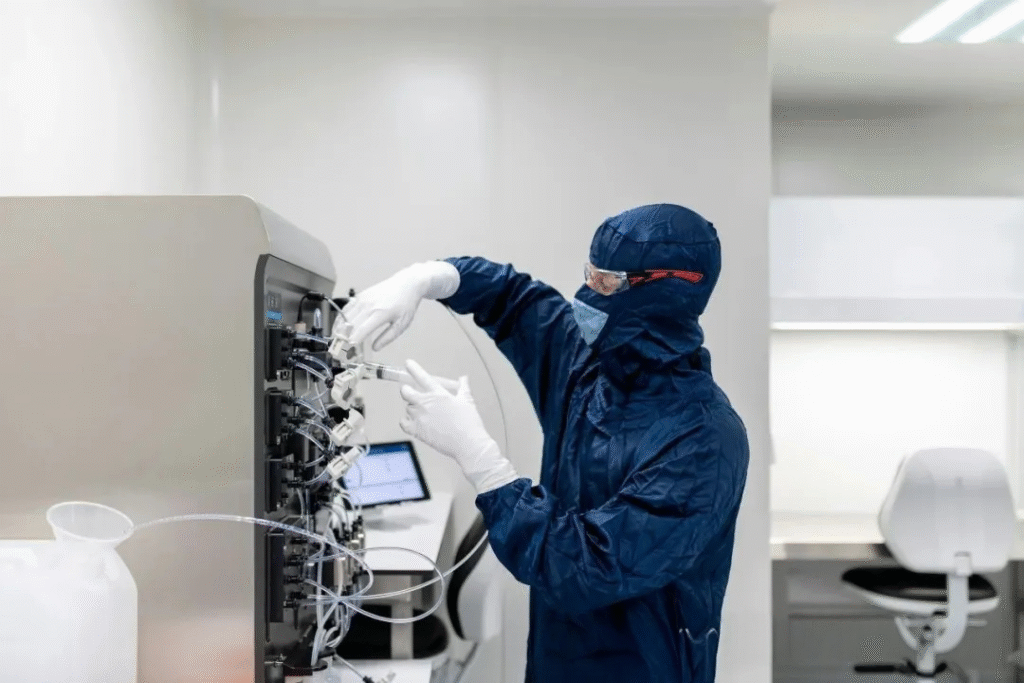
This technology can be applied in scenarios such as ultra-clean rooms, medical products, and food packaging production lines.