

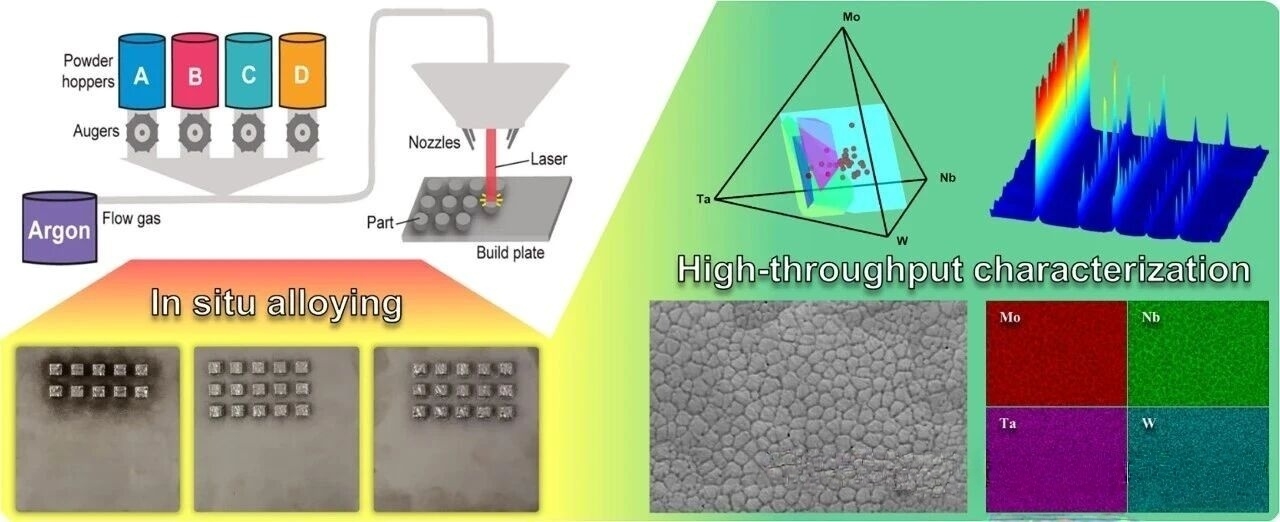
Scientists at the Lawrence Livermore National Laboratory (LLNL), a national research institution under the U.S. Department of Energy, have recently conducted a study showing that the performance of 3D printed metals can be precisely adjusted during the manufacturing process. The research team revealed how the cooling rate affects the atomic structure during the solidification of high-entropy alloys by altering the laser scanning speed during printing. The findings suggest that material performance can be directly adjusted through process parameters without the need for post-processing or alloy redesign.
These results directly address a major barrier to the application of metal 3D printing due to the uncertainty in material performance, helping the technology gain broader adoption.
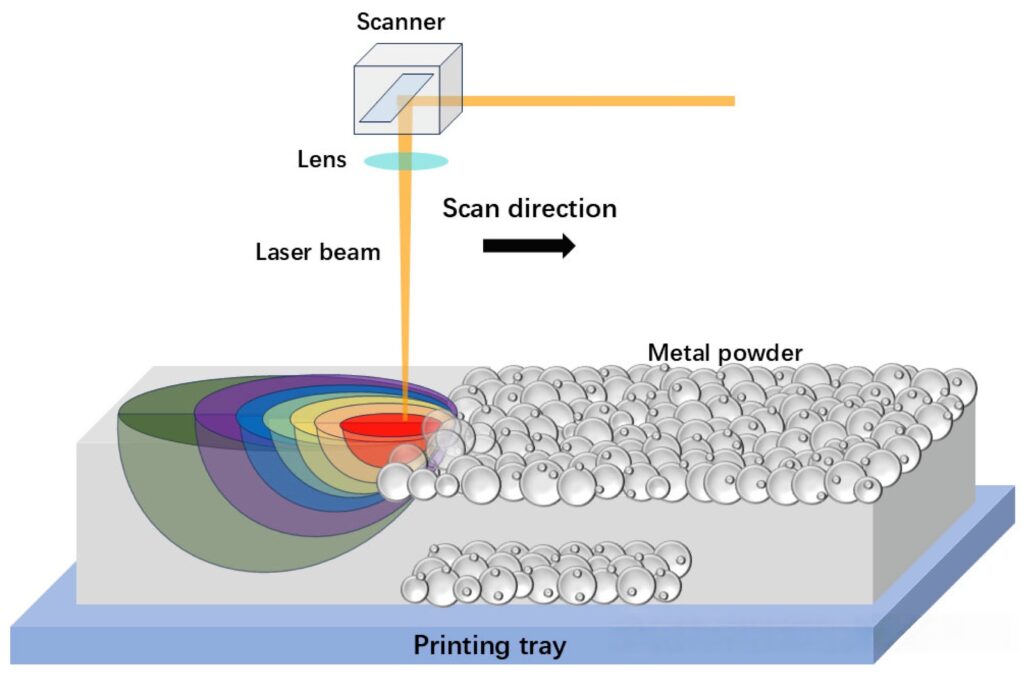
Challenges Faced in Predicting Metal Additive Manufacturing Performance
Although metal additive manufacturing technology can produce complex-shaped components for aerospace and defense applications, it is still difficult to confidently use it for critical applications that require high-performance materials, mainly due to the unpredictable nature of material properties. The rapid melting and solidification during the printing process result in non-equilibrium microstructures, which can lead to significant variations in strength, ductility, and fracture toughness, even with identical standard process parameters.
Lawrence Livermore National Laboratory (LLNL) points out that high-entropy alloys, which contain multiple major elements rather than a single base metal, offer a broader design space than traditional alloys. Their complex chemical composition allows them to exhibit a wide range of mechanical properties but also makes them highly sensitive to the thermal history during the printing process. Even small differences in cooling rates can significantly alter atomic arrangements and, consequently, the final material properties, further exacerbating the challenges in predictability.
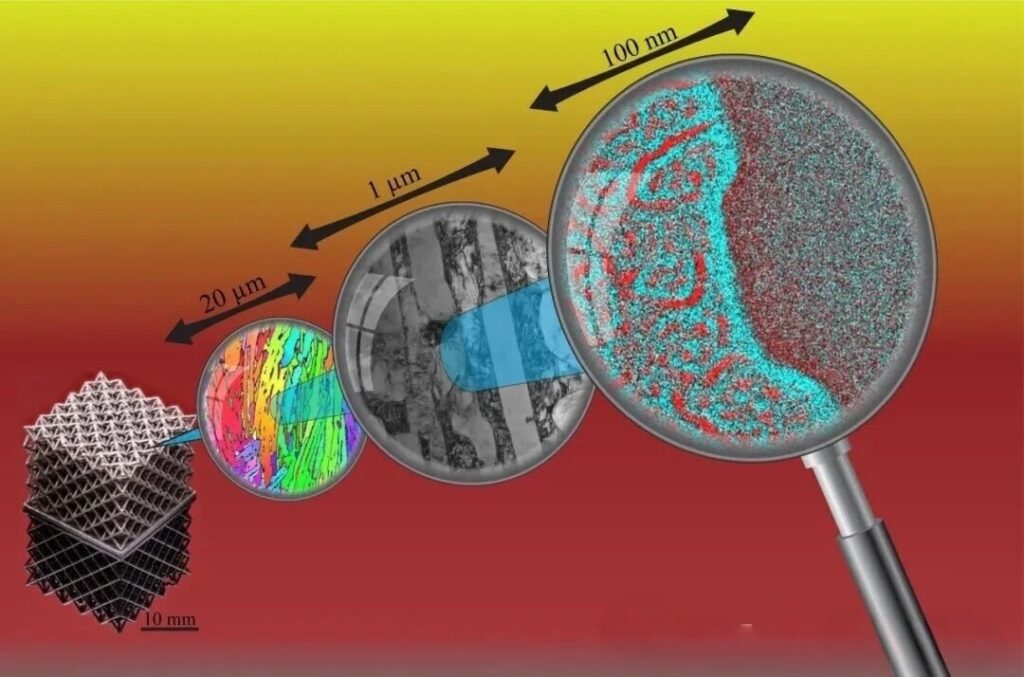
University of Massachusetts Team Develops High-Performance Nano-Structured Alloys with Both Ultra-High Strength and High Ductility
Programming Atomic Structure with Laser Speed
To study how process parameters influence material properties, a research team led by LLNL combined thermodynamic modeling with molecular dynamics simulations of metal additive manufacturing. The researchers analyzed how laser scanning speed affects the cooling rate during the solidification process, which in turn impacts the arrangement of atoms in complex alloy compositions.
The results showed that a faster laser scanning speed increases the cooling rate, limiting the time atoms have to rearrange into low-energy configurations, which locks the material into a non-equilibrium atomic structure. Slower scanning speeds, on the other hand, allow more atomic rearrangement, resulting in a structure closer to thermodynamic equilibrium.
This process-level control enables direct tuning of strength and ductility within the same alloy system. Rapid cooling improves strength but increases brittleness, while slower cooling provides more balanced mechanical properties. This method requires no change in the alloy composition; instead, performance can be adjusted by modifying a single printing parameter.
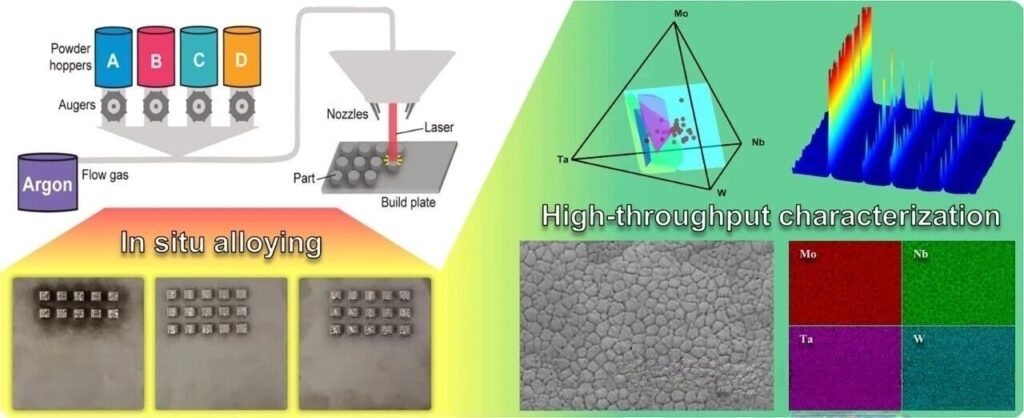
High-Throughput Synthesis of Mo-Nb-Ta-W High-Entropy Alloys Using Additive Manufacturing Technology
“We are now able to effectively design new materials that fully utilize the characteristics of additive manufacturing, such as extremely fast cooling rates,” said Deputy Team Leader Thomas Worthen.
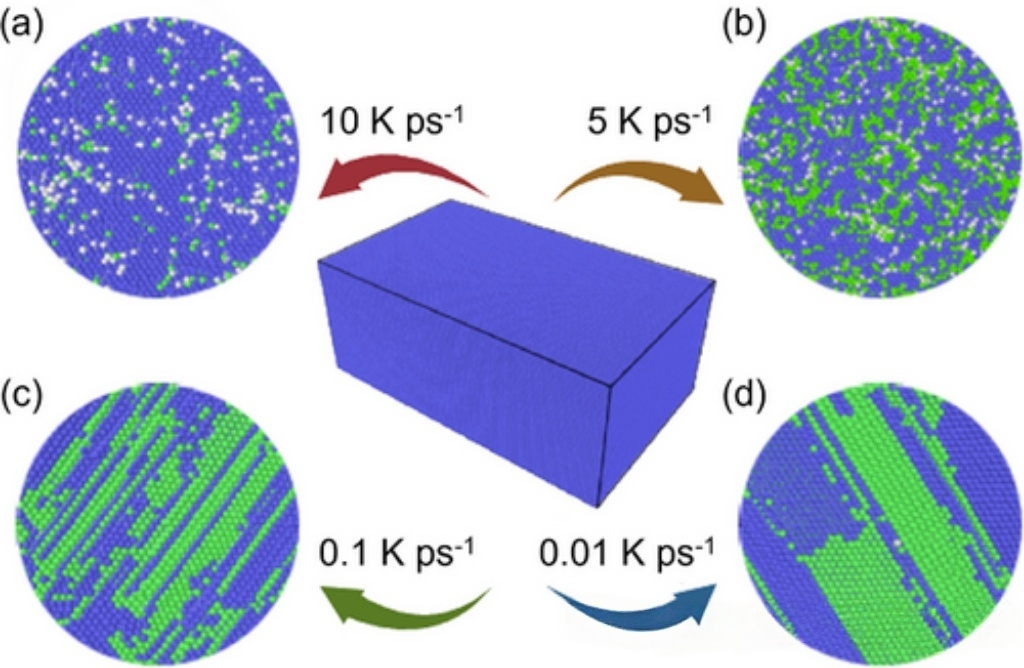
Room-Temperature Cross-Section of AlCrFe2Ni2 High-Entropy Alloys Solidified at Different Cooling Rates (300 K)
The cooling rates used are 10 K/ps, 5 K/ps, 0.1 K/ps, and 0.01 K/ps. The blue, green, and white spheres correspond to BCC, FCC, and amorphous atoms, respectively. The central box represents the initial lattice, which corresponds to the BCC structure (represented by blue spheres).
Although research at LLNL indicates that in metal additive manufacturing, atomic structures can be influenced by controlling the laser scanning speed, these findings are based on thermodynamic modeling and molecular dynamics simulations of high-entropy alloys and have yet to be verified in certified large-scale part production. Nonetheless, this work suggests that process parameters can be intentionally used to influence material performance, rather than viewing microstructural changes as an unavoidable consequence.
Adjustable Performance is Crucial in Applications
The ability to adjust mechanical performance in metal additive manufacturing addresses a fundamental challenge in the field: the uncertainty of the performance of final-use parts. In industries like aerospace, defense, and energy, engineers cannot design or certify parts based on various potential material outcomes. Mechanical properties must be pre-determined to meet certification, safety, and reliability requirements. However, traditional metal additive manufacturing processes often lead to microstructural differences, as even slight changes in thermal flow can cause significant variations in atomic structure.
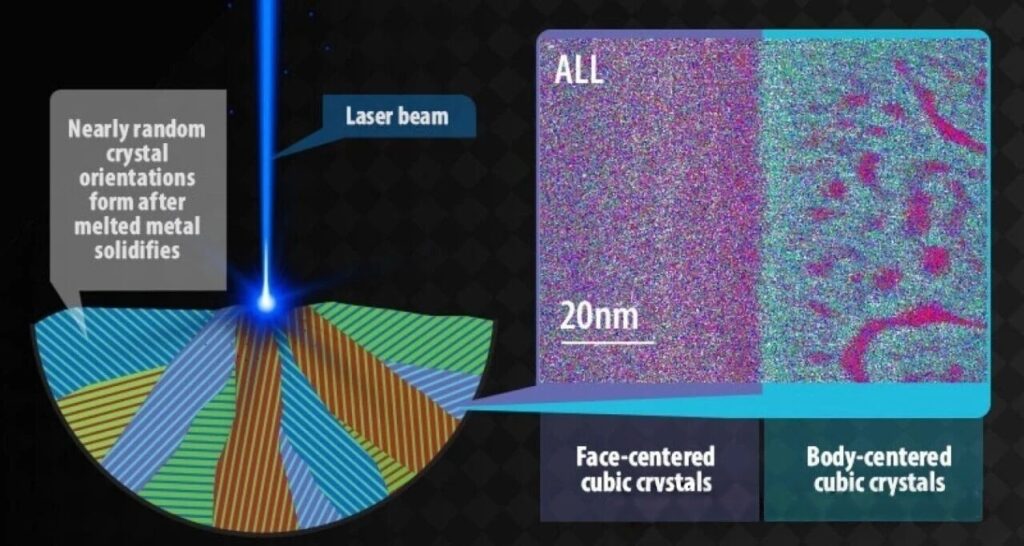
High-Entropy Alloys Manufactured through Additive Manufacturing
Recent studies indicate that the academic community is making efforts to reduce the uncertainty associated with material performance in additive manufacturing. Research has shown that the cooling rate during the laser powder bed fusion (LPBF) process can affect the grain structure, toughness, and corrosion resistance of the material. Other research teams have developed tools that can predict and influence the microstructure of nickel-based high-temperature alloys by adjusting laser power and scanning strategies. These methods aim to align the properties of printed materials with design intent, but typically require extensive parameter optimization or adjustments tailored to specific alloys.