

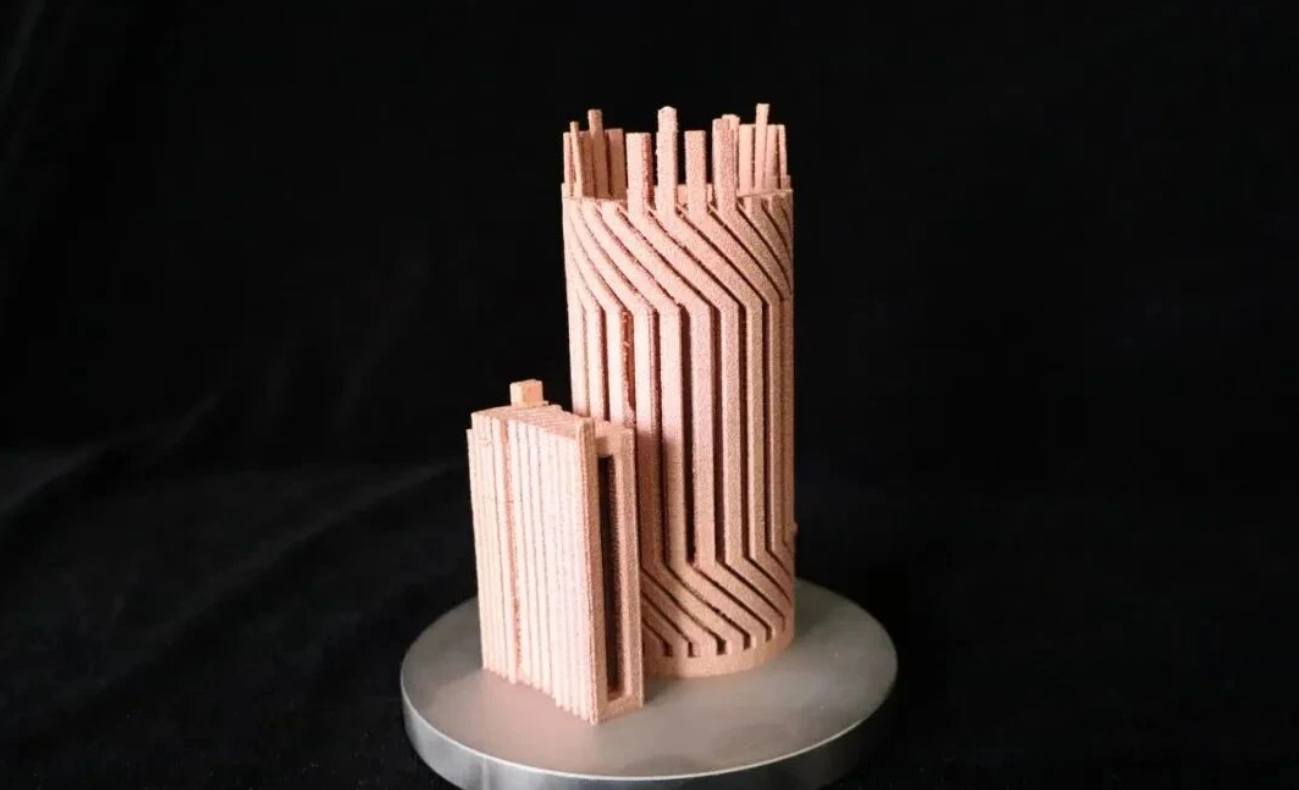
Electron Beam Spot Printing Technology
Spot printing / spot melting is one of the latest developments in electron beam 3D printing. It changes the traditional additive manufacturing approach of building parts from lines to surfaces and then to volumes.
Instead, the technology uses electromagnetic coils to enable the electron beam to jump and dwell at precise points within microseconds. This allows the beam to create thousands of tiny melt pools on the powder bed, forming a micro-melt-pool array that ultimately enables the overall formation of the component.

Each melt pool in spot printing can be controlled individually, which creates favorable conditions for microstructure regulation and high-surface-quality manufacturing.
In practice, the independent control of micro-melt pools enables precise control over grain growth direction, such as achieving the transformation from columnar grains to equiaxed grains. At the same time, parts produced by spot printing can reach a surface roughness of less than 10 μm, representing a significant improvement over the surface quality typically achieved with conventional electron beam 3D printing.
In addition, spot printing technology also improves the forming quality of high-reflectivity and crack-prone materials, further expanding the range of materials suitable for electron beam additive manufacturing.
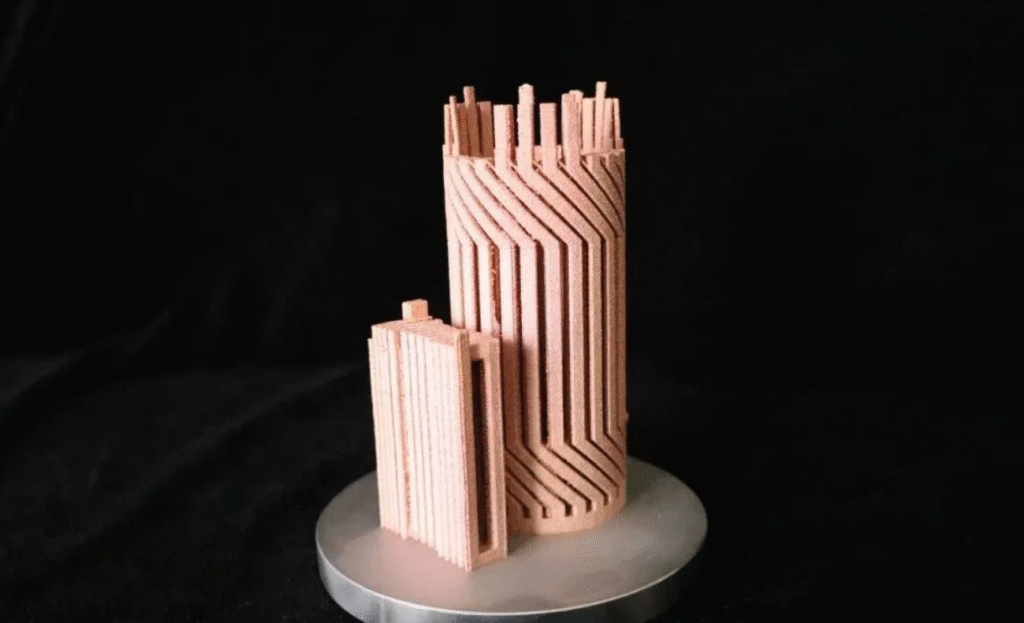
Copper Coil Manufactured by Spot Printing Technology
The system incorporates multi-point parallel melting and a high-speed beam deflection system, which further improves manufacturing efficiency.
In addition, it features an intelligent thermal-balance sensing and control system capable of “printing, sensing, and correcting simultaneously.” This means that process parameters during the 3D printing process can be adaptively adjusted in real time.
The core components of the electron beam spot printing equipment have all been independently developed, and a standardized process package has been established. This package covers a wide range of challenging materials, including difficult-to-weld materials, high-temperature alloys, refractory metals, and gradient composite materials.
Latest Case Study of Forging-Assisted 3D Printing Technology
An aero turbofan engine manufactured using this technology successfully completed its test run in 2025. At the TCT Asia, several representative cases were showcased, including key components for aircraft engines and rocket engines.
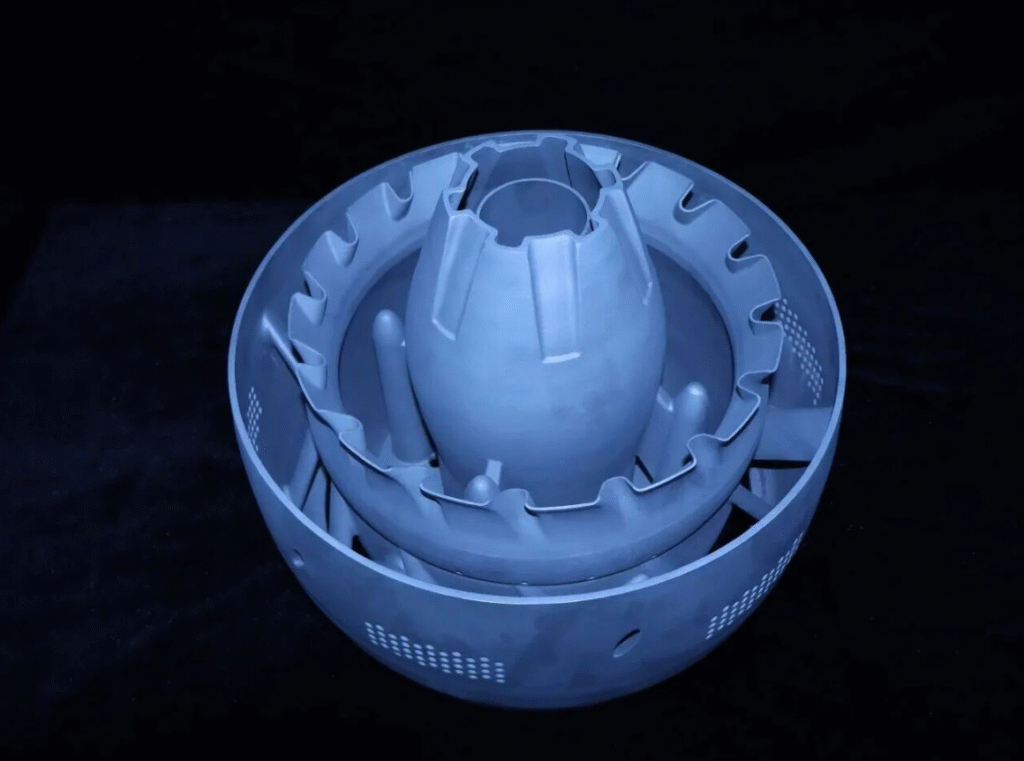
The first case is an aircraft engine combustion chamber, produced using GH3625 high-temperature alloy through 3D printing. The component measures Φ400 × 300 mm and features complex internal cavities and cooling structures, such as film cooling arrays and spoke-type reinforcing ribs.
Using forging-assisted 3D printing, the component is formed as an integrated structure in a single build, demonstrating the strong capability of additive manufacturing for producing highly complex geometries.
Moreover, impact strengthening is introduced layer by layer during the process, which significantly improves the fatigue strength of the component. This enhancement helps ensure that the aircraft is less prone to fatigue cracks during long-term flight operations.
Second Case: Liquid Rocket Engine Combustion Chamber Shell
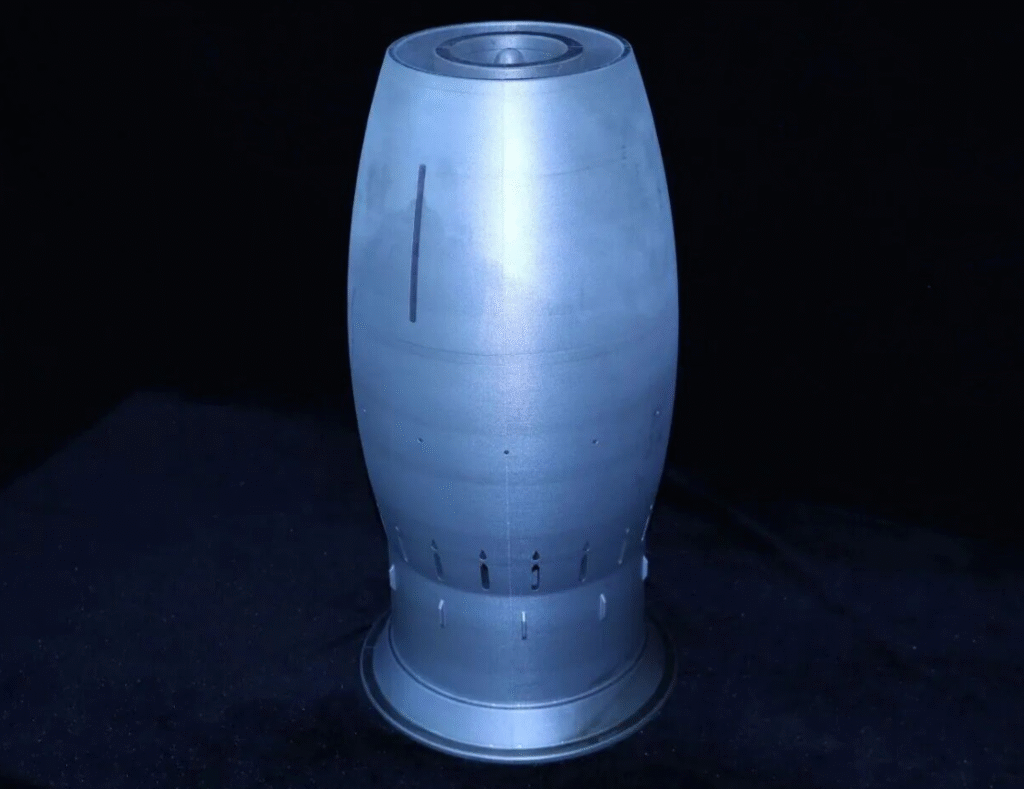
The second case is a liquid rocket engine combustion chamber shell, also produced using GH3625 high-temperature alloy through 3D printing. The component measures Φ300 × 500 mm.
The part incorporates complex internal flow channels and rib structures, including spiral ascending channels and radial reinforcing ribs. Using forging-assisted 3D printing technology, the component is integrally and precisely formed in a single build.
This manufacturing approach enables the combustion chamber to achieve high-efficiency regenerative cooling performance while maintaining excellent overall mechanical properties, ensuring that the rocket engine can operate reliably under extreme conditions.
Both cases demonstrate the strong adaptability of forging-assisted 3D printing technology to the aerospace industry’s needs for rapid iteration and high-performance manufacturing.
They also convey a clear concept: forging-assisted 3D printing can help aircraft engines “fly longer” and rocket engines “launch more reliably,” highlighting its potential to enhance both durability and stability in advanced propulsion systems.