

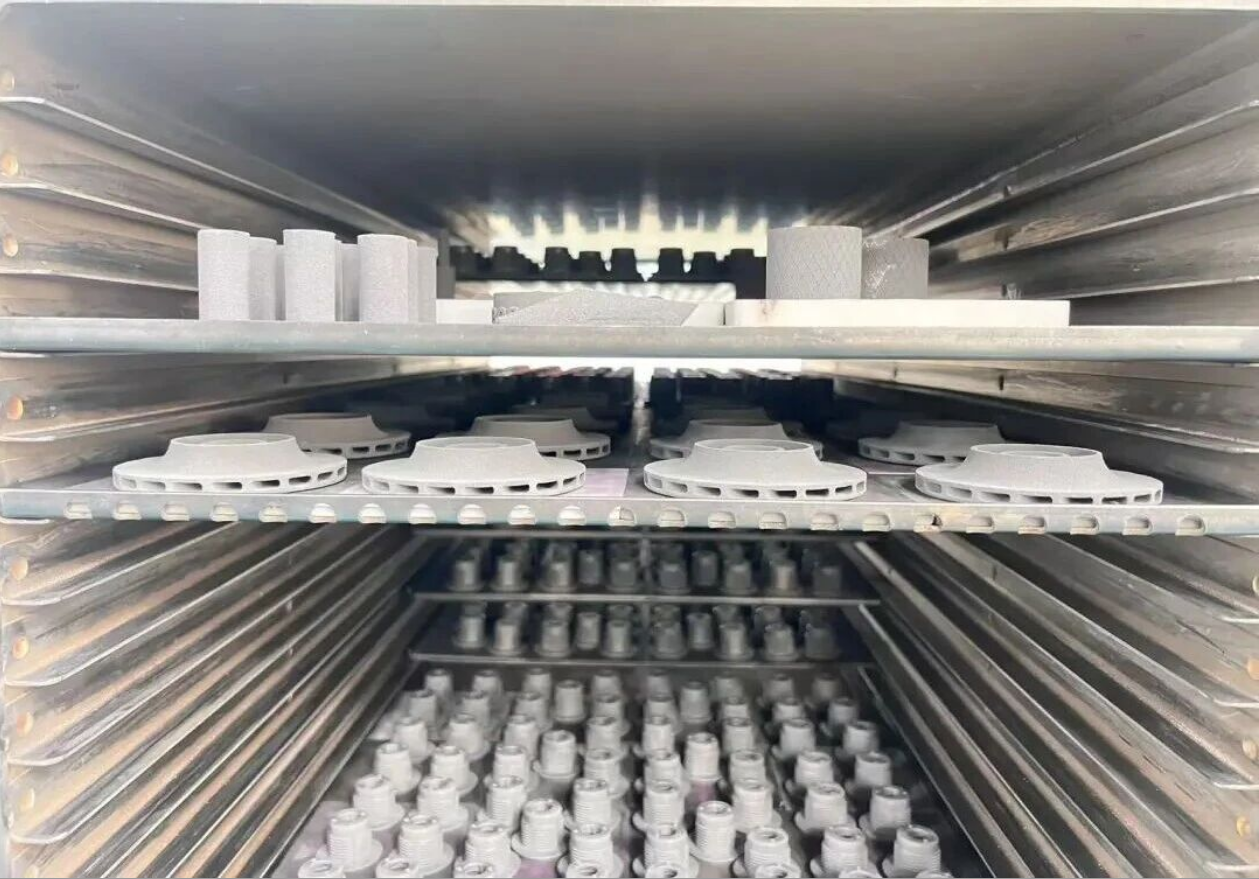
Cold Metal Fusion (CMF) is an indirect metal additive manufacturing technology that integrates the polymer SLS equipment platform with powder metallurgy Metal Injection Molding (MIM) processes through innovative development.
This approach overcomes the equipment barriers and cost limitations of conventional LPBF metal 3D printing technologies, making it a revolutionary solution for low-cost, large-scale production of metal components in the additive manufacturing industry.
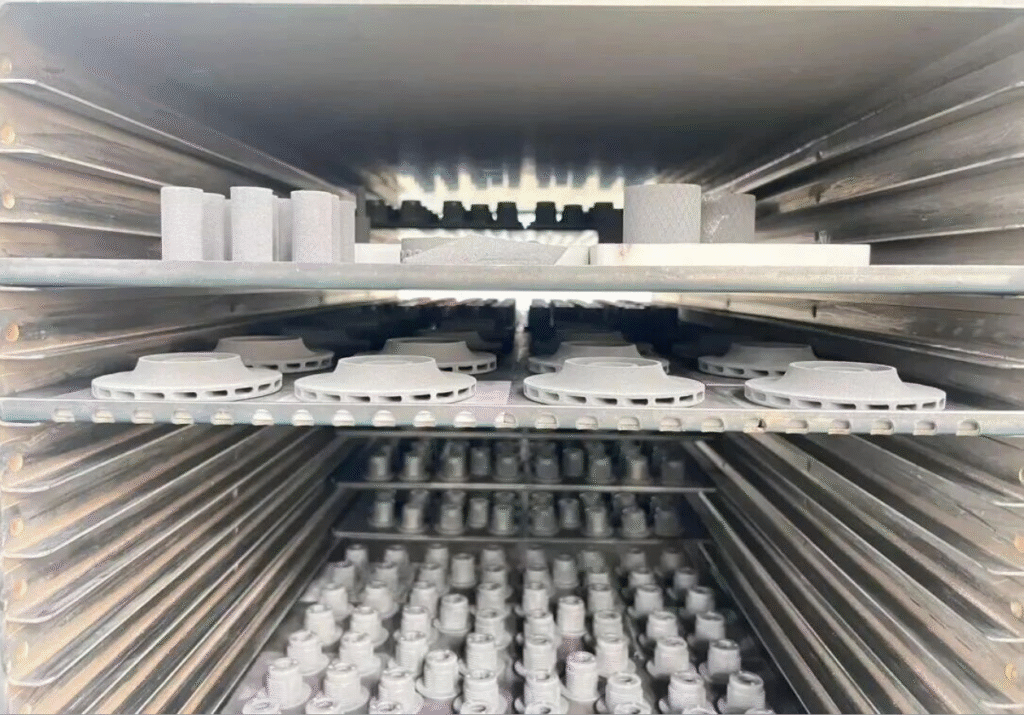
EOS New Titanium 3D Printing Technology
Titanium is a key material for manufacturing pumps and valves. Thanks to its excellent corrosion resistance, light weight, and biocompatibility, it offers outstanding durability in chemical, sanitary, and high-pressure environments. However, the final performance of titanium components depends not only on the material itself but also significantly on the manufacturing process.
For decades, the primary manufacturing methods for titanium alloys have been casting and forging, followed by additive manufacturing technologies such as laser melting, arc deposition, and electron beam melting. Today, sintering-based CMF (Cold Metal Fusion) indirect 3D printing technology is rapidly emerging. Its application positioning is very clear—serving as a powerful and scalable alternative to titanium casting.
So how does CMF 3D printing compare with traditional casting processes? Which process performs better in terms of performance, cost, and design freedom? The following section provides a detailed analysis.
Challenges of Titanium Alloy Casting
Titanium has always been difficult to cast. At high temperatures, it reacts readily with oxygen, which means foundries must use expensive vacuum or inert-gas protection equipment along with advanced melting technologies. This significantly increases both cost and process complexity, while also limiting design flexibility.
The major limitations of titanium casting include the following:
Complex Structures Are Difficult or Impossible to Produce
Molten titanium has poor fluidity, which makes it difficult to manufacture features such as thin walls, small radii, chamfers, internal channels, or sharp transitions.
In many titanium applications—especially pump components—complex geometries such as twisted impeller blades or internal diffusers are common. Due to the characteristics of molten titanium, such parts often need to be redesigned or manufactured as multiple assembled components.
High Mold Cost and Low Flexibility
To prevent contamination, titanium casting molds must be made from materials with high chemical stability, which significantly increases mold costs.
Additionally, pump components come in many structural variations, each typically requiring a dedicated mold, which greatly reduces manufacturing flexibility.
Difficult Dimensional Accuracy Control
Titanium alloys have a relatively high coefficient of thermal expansion and low thermal conductivity, making castings prone to warping and deformation. Combined with mold accuracy limitations, maintaining dimensional precision is challenging, and post-machining is usually required.
Long Production Lead Time
The full process—from sample preparation, mold installation, casting, HIP treatment, heat treatment, machining, to inspection—is more complex and time-consuming than conventional casting. The entire production cycle can take several weeks or even months.
Difficult Metallurgical Quality Control
Because molten titanium has high viscosity and poor flowability, uneven solidification can easily lead to internal defects such as porosity. These defects reduce the structural integrity and fatigue performance of the component and increase the need for inspection and rework.
Despite these limitations, casting remains feasible for large-volume production of relatively simple parts. However, when applied to high-performance engineered titanium components, the shortcomings of casting quickly become apparent.
CMF Indirect Titanium Alloy 3D Printing
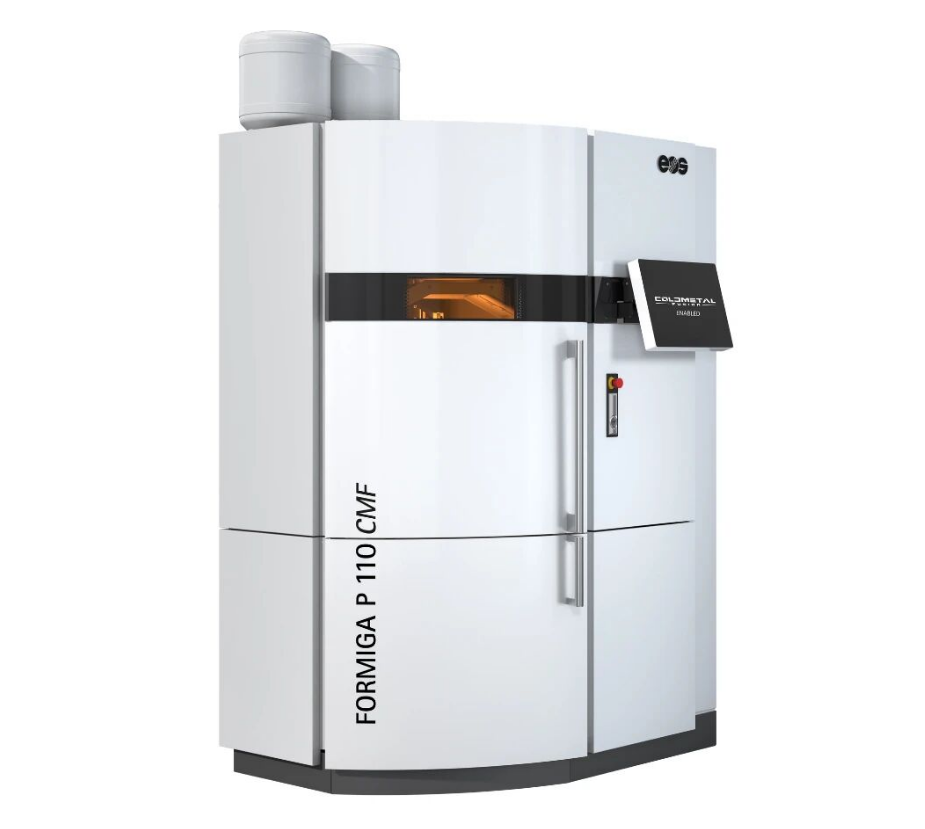
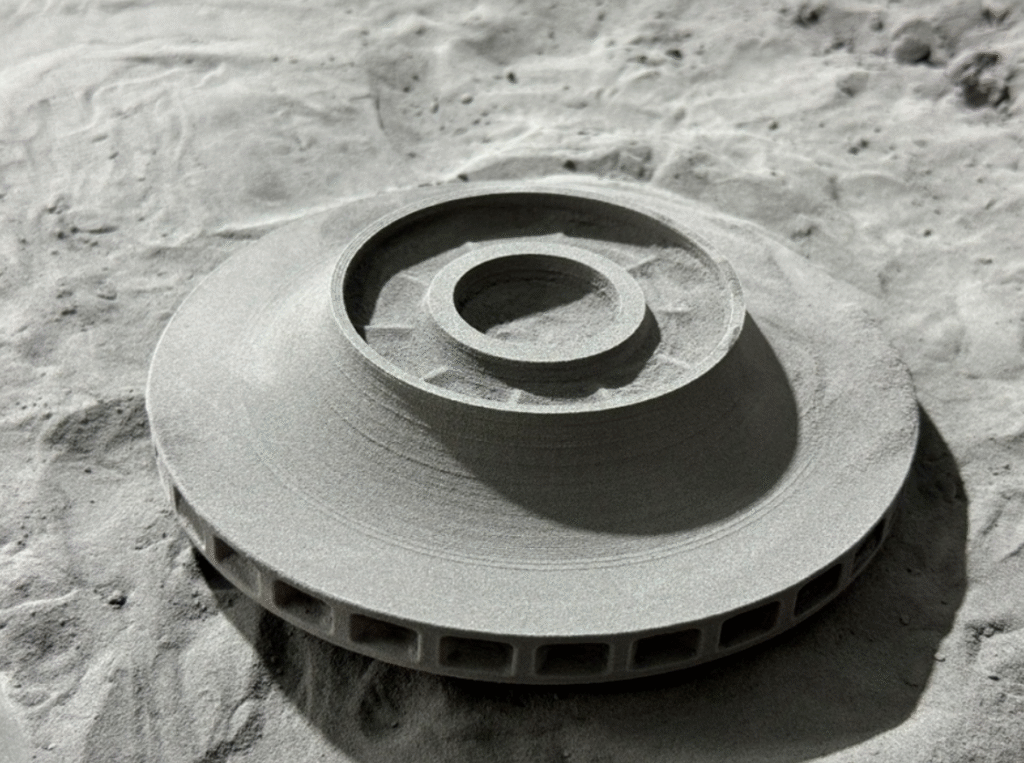
Cold Metal Fusion (CMF) is a sintering-based metal additive manufacturing process that combines polymer laser sintering technology with powder metallurgy. The latest FORMIGA P 110 CMF system introduced by EOS uses a polymer–metal composite feedstock, enabling the printing of near-net-shape titanium green parts at relatively low temperatures below 180 °C.
After printing, the green part undergoes solvent or catalytic debinding to remove the binder, producing a brown part. Finally, the component is sintered in a vacuum or controlled atmosphere furnace, resulting in a fully metallurgically bonded final titanium part.
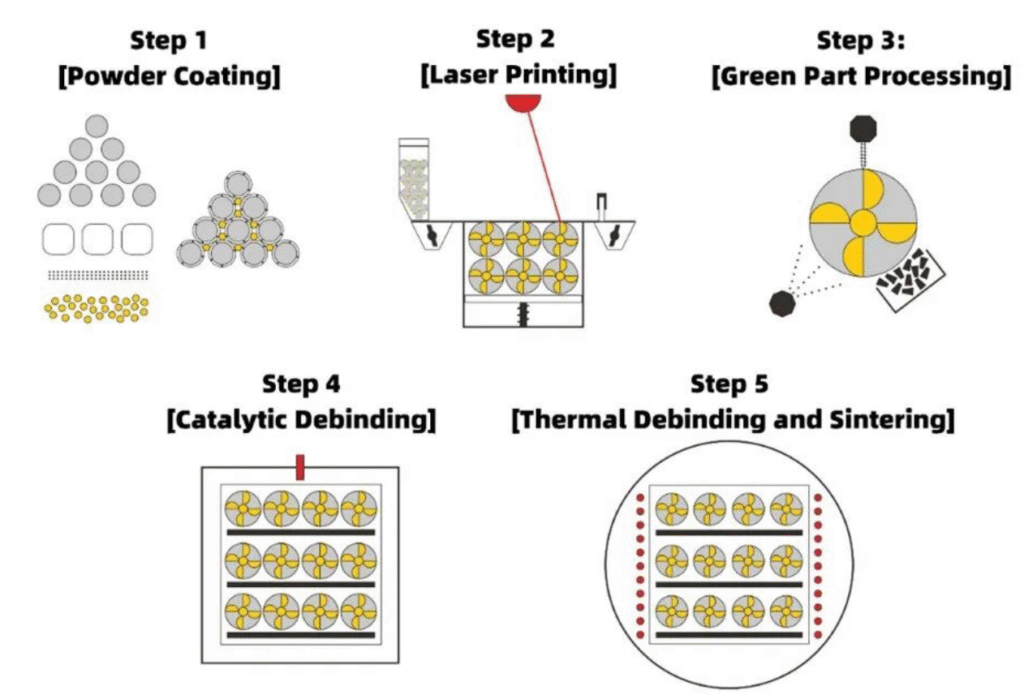
It has now been confirmed that Ti-6Al-4V parts produced using CMF 3D printing technology exhibit mechanical properties comparable to those manufactured by traditional powder metallurgy processes such as Metal Injection Molding (MIM). Reports also indicate that titanium alloys produced with this technology are already being used in the 3C industry (computers, communications, and consumer electronics).
Compared with traditional casting, CMF-based 3D printing demonstrates several typical advantages:
- Higher design freedom with lower costs
- Up to 99% of the raw material can be recycled
- Uses an SLS polymer laser sintering platform, resulting in lower equipment investment
- Support-free printing, making it suitable for fluid-related components such as impellers and diffusers
- Material properties meet the high requirements of pump and valve applications
- Scalable for small- and medium-batch production
Typical Application Scenarios of CMF Titanium Alloy 3D Printing
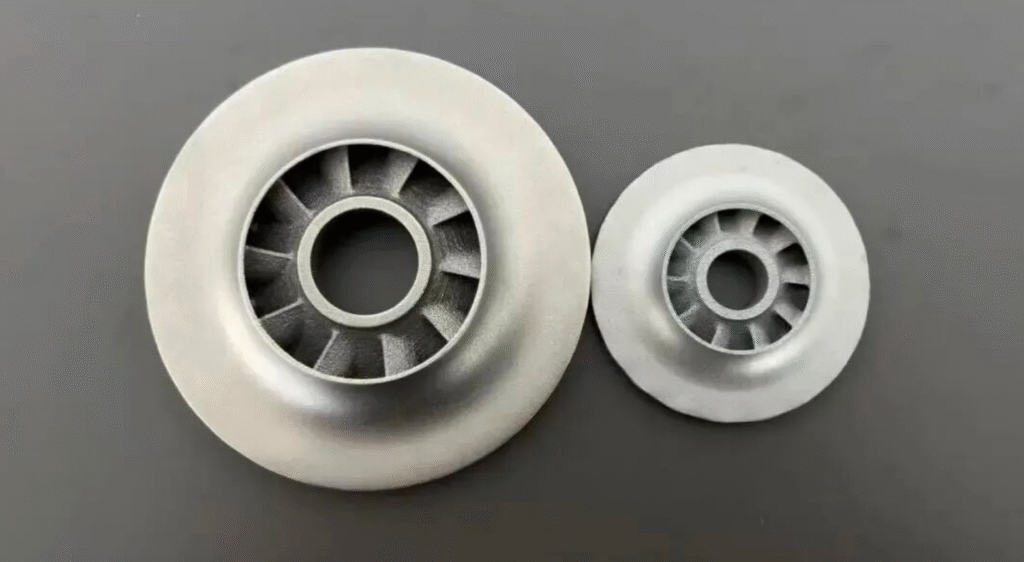
CMF technology enables the efficient and cost-effective production of titanium alloy components, particularly impellers, diffusers, fluid components, and housings used in pumps, valves, and other industrial applications.
Complex Pump Impellers
CMF allows support-free planar printing of impellers, significantly improving production efficiency.
With traditional casting, achieving the same internal curvature or thin-walled blade structures is extremely difficult—often impossible—without segmented molds.
Diffusers and Fluid Components
The technology enables internal channels, conical inlets, and free-form flow path designs, which can significantly improve fluid performance and are difficult or impossible to achieve with conventional casting methods.
Wide Range of Product Variants
Pumps and valves often require dozens or even hundreds of design variants.
Since CMF does not require molds, it allows economical and flexible customization for different configurations.
Faster Prototyping and Iteration
Engineers can move from part design to sintered production components within just a few days.
Even if mass production tooling is planned later, this approach eliminates long waiting times—previously often several months—which accelerates testing and significantly shortens the New Product Introduction (NPI) cycle.
Strategic Integration of Both Technologies
Although CMF 3D printing technology offers clear advantages, it is not intended to completely replace traditional casting. In scenarios where production is already stable, delivery schedules are not urgent, and demand volumes are high, conventional casting technologies remain more advantageous.
However, CMF technology is particularly suitable for applications such as customized parts, small batches of replacement or repair components, and rapid prototyping. In these cases, it can deliver greater flexibility and faster turnaround times.
Therefore, users can strategically integrate both technologies depending on their production needs.
An important conclusion is that CMF serves as a valuable complementary solution to titanium alloy casting.
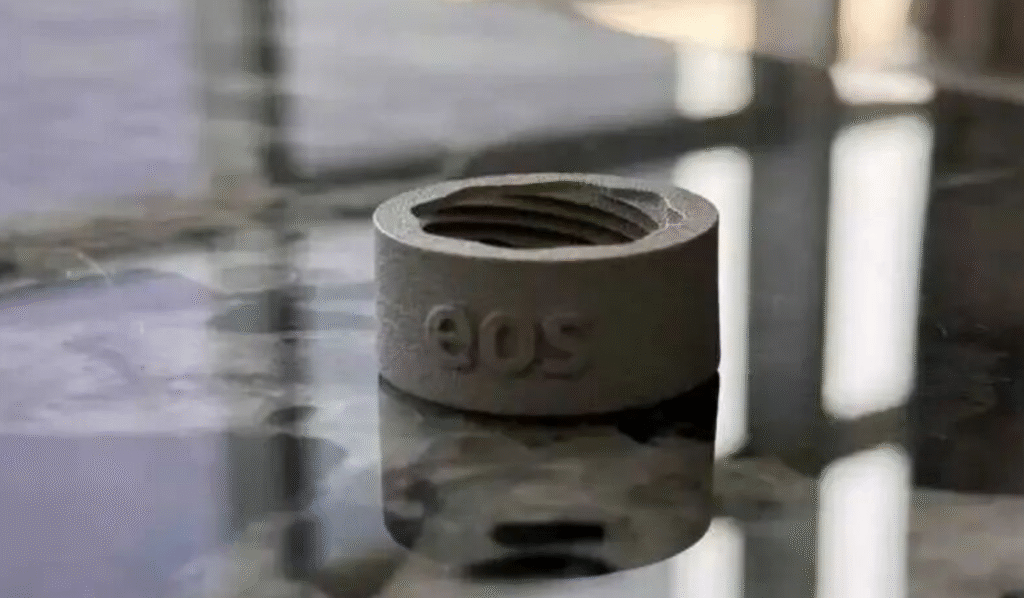
For most titanium pump and valve components—especially impellers, diffusers, housings, and engineered fluid components—CMF technology can provide greater flexibility, stronger capabilities for manufacturing complex structures, and highly competitive cost efficiency per part.
In practice, manufacturers tend to choose CMF technology when several clear conditions are met:
- The structure is difficult to manufacture using casting
- Production volumes are moderate
- A faster iteration cycle is required
- Molds are unavailable or mold costs need to be reduced
- Dimensional stability is required
- Material performance requirements are well defined
In these situations, CMF indirect metal 3D printing becomes a superior alternative to traditional titanium casting.
If you are involved in pump or valve component manufacturing and aim to reduce tooling costs, improve performance, or enable entirely new designs, CMF technology based on the EOS FORMIGA P 110 CMF platform may be an ideal solution.