

An FDM 3D printer costing only a few thousand yuan, combined with ordinary PLA plastic filament, has reportedly been used to 3D print landmines. Because these devices contain little or no metal, they create significant challenges for enemy mine detection and clearance operations.
On March 13, 2026, the Ukrainian public broadcaster Suspilne reported that Russian forces were deploying a new type of improvised 3D-printed anti-personnel landmine in the Kherson region. These devices are wrapped in camouflage fabric to enhance battlefield concealment, while also helping to compensate for shortages of standard-issue mines.
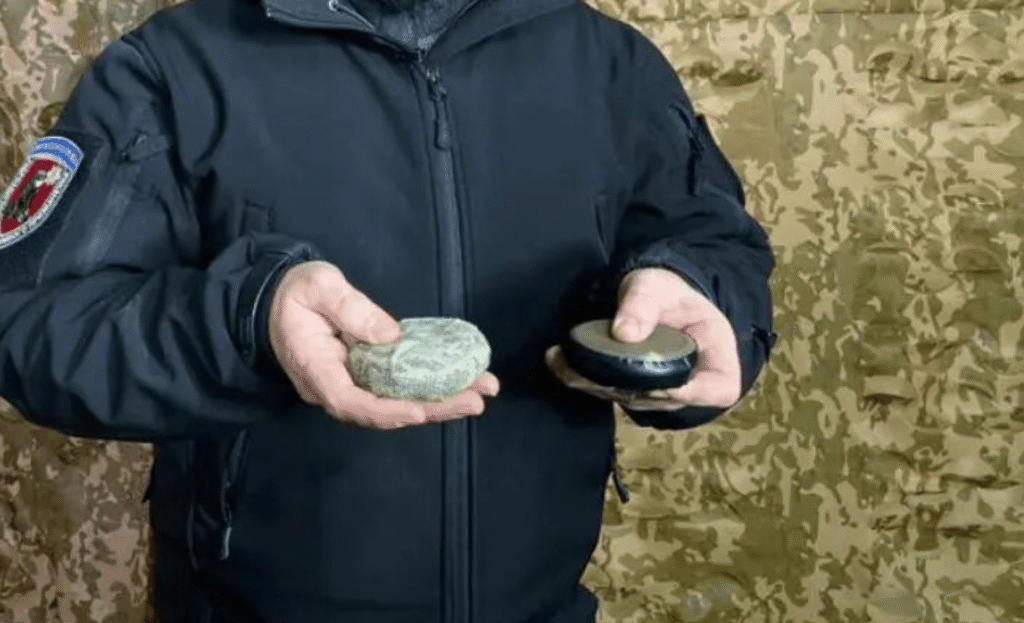
Reports Claim Russia Has Deployed 3D-Printed Anti-Personnel Mines in Kherson
According to reports, Russia has deployed 3D-printed anti-personnel mines in the Kherson region.
Volodymyr Perepelitsa, head of the explosives department of the Kherson Regional Police, explained:
“The Russian military developed this type of improvised explosive device to address shortages of the PFM-1 anti-personnel mine (nicknamed the ‘Butterfly’ or ‘Petal’ mine). They modified a self-developed mine known as ‘Praynik’ (Gingerbread) and introduced 3D-printing technology in its manufacturing.”
These mines are produced as an integrated structure using 3D printing, with explosives, a detonator, and triggering components assembled inside. Their operating principle is similar to that of the PFM-1 mine, relying on pressure activation. When stepped on by a person or crushed by a vehicle, the plastic casing deforms or breaks, which then triggers the explosion.
Unlike traditional mechanical fuzes, these 3D-printed mines use an electric detonation system, which makes them more sensitive. The average pressure required to activate the device is about 7 kilograms, meaning almost any adult stepping on it could trigger the explosion, potentially causing severe injuries. According to experts, the explosive charge is sufficient to cause permanent disability.
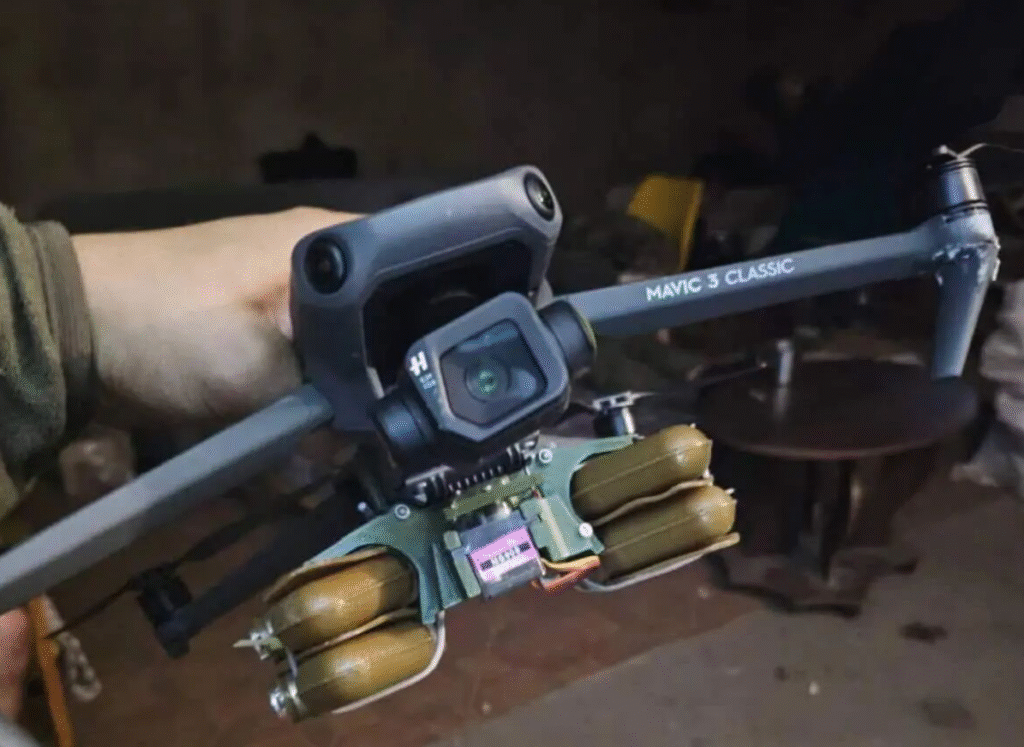
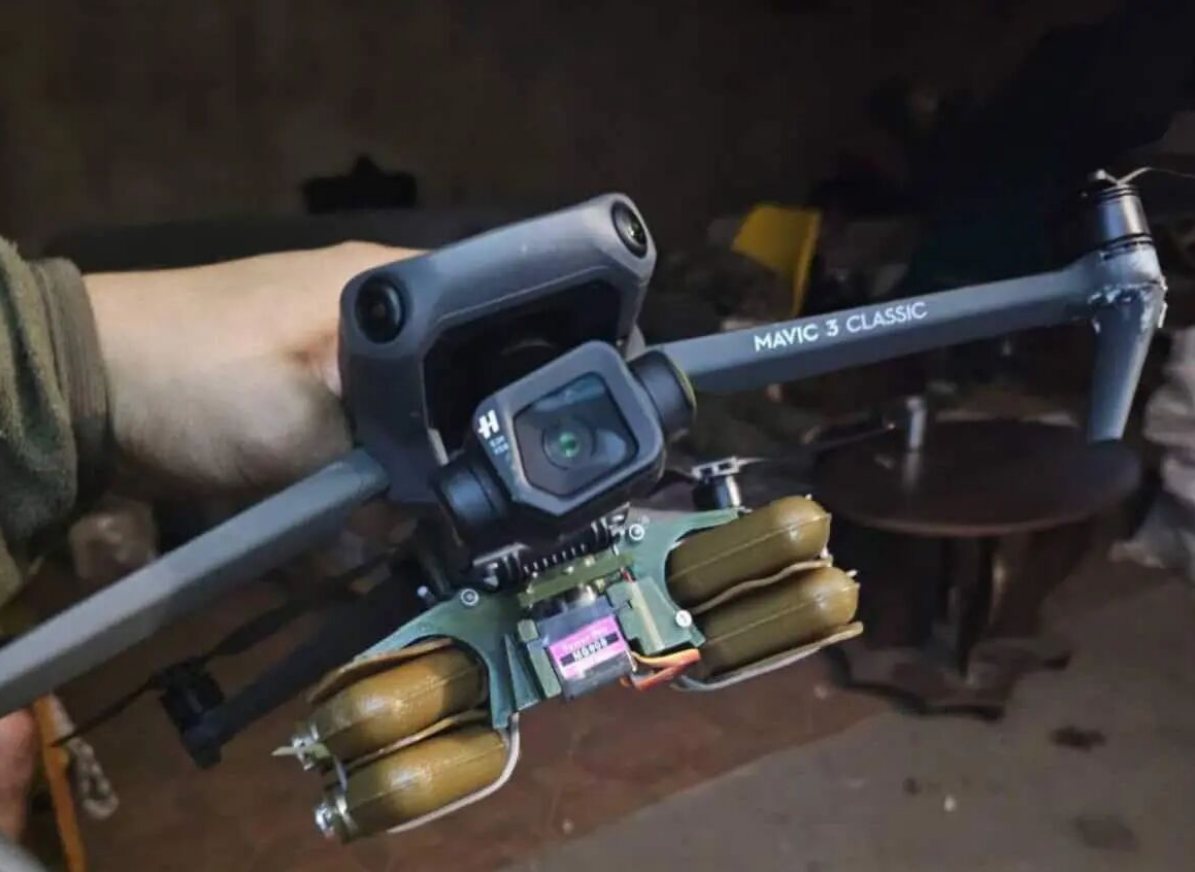
DJI Mavic 3 Drones Used by Russian Forces Equipped with PFM-1 Mine-Laying Systems
A Growing Contest of 3D Printing Technologies Between Both Sides
It has been reported that Russian forces are using DJI Mavic 3 drones fitted with PFM-1 mine-laying systems.
Notably, this is not the first time that 3D-printed mines have appeared on the Russia-Ukraine battlefield. As early as June 2025, reports indicated that Ukrainian forces had deployed large numbers of 3D-printed anti-personnel mines in the Kursk region. According to Russia’s TASS news agency, Russian combat engineers discovered a batch of anti-personnel mines made entirely through 3D printing using plastic materials.
These mines feature non-metallic casings, compact size, and lightweight construction, allowing them to evade traditional metal detectors, which significantly increases the difficulty of mine-clearing operations.
By leveraging additive manufacturing technology, Ukrainian forces are able to rapidly produce and deploy mines while reducing reliance on traditional supply chains. It is estimated that the manufacturing cost of each unit is less than $50, and their shape and structure can be quickly customized according to battlefield conditions, demonstrating the tactical advantages of 3D printing in low-cost, rapid manufacturing.
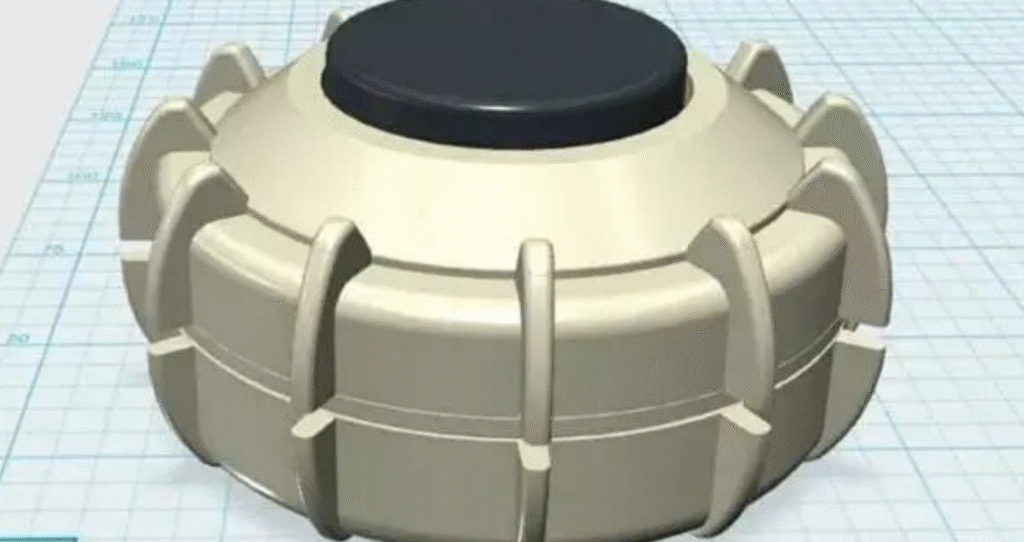
Ukraine First Deployed 3D-Printed Mines on the Kursk Front Last Year
The Spread of 3D Printing Technology and Its Global Security Implications
Last year, Ukraine was the first to use 3D-printed mines and deploy them on the Kursk front.
From Ukraine’s initial application of 3D printing technology in mine production to the Russian military now adopting similar tactics, the bidirectional spread of this technological approach is profoundly changing the nature of the battlefield. The use of 3D printing in this area is no longer limited to spare parts manufacturing and equipment maintenance, but is gradually entering the large-scale production of low-cost lethal weapons.
As early as 2017, the U.S. Department of Defense and DARPA launched programs such as “Additive Manufacturing for Munitions”, exploring cutting-edge applications of 3D printing in ammunition, drones, and other military systems. Think tanks including the RAND Corporation have warned that the widespread adoption of additive manufacturing is lowering the barrier to weapon production, potentially enabling non-state actors and smaller nations to challenge larger military forces, creating new uncertainties for global security.
Compared with the 3D-printed mines previously deployed by Ukrainian forces, the tactics used by Russian forces in this instance show several new features. These improvised devices do not include a self-destruct mechanism, are wrapped in camouflage fabric, and are deployed by rotary-wing drones, further increasing deployment speed and battlefield concealment.