


Many people may not yet realize that the conflict in the Middle East has already reached the upstream supply chain of consumer-grade 3D printing materials.
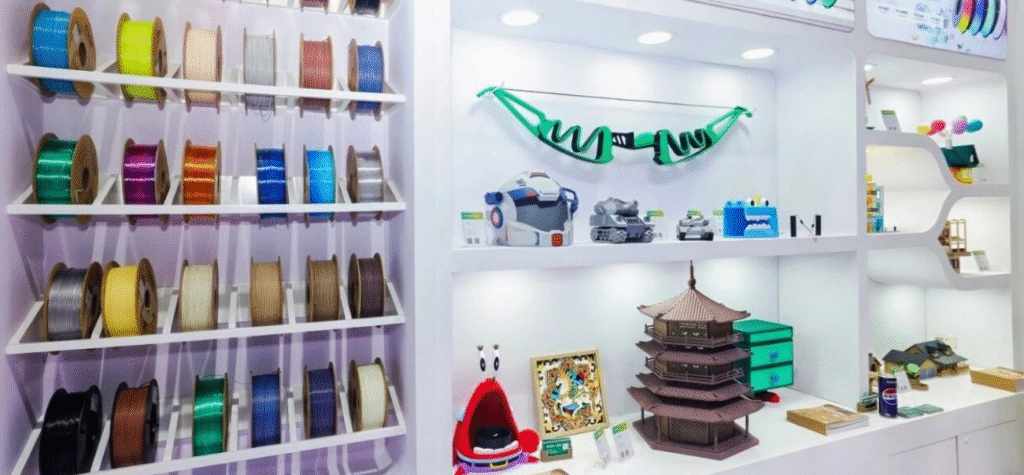
The conflict in the Middle East is being transmitted through the oil and petrochemical supply chain into the broader chemical industry, ultimately impacting the 3D printing materials market.
Due to disruptions in shipping through the Strait of Hormuz and surging international crude oil and chemical feedstock prices, the costs of mainstream petroleum-based filaments such as ABS, TPU, and PETG are rising sharply. As a result, end-user prices may increase within the next 1–2 months.
In contrast, bio-based PLA filament, which does not rely on the petroleum supply chain, is expected to remain largely unaffected.

As one of the most commonly used engineering materials in 3D printing, ABS is directly impacted:
- Upstream petrochemical feedstock prices have surged rapidly from around RMB 8,000 per ton to RMB 13,000–14,000 per ton, with even higher extreme quotes.
- Traders are adopting “one order, one price”—or even “one price per hour”—leading to longer delivery cycles and rising logistics costs.
- Raw material procurement costs for 3D printing filament manufacturers have been passively driven up, significantly squeezing profit margins.
At the same time, TPU (thermoplastic polyurethane) is also under pressure. Its upstream raw materials are closely tied to MDI and polyols, and global chemical giants such as Wanhua Chemical, BASF, Huntsman, and Dow have jointly raised prices across Europe, North America, and the Asia-Pacific region. MDI prices have increased by €200–500 per ton, with rising energy and raw material costs directly pushing up TPU pellet prices.
Taking mainstream general-purpose TPU materials in China with Shore hardness 85A and 95A as an example, prices before the increase were typically in the range of RMB 14,200–14,800 per ton. They have now risen by about RMB 1,500 (approximately 10%) to around RMB 16,000 per ton. This translates to an increase of about RMB 1 to 1.5 per kilogram in raw material costs for 3D printing TPU filament.
PETG is heavily affected by the petroleum chain, while PLA may remain relatively insulated
This round of price increases shows a clear structural divergence, with different materials facing very different outcomes:
1. PETG: A petroleum-based copolyester with rising costs
PETG (polyethylene terephthalate glycol-modified) is derived from petrochemical pathways. Its core monomers originate from crude oil through the chain: crude oil → naphtha → PX → PTA and ethylene glycol, making it highly correlated with oil prices.
- Rising crude oil prices → increased PTA and ethylene glycol costs → higher PETG resin prices
- Coupled with higher shipping insurance costs and tight cargo capacity, PETG filament prices are highly likely to increase in tandem with ABS
2. PLA: Bio-based pathway, largely unaffected by oil price fluctuations (for now)
PLA is derived from biomass sources such as corn, cassava, and agricultural residues. Its production process follows the pathway: starch → glucose → fermentation → lactic acid → polymerization, making it completely independent of the petroleum supply chain. However, rising prices of fertilizers such as urea may eventually impact agricultural costs and, in turn, PLA feedstock prices.
- Raw material costs are tied to agricultural products and fermentation processes, rather than crude oil or naphtha
- In the current wave of price increases for petroleum-based materials, PLA prices remain relatively stable, making it a cost-friendly option for desktop 3D printing users