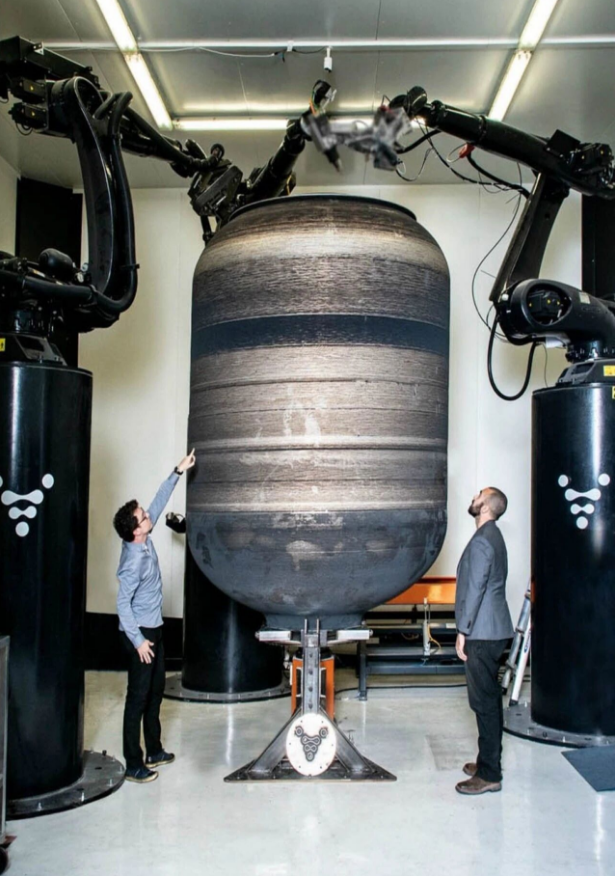
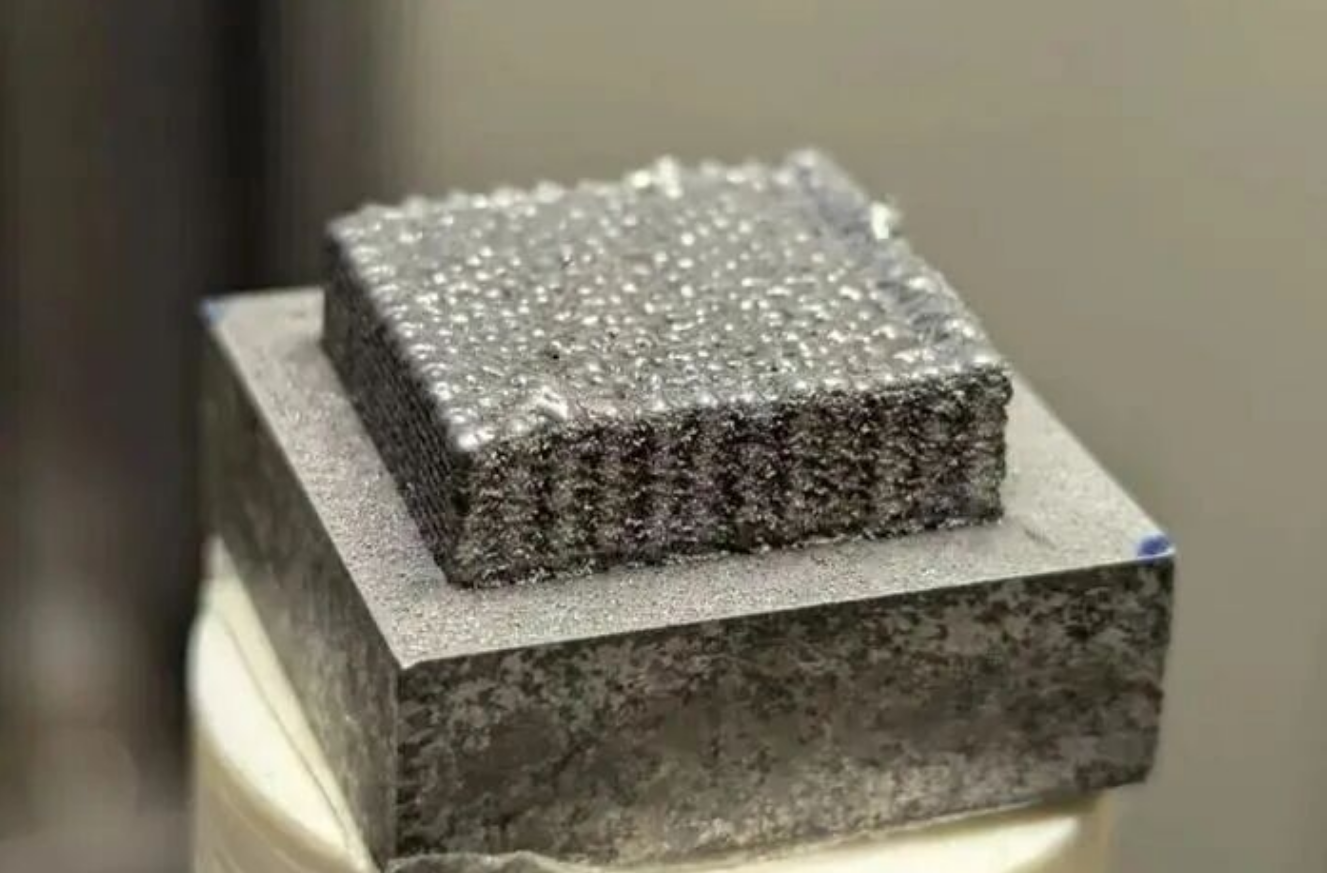
A research team from University College London has recently developed a new 3D-printable aluminum alloy composed of Al, Ni, Ce, Mn, and Fe.
Unlike conventional materials such as AlSi10Mg, this new alloy is not only easier to print, but also delivers significantly improved mechanical performance.
Compared to AlSi10Mg produced using the same printing process:
- Yield strength is increased by 70%
- Tensile strength is improved by 50%
- Residual stress remains low, at below 32 MPa
This combination of high strength + low residual stress is particularly important in metal additive manufacturing, as it helps reduce deformation, cracking, and post-processing requirements—making the material highly promising for high-performance, lightweight structural applications.
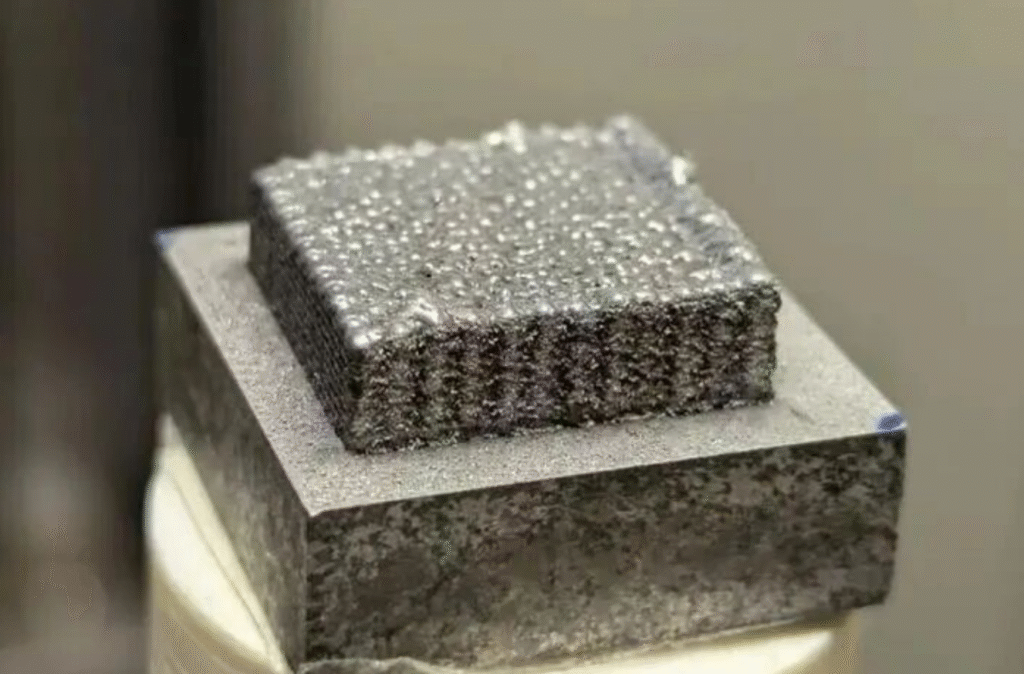
Researchers emphasized that the development of high-quality printed components must start from material design, not just process optimization.
The new aluminum alloy was specifically engineered to achieve low cracking sensitivity and high thermal stability. In conventional aluminum alloys, strength degradation at elevated temperatures is typically caused by:
- Dissolution of strengthening phases
- Precipitation changes
- Grain coarsening
To overcome these issues, the team selected alloying elements with low diffusivity and low solubility in aluminum, namely Ce, Fe, Mn, and Ni.
- Cerium (Ce) was chosen because it improves melt fluidity through eutectic formation and forms intermetallic compounds that help inhibit grain coarsening.
- Iron (Fe), an unavoidable impurity in aluminum, was intentionally controlled at a low level (0.3 wt%) to stabilize composition.
- Manganese (Mn) and Nickel (Ni) contribute to the formation of thermally stable phases, which enhance the high-temperature strength of the Al–rare earth (Al-RE) system.
This material-first design approach enables the alloy to maintain structural stability and mechanical performance during and after printing, addressing one of the key limitations of traditional aluminum alloys in additive manufacturing.
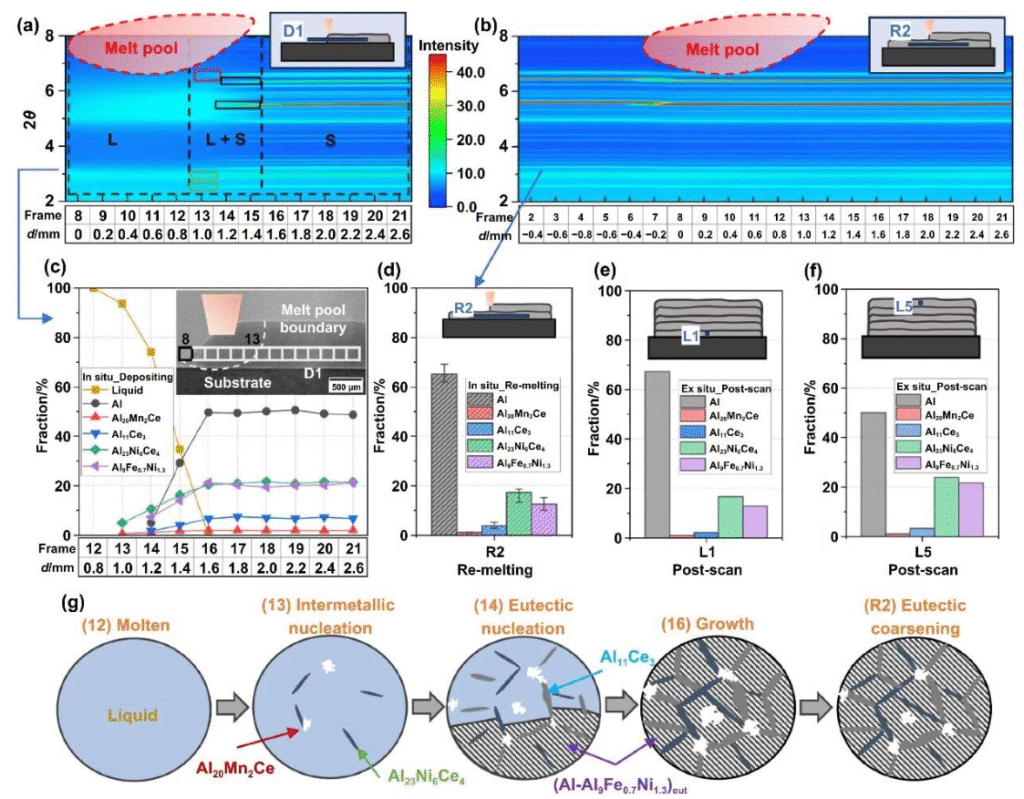
The newly designed aluminum alloy solidifies within an extremely narrow temperature range of only 2.8 °C during the printing process, forming an exceptionally fine microstructure. The grains contain eutectic lattice structures smaller than 200 nm, and five intermetallic phases were observed within the alloy microstructure, enhancing the material’s overall performance.
For comparison, AlSi10Mg exhibits a yield strength of approximately 112 ± 16 MPa and an ultimate tensile strength of around 279 ± 21 MPa. In contrast, the as-printed new aluminum alloy achieves a yield strength of 191 ± 26 MPa, an ultimate tensile strength of 421 ± 17 MPa, and an elongation of 15%, demonstrating an excellent balance of strength and ductility in the deposited state.
Regarding residual stresses induced by printing, this alloy also shows outstanding performance. Laser energy deposition (3D printing) involves rapid cooling and complex thermal conditions, which significantly affect the final part properties. Previous studies indicate that residual stresses in laser-directed energy deposition (DED) aluminum alloys can reach up to 110 MPa, approximately 35% of their yield strength, whereas arc-directed energy deposition aluminum alloys can experience maximum stresses of 130 MPa, even reaching their yield strength. In comparison, the estimated residual stress of the aluminum alloy in this study is extremely low, below 32 MPa, less than 16% of the yield strength, which reduces both cracking susceptibility and geometric deformation.
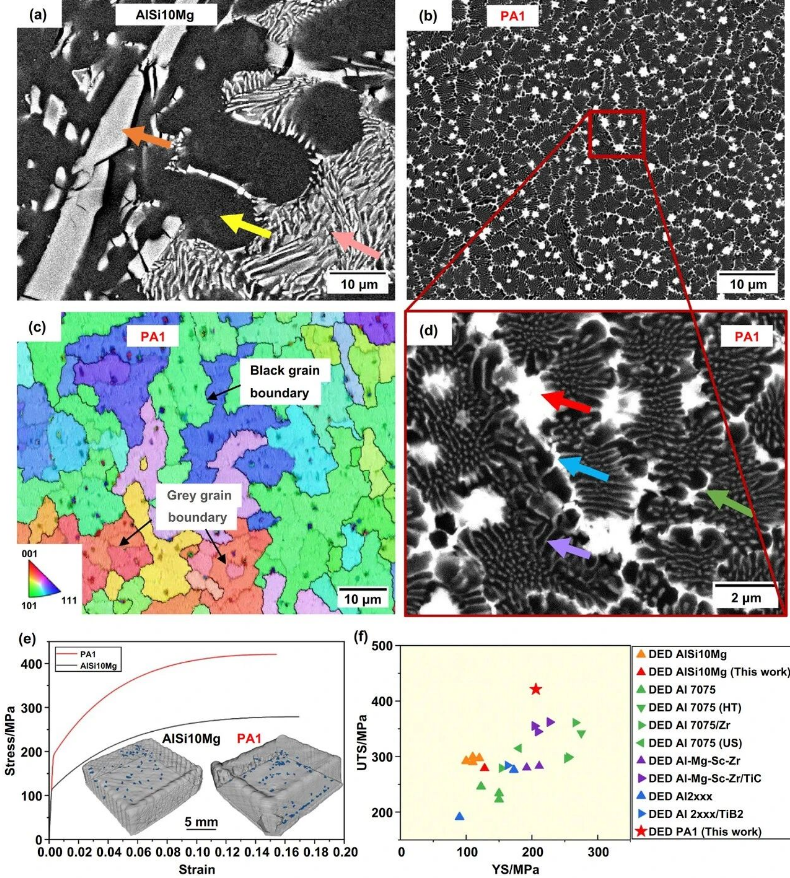
Residual stress primarily arises from thermal contraction during cooling and the mechanical constraints imposed by surrounding material. In directed energy deposition (DED) processes, due to the high thermal gradients and rapid temperature fluctuations, local processing stresses can reach up to 60 MPa, exceeding the final residual stress.
The new alloy features an extremely narrow solidification range of 2.8 °C and a linear solidification shrinkage of only 0.028%, which is an order of magnitude lower than that of Al6061. The significant reduction in thermal contraction during cooling is the main reason for the alloy’s low residual stress.
Although sample size can also influence residual stress levels, with smaller parts generally exhibiting lower stresses, reports indicate that aluminum prepared by DED with similar part dimensions can still show higher residual stresses. This further highlights the advantage of this new alloy.