

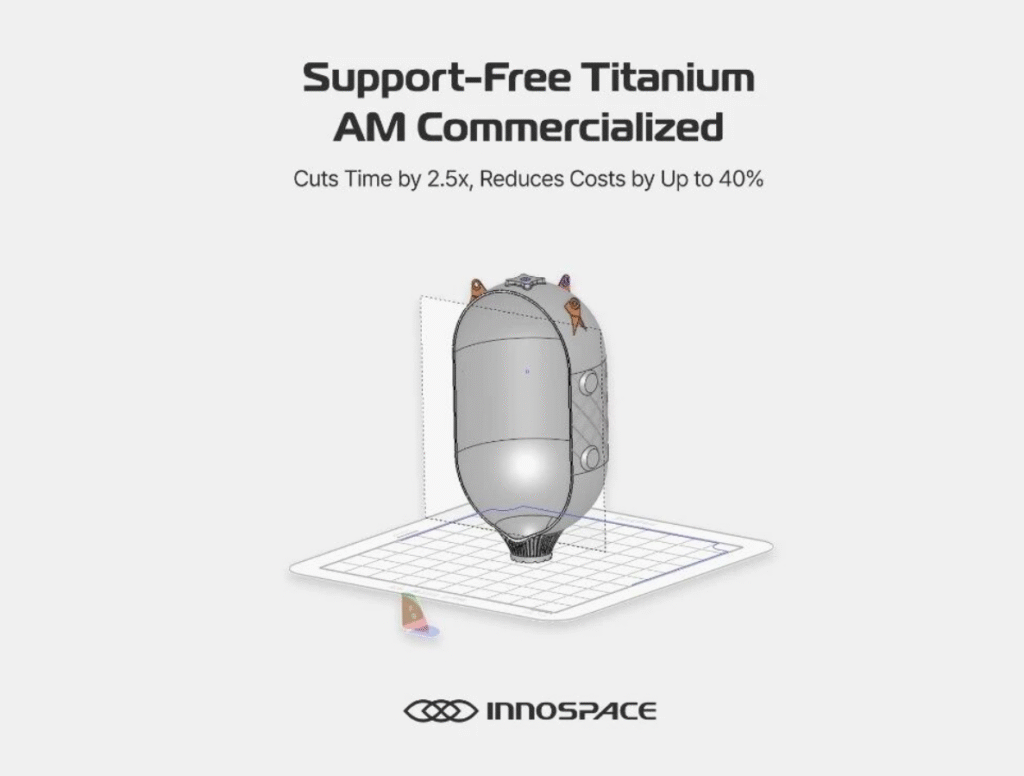
INNOSPACE, a South Korean satellite launch service company, has achieved a major breakthrough in metal 3D printing. The company recently announced the commercialization of support-free titanium alloy metal 3D printing.
Based on this technology, INNOSPACE has reduced titanium alloy support-free printing time by 60%, lowered costs by up to 40%, and improved design freedom, enabling both weight reduction and enhanced performance in its products.
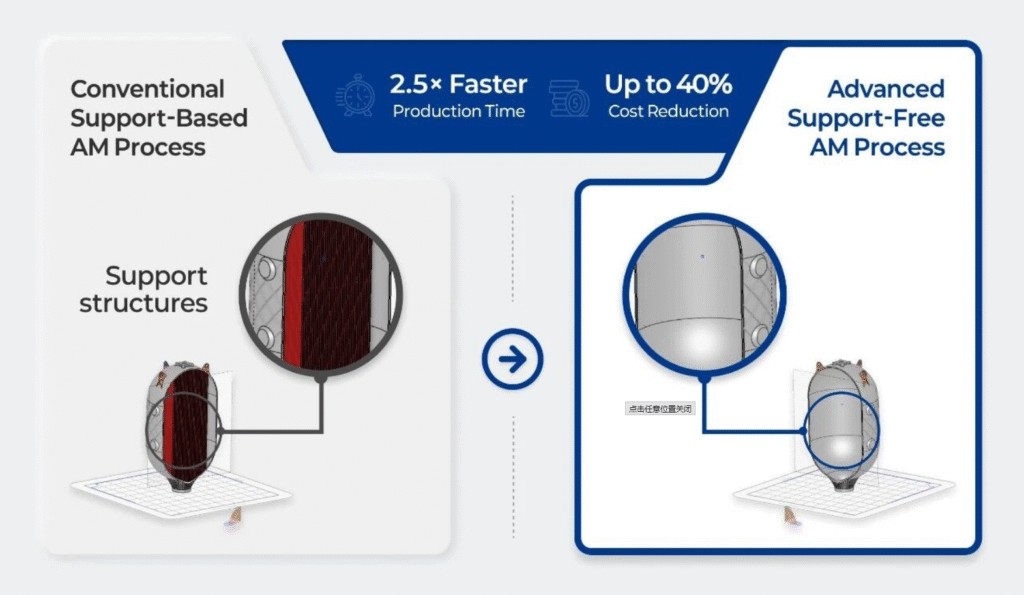
In traditional metal additive manufacturing, internal support structures are usually required to prevent deformation during the printing process. However, these supports increase post-processing workload, extend production cycles, and limit design freedom, thereby raising both time and cost. The removal of supports is often a labor-intensive and frustrating step, as many practitioners in the field have also noted.
INNOSPACE specifically stated that, using standard laser powder bed fusion (LPBF) processes, it has applied advanced process control technologies to achieve support-free printing, while ensuring high-quality output and structural stability.
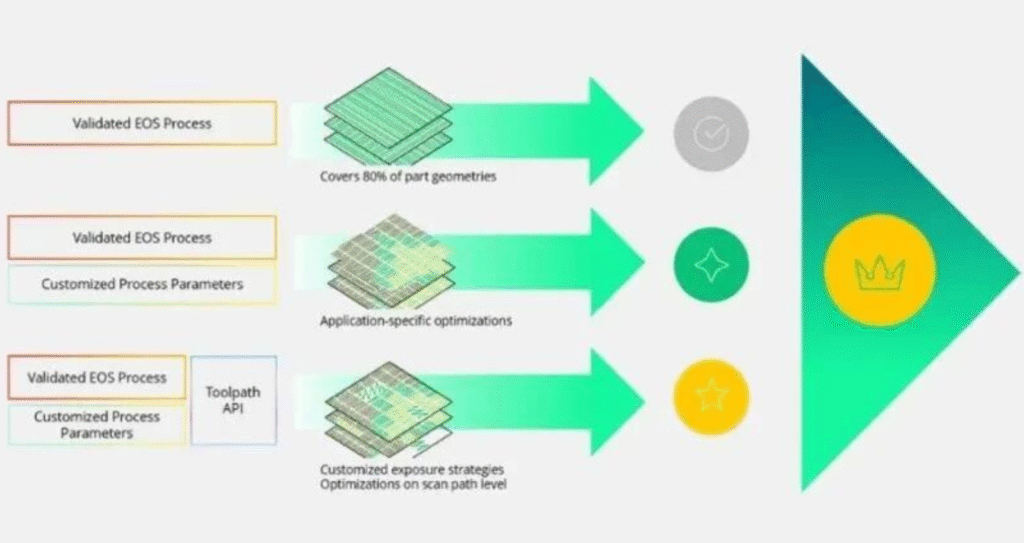
However, conventional standard 3D printing processes cannot directly achieve true support-free printing, as this depends on the range of user-adjustable parameters. Although many brands claim to have achieved support-free or low-support printing, these are usually based on specific, pre-defined process routes—essentially “value-added” process packages.
While most LPBF systems are described as open, advanced functions such as scanning strategies and real-time energy modulation often require special permissions. As a result, users who wish to independently explore and develop these capabilities may face significant limitations.
Oqton has developed an innovative metal additive manufacturing scanning strategy known as melt control technology. By combining physics-based process simulation with advanced scan path optimization, it can dynamically adjust each scan vector based on local thermal effects and geometric conditions.
Moreover, this solution can be fully accessed through the Toolpath API of EOS. The EOS API enables customers and software partners to freely create customized scanning strategies.
Therefore, for ordinary users to achieve true support-free printing, they typically need higher-level system access permissions to the equipment.
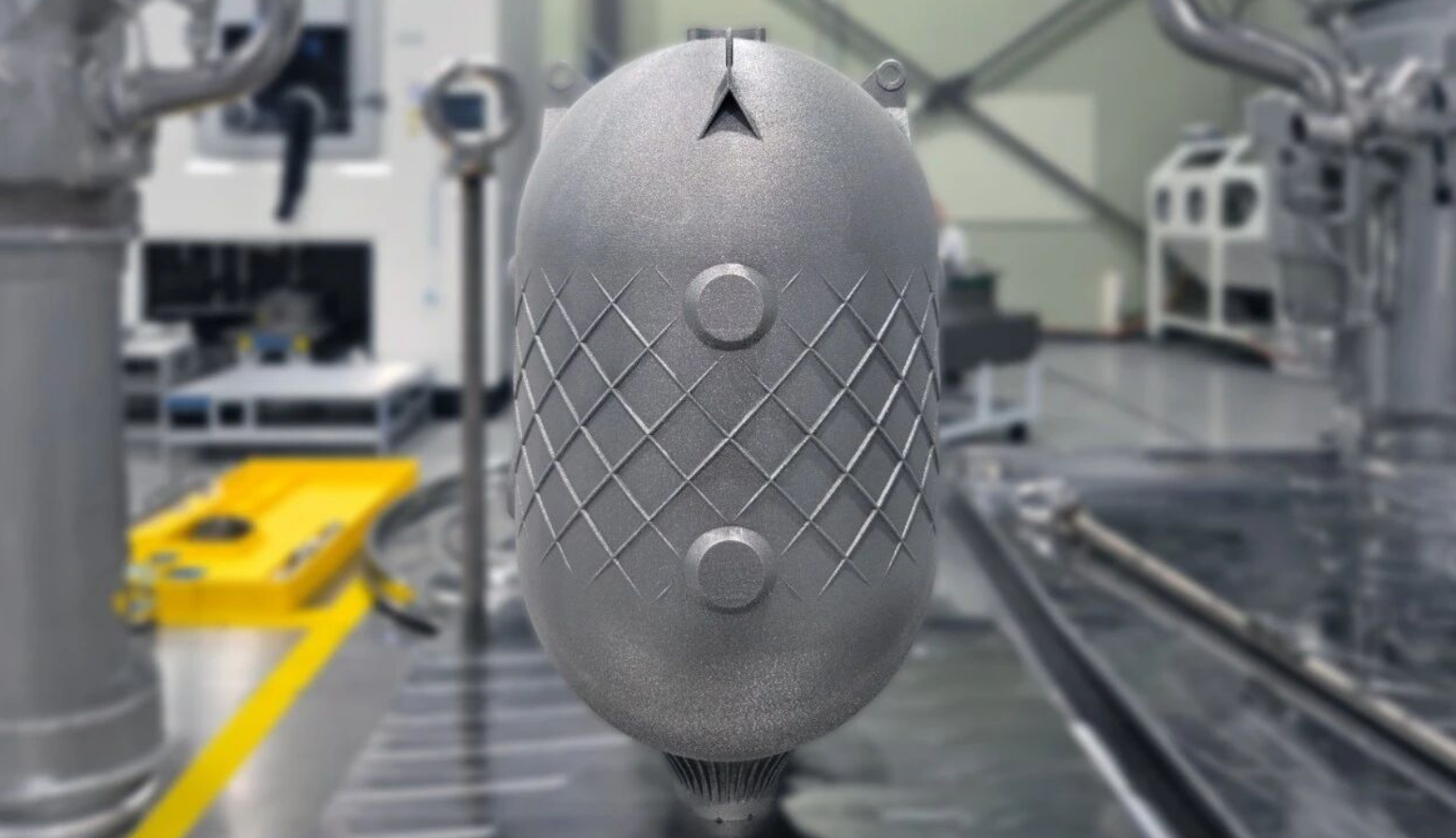
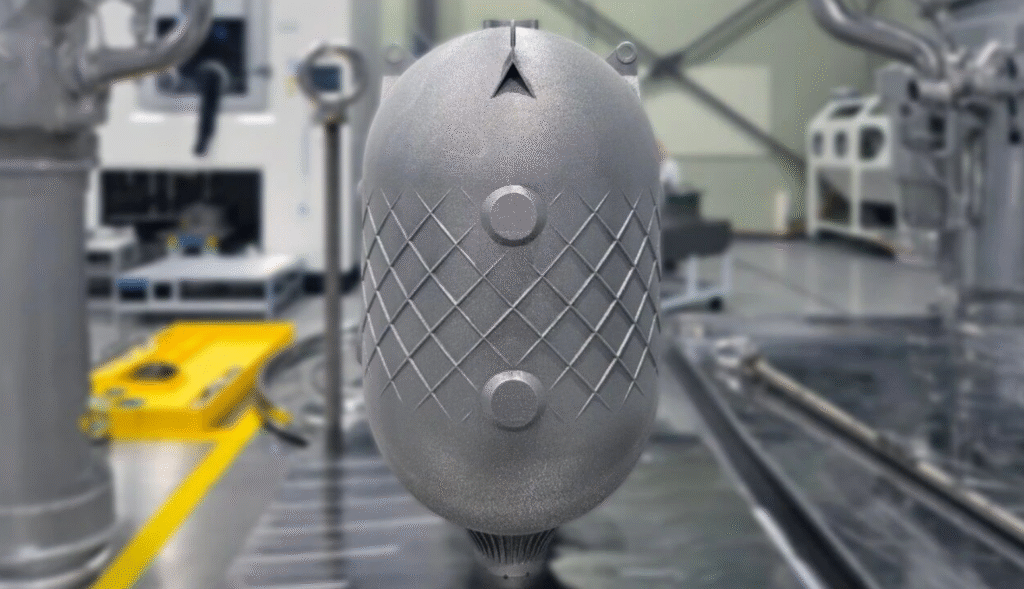
In January this year, INNOSPACE showcased a closed fuel tank developed for aerospace customers.
The part, manufactured using a support-free titanium alloy 3D printing process, features complex curved geometries, including spherical and dome-like structures. The product has already been validated through real-world application.
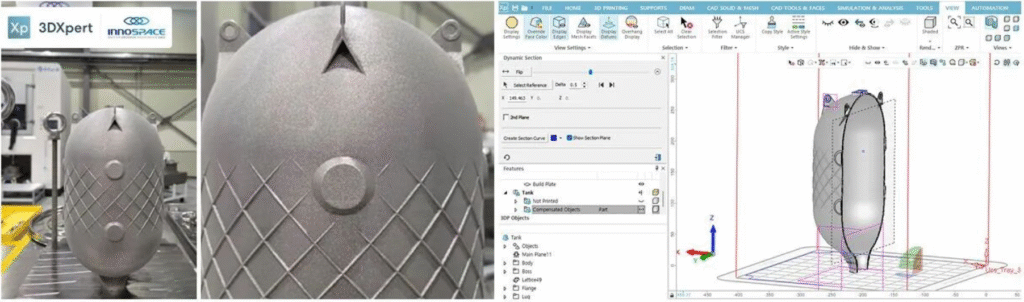
In fact, satellite fuel tanks are one of the most important application scenarios for support-free titanium alloy 3D printing, and once successfully validated, they are likely to become standard practice. The current satellite launch market is already operating at a large scale, which may further expand the growth potential for this technology.
INNOSPACE noted that this achievement extends its technological capabilities into commercial manufacturing applications. With the ability to produce high-precision titanium parts using true support-free 3D printing, the company is accelerating its expansion into high-value sectors such as aerospace, defense, and satellite manufacturing.