

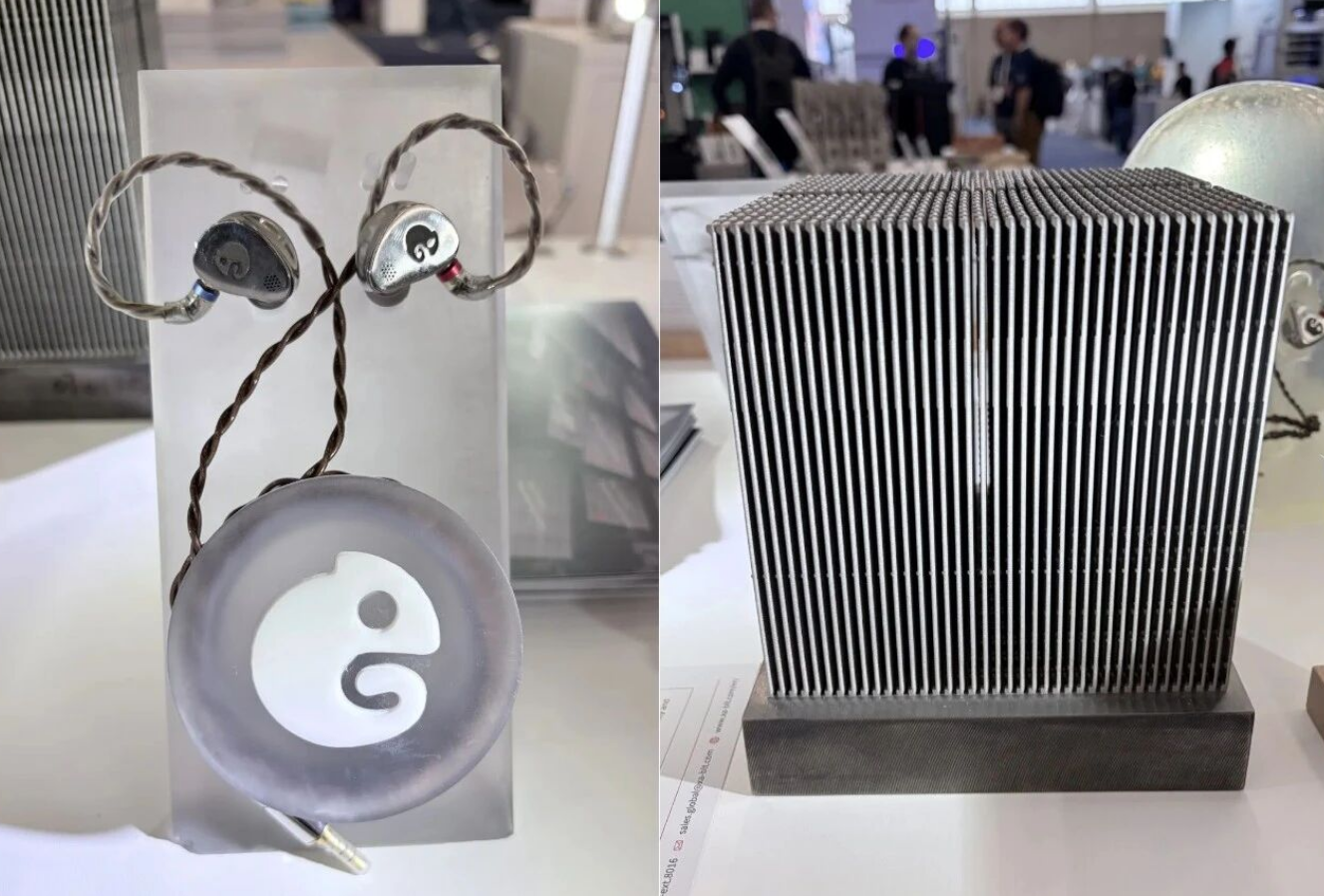
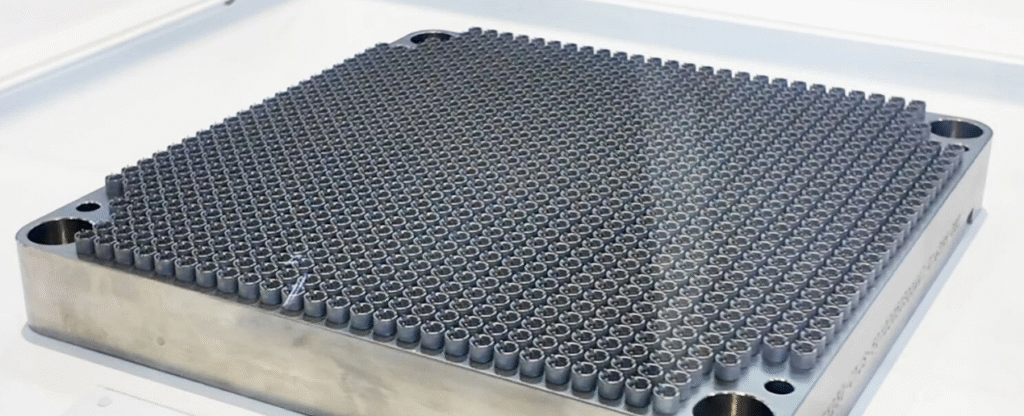
3D-printed Photon Finger-B micro multi-axis force sensor,Its key feature lies in enabling mass production of 3D-printed parts with high surface quality, high precision, and high consistency.
Key Point 1: Breakthrough in Printing Precision and Surface Roughness
First, the feature size of this product reaches 0.05 mm. This reduces the minimum scale of commercial products from 0.3 mm to 0.15 mm, breaking through the application limitations of traditional machining and metal 3D printing. Now, achieving 0.05 mm represents another major leap in process capability.
Second, the printed surface roughness is Ra 2–3 μm, whereas traditional processes typically yield around 10 μm. This means that many parts can eliminate post-processing steps such as grinding and polishing.
For products with extremely fine microstructures, post-processing can easily damage delicate features. Achieving high surface quality directly in the as-printed state will undoubtedly unlock a wider range of applications.
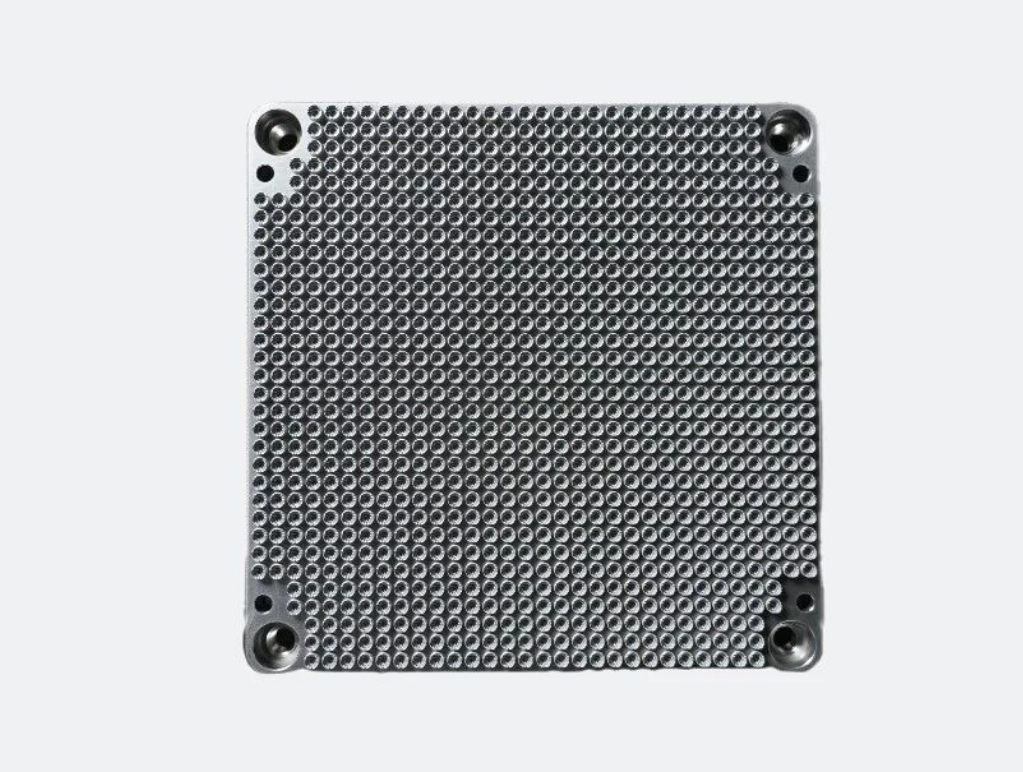
Achieving both high precision and high surface quality means metal 3D printing is no longer just for producing “rough blanks.” It can now directly manufacture near-finished or even ready-to-use high-performance micro functional components, allowing many products to bypass secondary machining altogether.
Key Point 2: Large-Area, High-Precision 3D Printing
The showcased sensor has overall dimensions of 8.5 mm × 8.5 mm × 6.91 mm, making it a typical microscale component.
With a high-precision 3D printing system featuring a build volume of 450 mm × 380 mm, up to 972 units can be produced in a single full build. Compared to the past—when only dozens of high-precision parts could be printed at once—this represents a significant advancement in manufacturing capability and throughput.
Key Point 3: High Consistency Enables Stable Mass Production
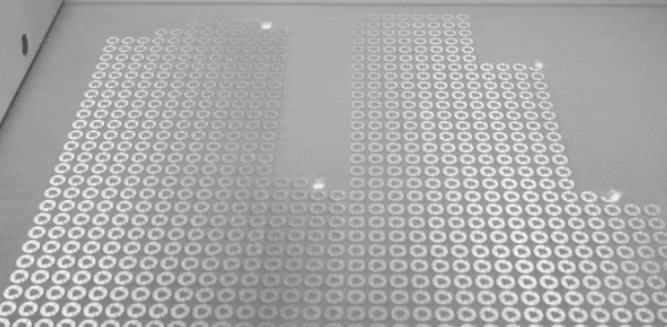
In addition to high precision and excellent surface quality, the product also demonstrates strong consistency, laying the foundation for reliable batch production—a critical factor for industrial applications.
With the rapid development of fields such as humanoid robotics, intelligent prosthetics, 3C components, and automated assembly, the demand for micro multi-axis force sensors continues to grow.

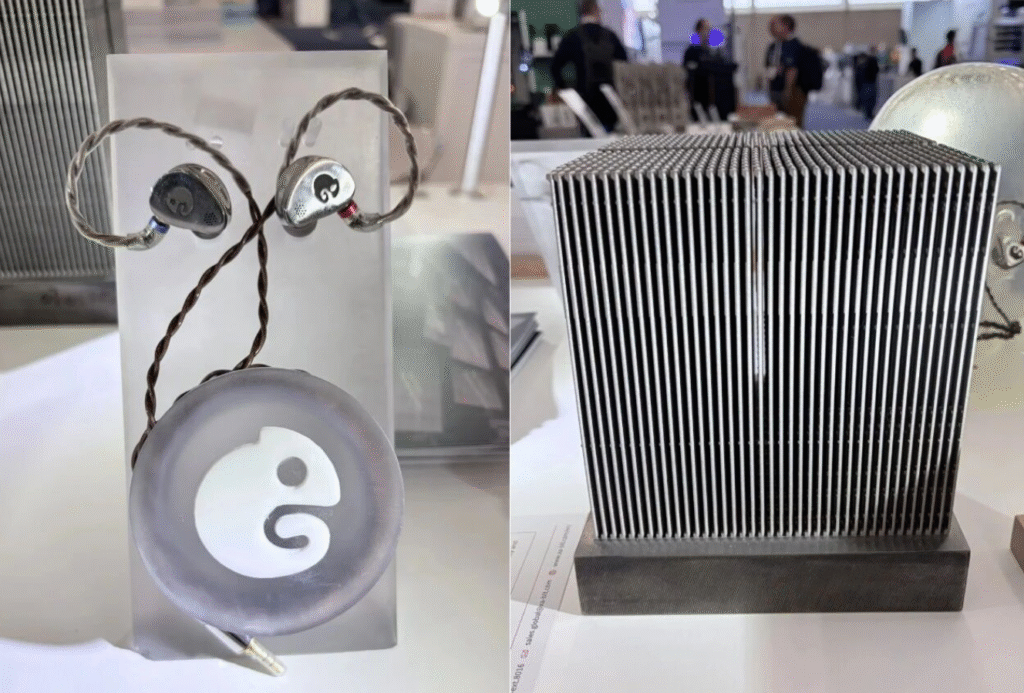
At the recently concluded RAPID + TCT 2026 in the United States, high-precision 3D printing processes showcased their achievements in the 3C consumer electronics sector, including applications such as earphones and core structural components of foldable smartphone hinge systems.
With this technology, it is possible to achieve micron-level dimensional control and integrated fabrication of complex geometries, meeting the stringent demands of 3C products for miniaturization and high integration. It also helps customers bring high-quality structural components into real-world applications within tight development cycles.