

On March 9, 2026, Bloomberg’s Mark Gurman revealed in a report that Apple is developing aluminum alloy 3D printing processes for future products.
Apple is developing 3D-printed aluminum alloy technology for future products. The MacBook Neo uses a new aluminum alloy manufacturing process designed to maximize metal efficiency. This approach can reduce costs and accelerate production speed—but it’s only the beginning.
According to my understanding, Apple’s design-for-manufacturing team and its operations division are exploring methods for 3D printing aluminum alloys. This could improve the production efficiency of Apple Watch casings and may potentially be applied to iPhone enclosures in the future.
This follows Apple’s adoption of 3D-printed titanium, which has already been used in the Apple Watch Ultra 3.

The MacBook Neo adopts a new aluminum alloy manufacturing process designed to maximize material efficiency. This approach can reduce costs and accelerate production speed—but it is only the beginning.
It is understood that Apple’s design-for-manufacturing team and its operations division are actively exploring methods for 3D printing aluminum alloys. This could significantly improve the production efficiency of Apple Watch casings and may potentially be applied to iPhone enclosures in the future. This marks another step forward following the adoption of 3D-printed titanium, which has already been used in the Apple Watch Ultra 3.
This development is becoming an important indicator of manufacturing process upgrades in the consumer electronics industry. If 3D-printed aluminum alloys can be applied at scale to Apple Watch casings, iPhone shells, and even MacBook components, demand for metal 3D printing equipment and materials could increase by an order of magnitude. Much like the rise of CNC machining in the mobile electronics (3C) sector after 2010—which gradually replaced part of traditional plastic injection molding—manufacturing processes in this field are evolving at an extraordinary pace.
Titanium 3D printing has already been validated for mass production, and its technological foundation is becoming increasingly mature. This is not Apple’s first attempt to integrate 3D printing into consumer electronics manufacturing. The company has previously achieved large-scale implementation of titanium-based processes, with both the technology and supply chain now well established.
Currently, the casings of the Apple Watch Ultra 3 and the titanium version of the Apple Watch Series 11 are manufactured using 100% recycled titanium powder through selective laser melting (SLM), a metal 3D printing process that enables fully integrated one-piece forming. This marks the first time Apple has applied metal 3D printing technology to mass production across its flagship product line.
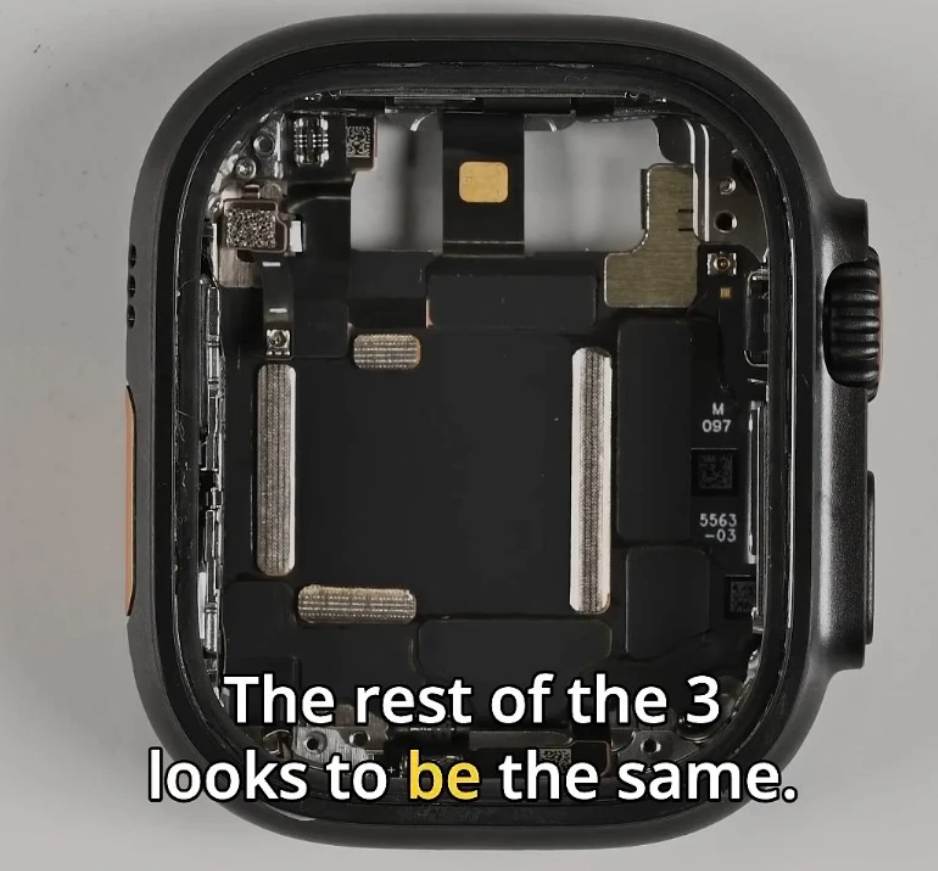
Capture high-resolution images of the watch case using a DSX2000 digital microscope.
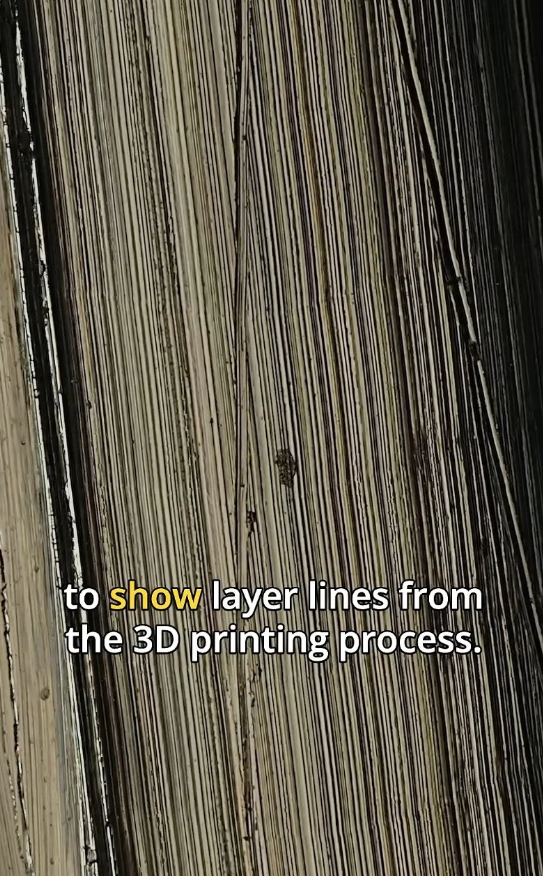
Under the microscope, distinct layer-by-layer 3D printing patterns are visible, with relatively smooth and uniform lines. This is likely the watch casing Apple officially promotes for the high-end models of the Apple Watch Ultra 3 and Apple Watch Series 11, which are manufactured using 100% recycled titanium through 3D printing.
At the same time, the USB-C port component of the iPhone Air is also produced using 3D-printed titanium alloy. Apple has confirmed that this process enables a thinner connector structure. Compared with traditional forging methods, it reduces material usage by 33% while maintaining structural strength and signal transmission stability.
Compared to conventional CNC machining, Apple’s current titanium 3D printing process can save about 50% of raw materials. For titanium alone, this translates to a reduction of over 400 tons of material annually. This not only lowers production costs but also aligns with Apple’s goal of achieving carbon neutrality across its entire supply chain by 2030, while providing valuable mass-production experience for expanding aluminum-based processes.
Capture high-resolution images of the USB-C port using a DSX2000 digital microscope.

If 3D printing achieves mass production, it will not only further reduce iPhone manufacturing costs and improve production efficiency, but also overcome the design limitations of traditional processes—enabling a thinner and lighter form factor, more personalized aesthetics, and more optimized internal structural layouts.