

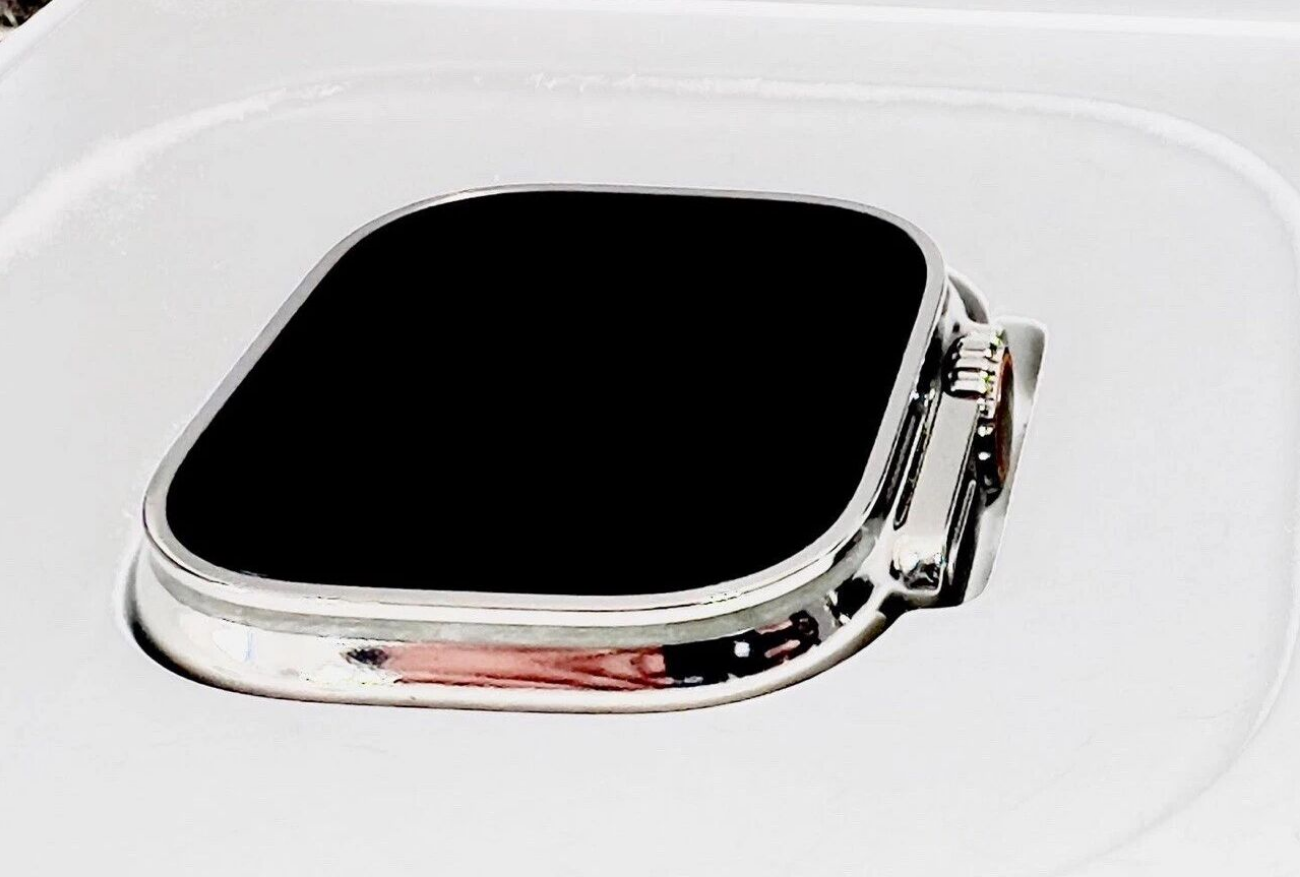
When it comes to the application of 3D printing technology, people typically pursue the idea of “creating structures that traditional manufacturing cannot achieve.” Lattice structures, topology optimization, and complex internal channels have almost become the default narrative of 3D printing.
However, leaders in the 3C industry like Apple are taking a different path—aiming to make products that are “just as good as those made by traditional processes.”
The goal is to be just as smooth, just as refined, and just as durable. The less it looks like 3D printing, the more satisfied “Apples” are. But how much effort does it take to achieve this?
The answer lies in the engineering details recently revealed by two Apple executives.
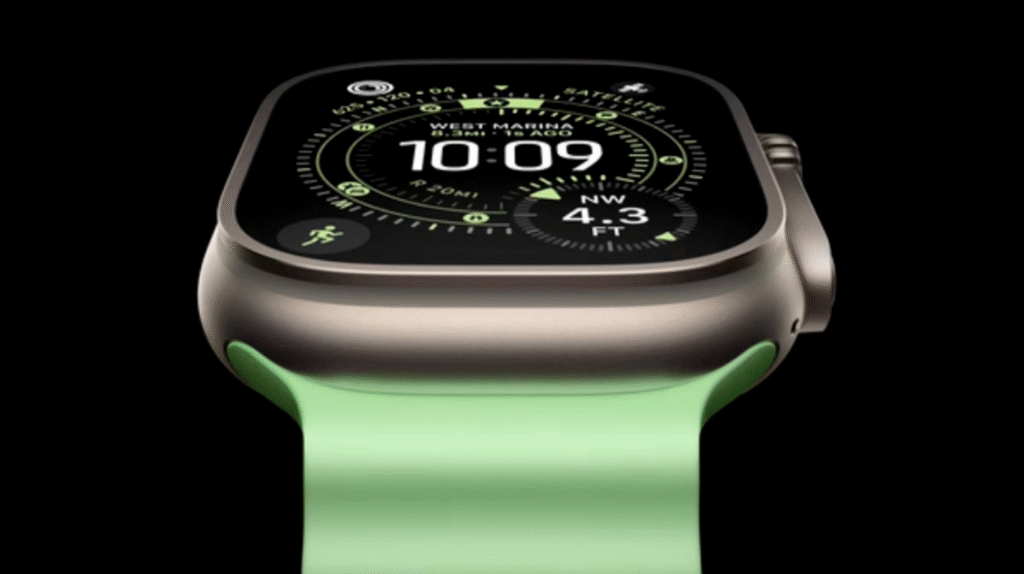
Apple’s Vice President of Hardware Engineering, Kate Bergeron, and Vice President of Environment and Supply Chain Innovation, Sarah Chandler, have revealed more details about the 3D-printed watch case manufacturing process—offering insights into Apple’s approach to material sourcing and post-processing.
Apple’s goal is to achieve the same aesthetic standard as previous Apple Watch models.
In the past, Apple Watch cases were made using subtractive manufacturing, starting from forged metal billets and then milled into the final shape. This process requires significant machining time and results in substantial material waste.
In contrast, 3D printing builds the casing layer by layer, significantly reducing the amount of material and energy required for the final product. However, the drawbacks of 3D printing are also clear—visible layer lines, efficiency challenges, cost, and yield issues.
So how does Apple manage to achieve mass production while maintaining high quality?
From material sourcing to printing and post-processing
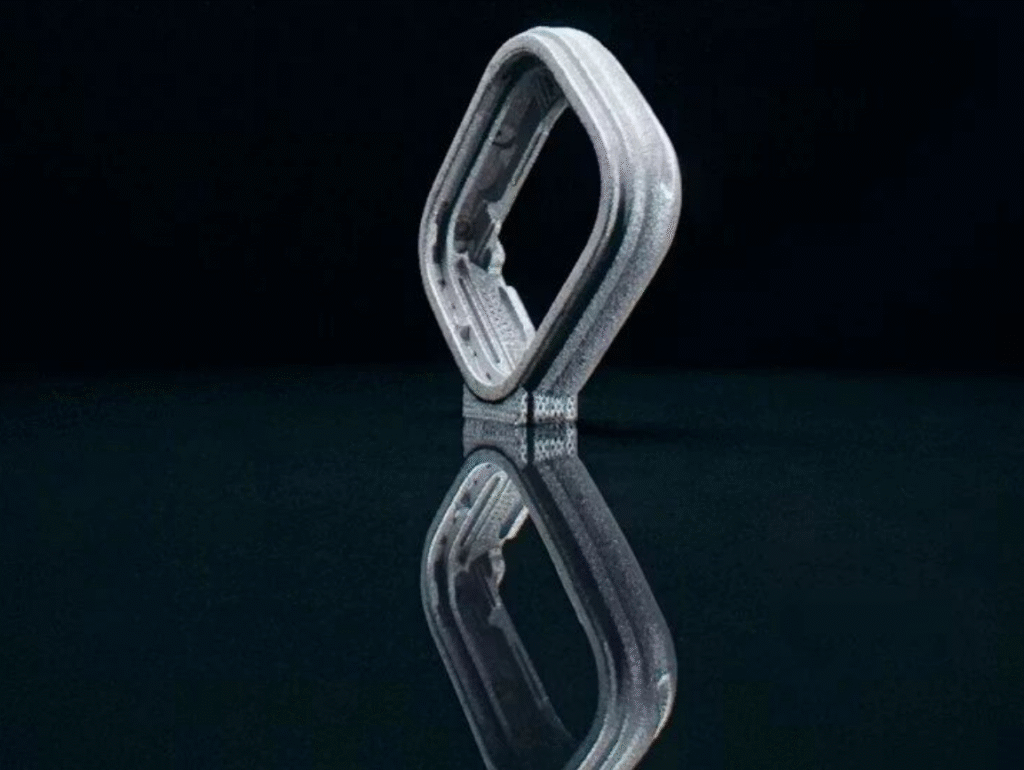
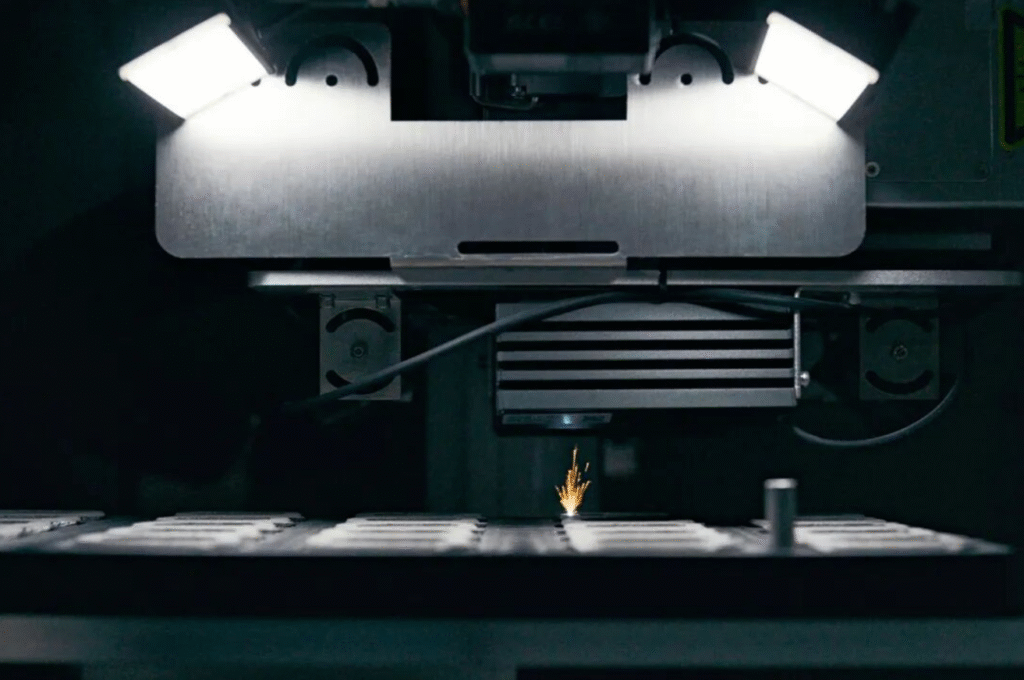
At a macro level, Apple’s titanium watch cases are produced using the mature laser powder bed fusion (LPBF) 3D printing process. For a single watch case, over 900 layers are printed, taking around 20 hours, followed by final machining and finishing steps.
On sourcing recycled materials
Apple states that its watch cases are made from metal powder derived from 100% recycled titanium. However, procuring recycled titanium at scale is no easy task. Due to Apple’s massive production volume, the recycled material must be sourced from multiple external suppliers. Bergeron revealed that through this supply chain, they are able to transform Grade 5 titanium scrap into Grade 23 titanium with lower oxygen content—leveraging expertise built from their work with aluminum alloys.
During the 3D printing process, oxygen content increases, and the final watch case ultimately exhibits properties similar to Grade 5 titanium. Notably, Grade 5 titanium is also the standard material traditionally used in the watchmaking industry.
On balancing efficiency and cost
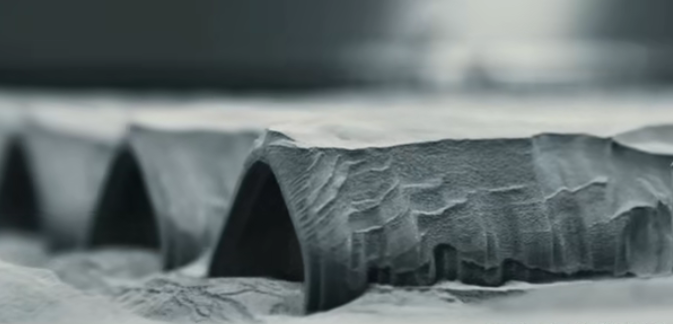
In the 3D printing process, the titanium powder layer thickness is set at 60 microns, and six lasers are used for powder fusion. This offers a new perspective: a larger layer thickness leads to higher efficiency, though with slightly lower precision compared to thinner layers. However, the improved efficiency also helps reduce overall costs.
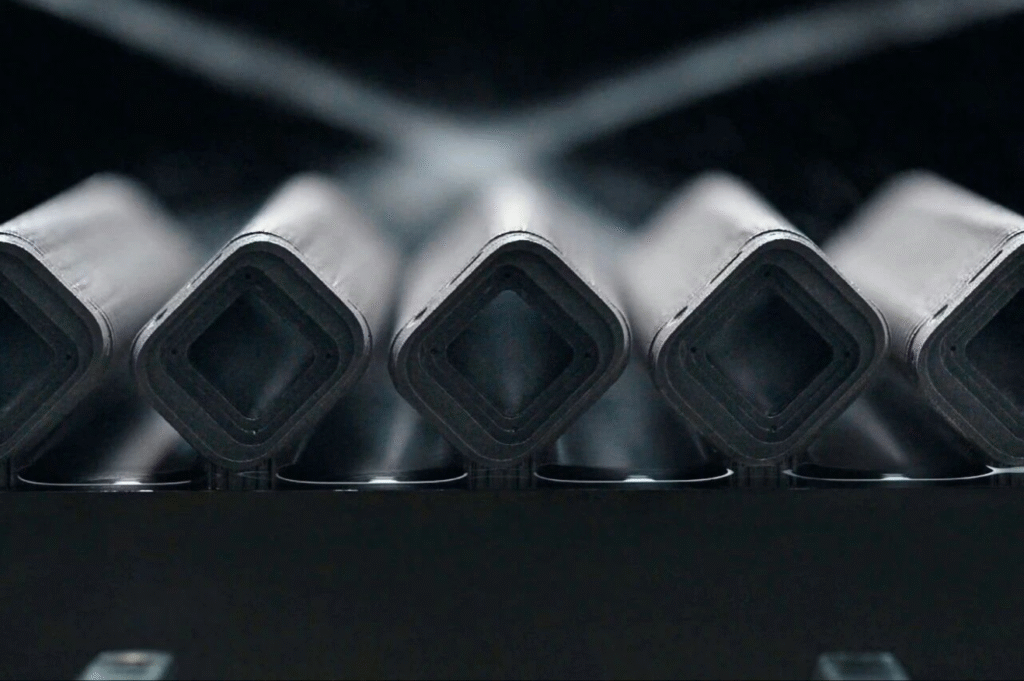
Powder removal is just one of the post-printing steps.
After printing is completed, pressurized argon gas and ultrasonic vibration are used to thoroughly remove any residual titanium powder trapped in the casing’s fine gaps. During both of these powder removal stages, the titanium powder is collected and recycled for subsequent printing.
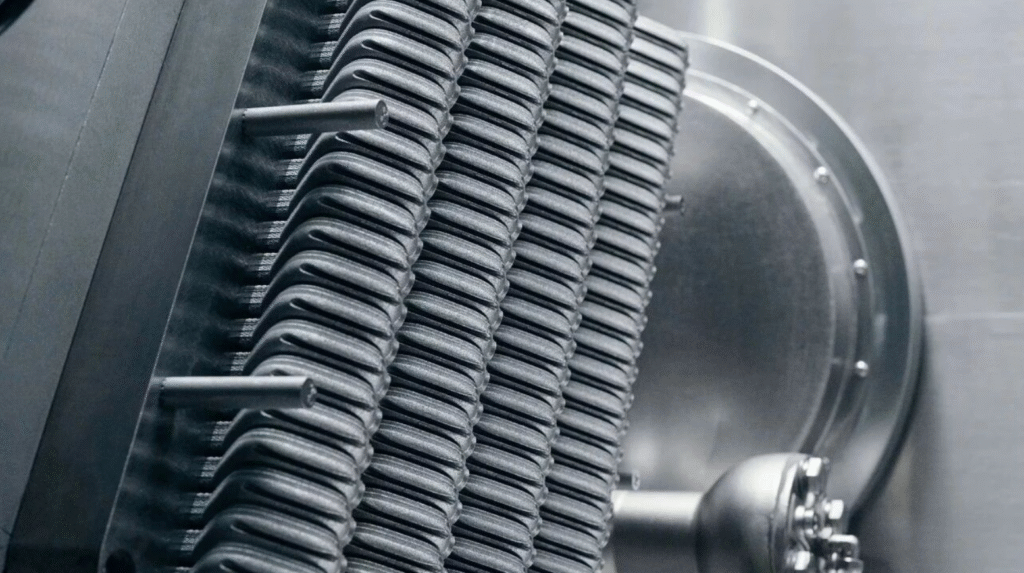
For fine depowdering, ultrasonic vibration is used to remove any remaining powder.
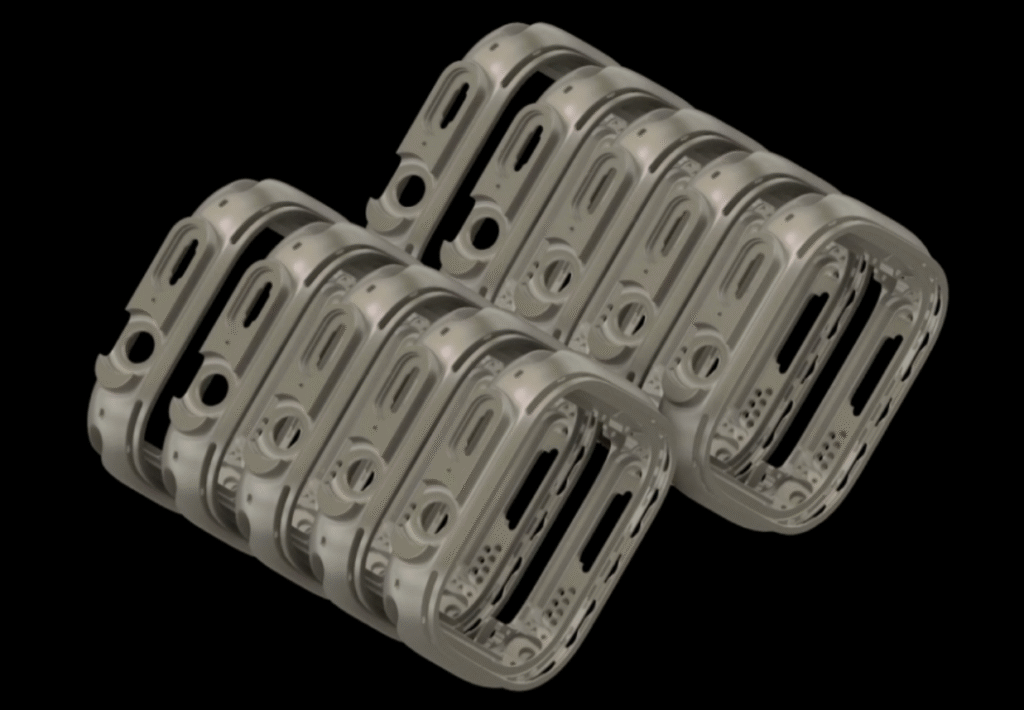
The watch cases are printed in a vertically tilted orientation along a diagonal on the build platform, each standing on one corner and supported by integrated support structures. After printing, wire cutting is performed to obtain the initial form of the Apple Watch case.
But that’s not the end of the process. Each case is then marked with a barcode for traceability, and computer systems verify whether every unit meets quality control standards in terms of dimensions and appearance.

The barcode engraving process is followed by automated optical inspection.
Once these steps are completed, the watch cases leave the 3D printing supplier and are sent to traditional case manufacturing facilities. These factories specialize in CNC machining and surface finishing processes—just like those used for previously forged Apple Watch cases.
It is precisely these final steps that transform the rough surface of the 3D-printed cases into a sandblasted or polished finish, making them indistinguishable from earlier models. For the fully polished Series 11 cases, each unit also undergoes hot isostatic pressing (HIP), which effectively seals internal pores and prepares the surface for the final polishing stage.
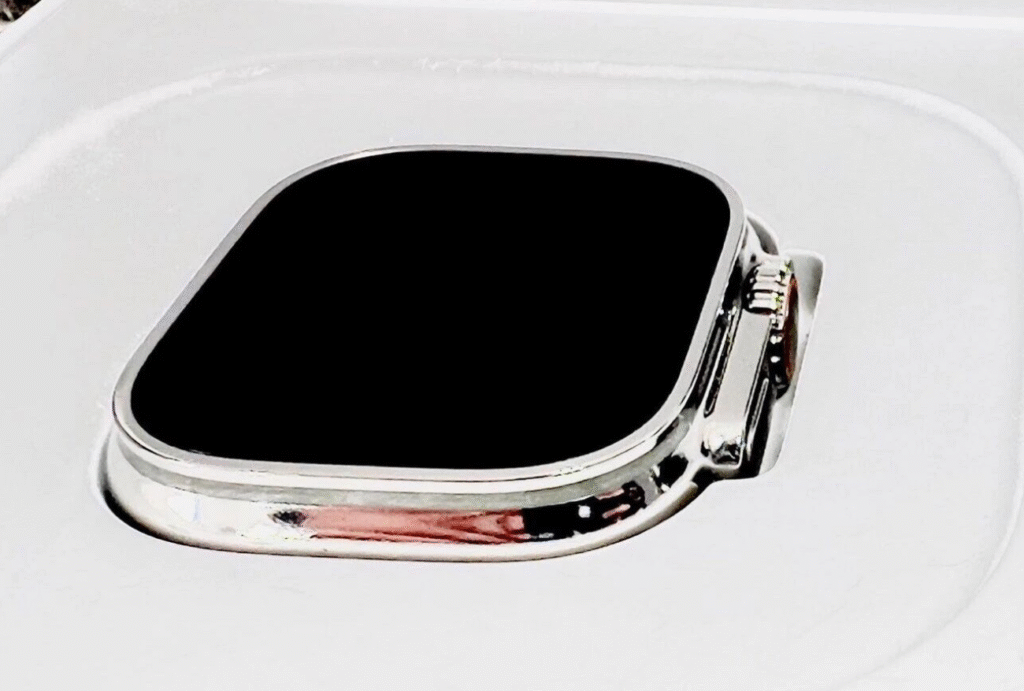
For such a significant engineering effort, these changes are almost imperceptible to the wearer—the appearance of the case does not reveal anything unusual about the manufacturing process.
However, Bergeron pointed out that the new 3D-printed structures incorporate design features that cannot be achieved through traditional CNC machining. “You can imagine that any manufacturing method comes with certain limitations. By adding additional structures within the metal, we are able to form antenna windows and achieve waterproof sealing—capabilities that are not possible with conventional machining.”
However, when viewed in a broader context, more significant implications begin to emerge. Chandler explained, “I think we may be underestimating the impact of cutting material usage in half—it’s a huge breakthrough. Normally, I’d be thrilled with just a 5% improvement in material efficiency. Even though 3D printing is a mature technology, people still believe it’s not possible to print using recycled titanium powder. But why is that?”
Bergeron noted that Apple’s product development operates like an extreme team sport—when one team encounters a challenge, others come together to solve it. Designers, engineers, and material scientists must work closely with manufacturing, operations, and other teams to overcome such difficulties.
Admittedly, traditional watch brands often promote the use of recycled metals for their cases. However, due to their relatively small production volumes, the actual environmental impact is minimal. As a result, this practice is increasingly being questioned and sometimes viewed as a form of “green marketing.”
In contrast, Apple operates at a vastly larger scale. When recycled materials are combined with more efficient 3D printing processes, the impact becomes far more meaningful. In 2025 alone, Apple is expected to save over 400 tons of titanium material through the adoption of this new process—a substantial achievement.
The Series 11 still retains many of the visual characteristics of the original 2014 Apple Watch, but the new full-scale manufacturing process provides designers with greater freedom in form. This freedom may lead to unexpected discoveries and could even inspire traditional watchmakers. As internal case structures become more sophisticated and more watchmakers adopt these next-generation processes, could the design of mechanical movements also begin to evolve?