

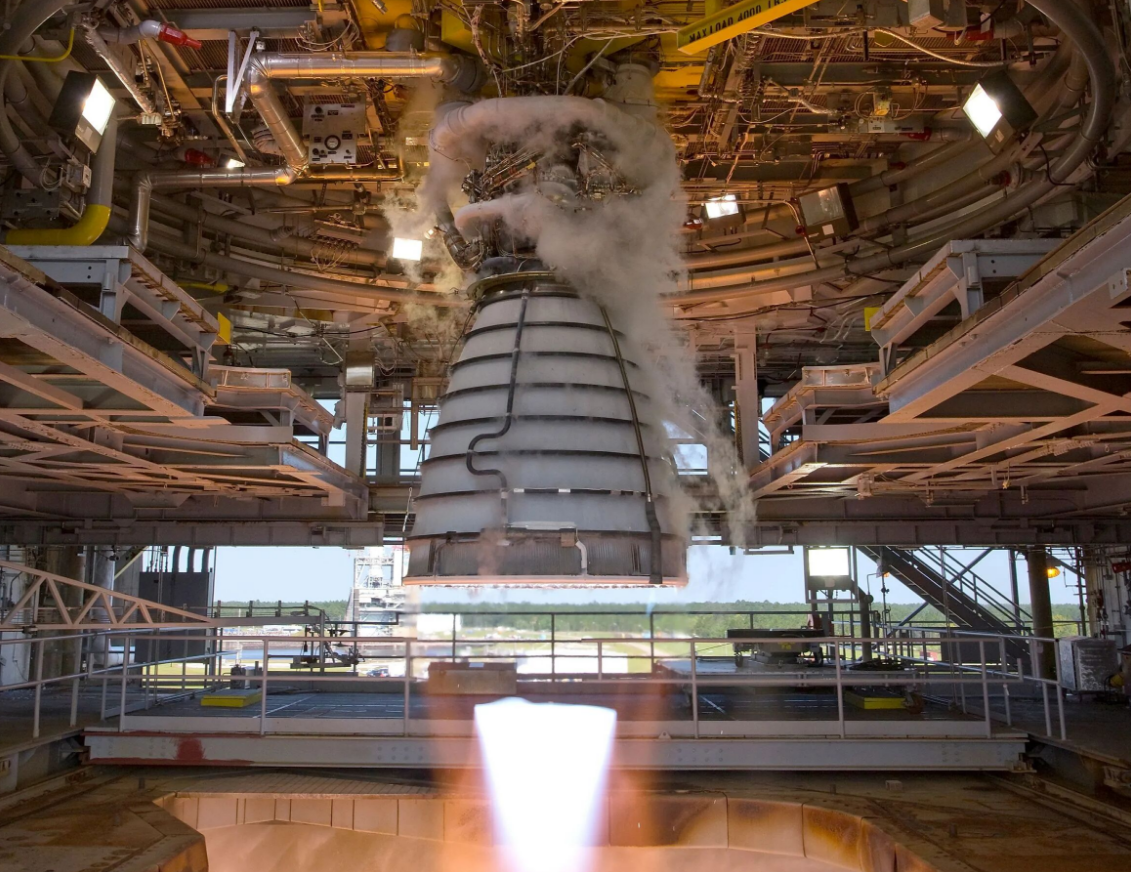
On April 2, NASA successfully launched the Artemis II spacecraft from the Kennedy Space Center, marking the first crewed lunar flyby mission by the United States in over half a century.
This mission is considered a major milestone by NASA, as it represents the first crewed flight of the Artemis program and a critical step toward returning humans to the Moon. Notably, Artemis II also demonstrates how 3D printing technologies are being integrated into such missions. In the coming years, understanding how to sustain and support these missions will be essential.
Crewed lunar flyby mission and the role of 3D printing
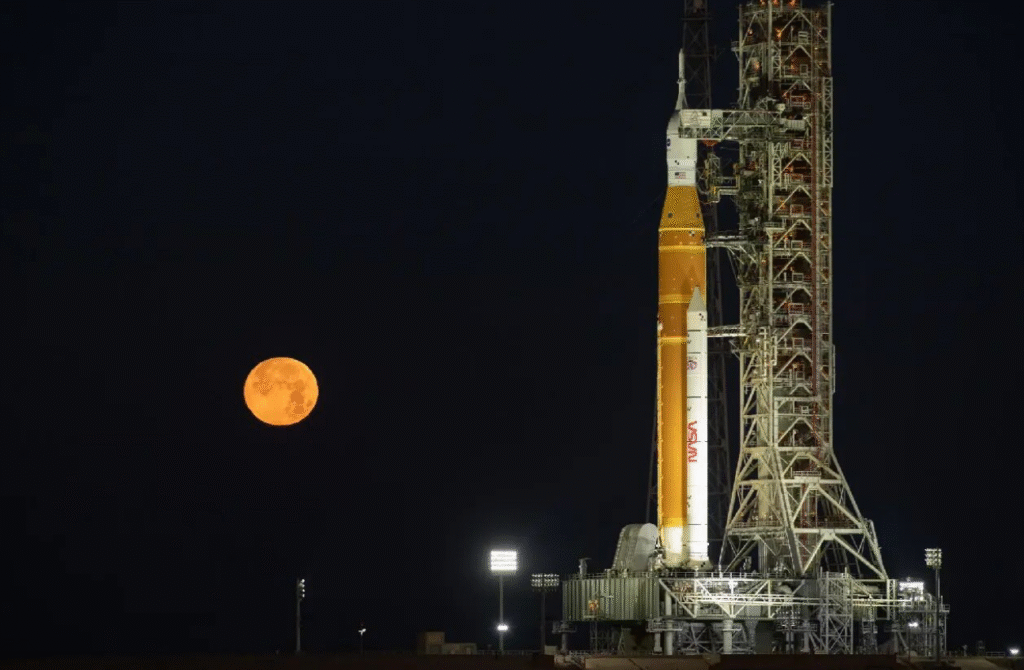
“Artemis II” is not a lunar landing mission, but a crewed, full-system test flight. Similar to Apollo 8, astronauts will orbit the Moon and return to Earth, validating the spacecraft, life support systems, and overall mission architecture. The mission is expected to last about 10 days, with splashdown in the Pacific Ocean after reentry.
If Artemis II proceeds as planned, it will pave the way for future crewed lunar landings and the establishment of long-term lunar habitats. This is not just about returning to the Moon—it marks a shift toward sustained human presence beyond Earth.

The Artemis program is massive in scale, but additive manufacturing has not been widely applied—which is unsurprising. In aerospace, certification, reliability, and long-term validation are critical, so the adoption of new technologies requires extra caution. For this reason, 3D printing is used in specific areas where it offers clear advantages. Within NASA and its contractors, the technology has been applied in three main areas:
- Spacecraft (Orion)
The crewed Orion spacecraft also incorporates 3D-printed components. The primary contractor for Orion has used additive manufacturing to produce multiple parts of the spacecraft, such as brackets, cable guides, environmental control system components, and housings. Many of these parts are made using laser metal 3D printing, allowing them to be manufactured as single, integrated pieces without assembly.
These components are critical—they help reduce weight, simplify manufacturing, and enhance reliability in performance-critical areas.
2. Tooling, Testing, and Ground Systems
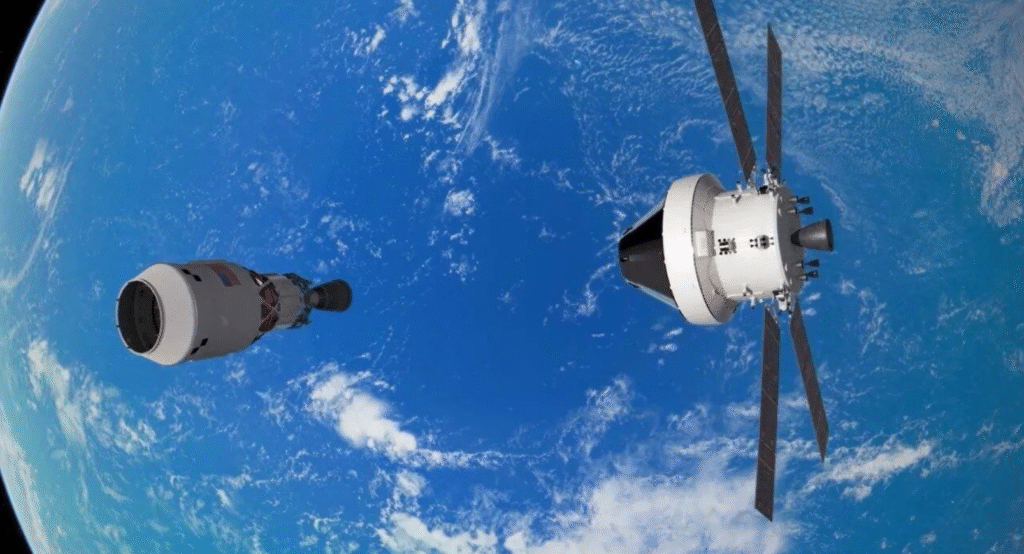
In the Artemis program, much of the application of additive manufacturing occurs behind the scenes. NASA centers, such as the Marshall Space Flight Center and Kennedy Space Center, as well as contractors, rely on 3D printing to produce tooling, conduct testing, and support ground operations.
This includes custom test fixtures and tooling used to validate engines and spacecraft components, as well as rapid prototypes, assembly aids, and other manufacturing tools that support production and integration. Many of these parts are produced using polymer-based processes such as Fused Deposition Modeling (FDM), enabling teams to quickly design, print, and test components.
Although these parts are not used in flight, they play a crucial role in the Artemis program, helping engineers iterate faster, reduce costs, and address issues early in development.
3. Rocket Engine Components (SLS)
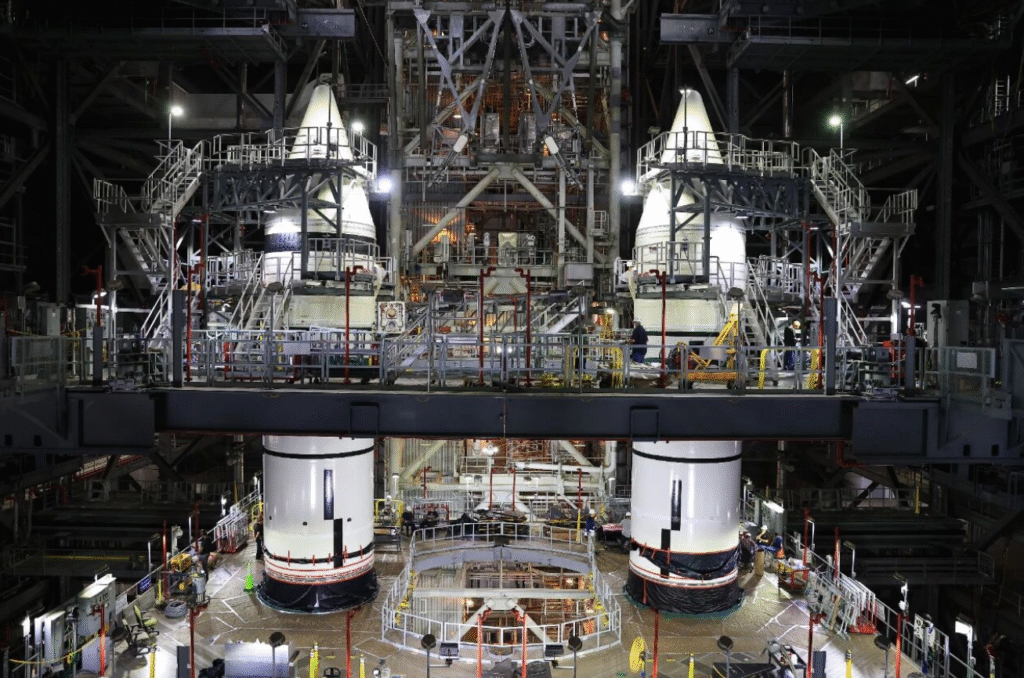
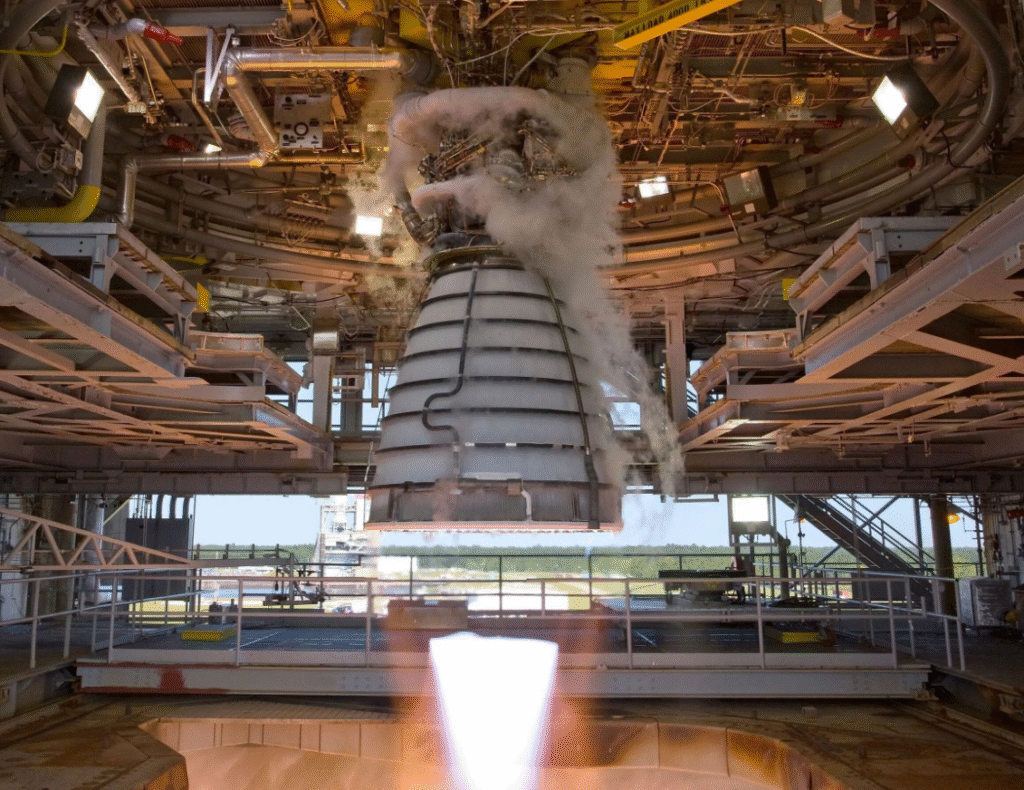
One of the most significant applications of 3D printing in space is rocket engines, although they are not the most prominent aspect of this mission. NASA’s heavy-lift rocket—the Space Launch System (SLS)—uses the RS-25 engines originally developed for the Space Shuttle.
Over the past few years, NASA and its partners have been incorporating 3D-printed parts into the RS-25 engines, including components for the spring accumulator system to reduce vibration, as well as certain valves and internal components. In future versions of Artemis program engines, additive manufacturing is expected to play an even larger role.
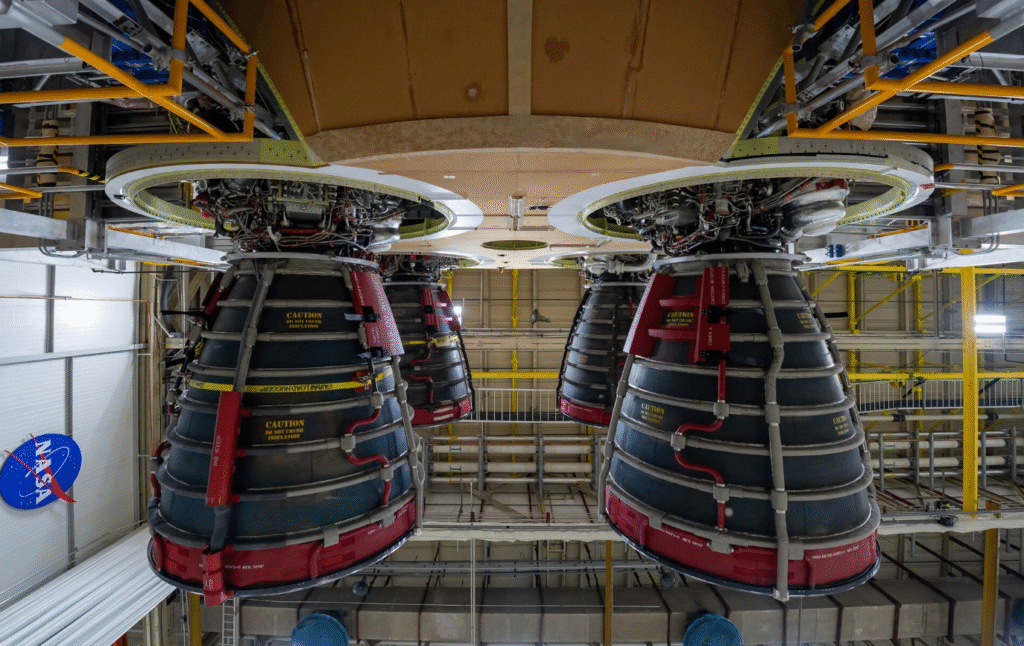
This is precisely one of the areas where 3D printing can have the greatest impact. Rocket engines are among the most complex systems in aerospace, operating under extreme conditions. Even small improvements can be critical. Additive manufacturing enables simplified designs, reduces the number of parts, and creates internal channels that are difficult—or even impossible—to achieve with traditional methods.
Functions Not Yet Achievable with 3D Printing
Artemis II also demonstrates the current applications of additive manufacturing, but it has not printed entire rockets or large flight structures. Its core systems are still produced using traditional methods that have been validated over decades.
The use of 3D printing is selective. It is applied in areas where it adds value—such as complex components, lightweight structures, and rapid iteration—rather than completely replacing conventional manufacturing.
This aligns with recent analyses from additive manufacturing research (AMR), which show that industry growth increasingly depends on specific applications rather than broad adoption across entire systems. This distinction is critical, especially given the common misconception that 3D printing is applied more widely than it actually is.
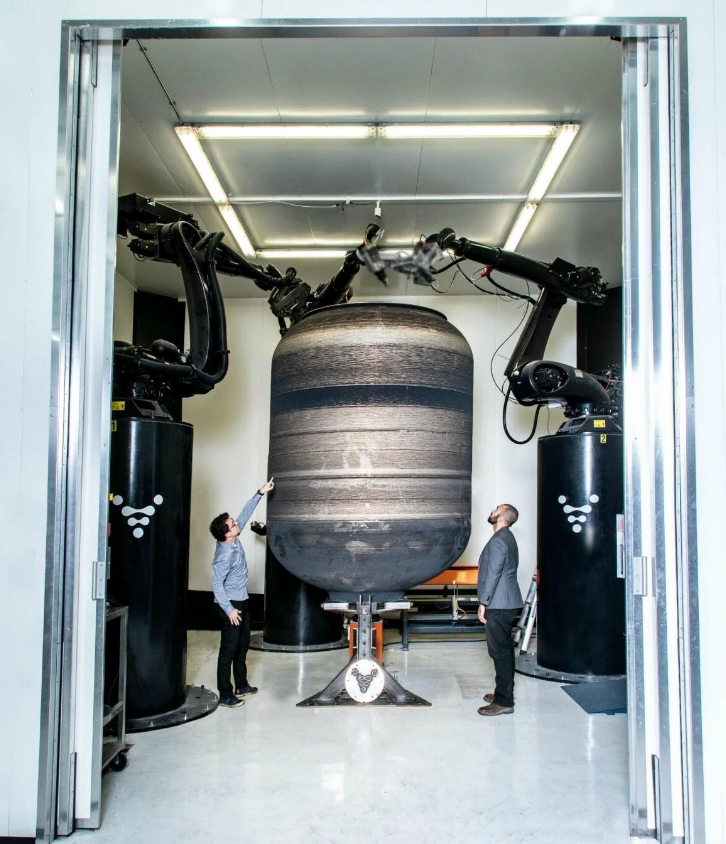
Relativity Space Prints Large Fuel Tanks with 3D Printers
3D Printing Will Play a Major Role in Long-Duration Missions
The true impact of 3D printing in the Artemis program goes beyond this launch and lies in its future development. Upcoming missions aim to establish a sustained human presence on the Moon, which will fundamentally change the nature of the challenges involved.
On Earth, manufacturing relies on supply chains, with raw materials and components flowing through a global network. On the Moon, this model does not work. Transport takes too long, payload capacity is limited, and every kilogram is extremely costly. In such an environment, manufacturing must occur closer to the point of demand.
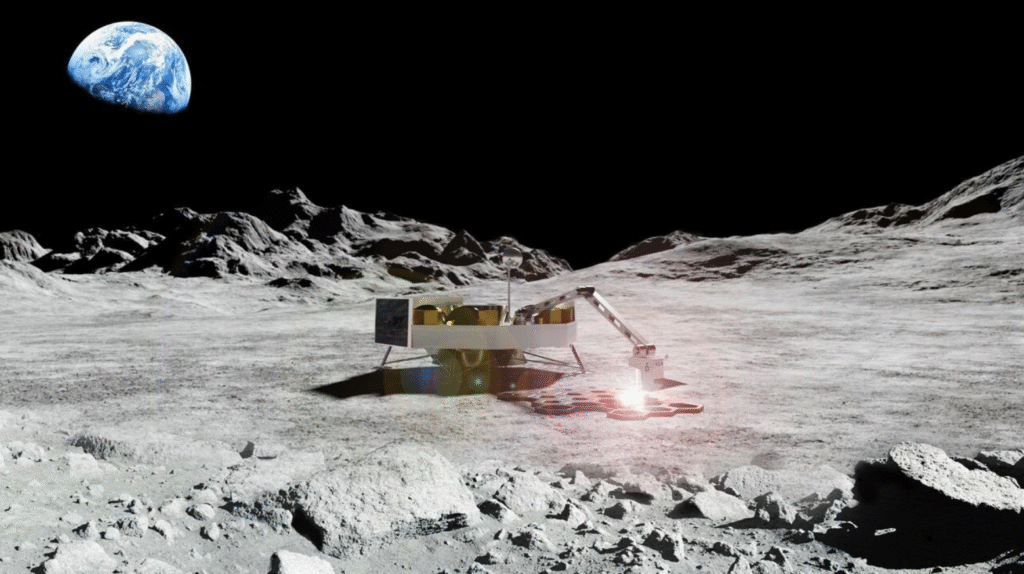
In many projects, scientists are exploring how to use lasers to 3D print structures on the Moon using lunar regolith.
Essentially, if a part cannot be easily transported, it must be manufactured on site. This is where 3D printing truly comes into play. Missions do not need to carry physical components; instead, they can bring digital files and produce parts on demand—whether tools, replacement components, or more complex equipment, such as medical devices.
In the future, the applications of 3D printing will extend far beyond small components. Research teams from major spacefaring nations are exploring how to use the Moon’s regolith as material for in-situ 3D printing, aiming to construct a variety of necessary facilities—such as landing pads, protective structures, and habitats—using local resources, thereby reducing the need to transport materials from Earth.