

In today’s rapidly advancing fields such as aerospace, semiconductors, precision instruments, and high-end equipment, even the slightest dimensional change in materials caused by temperature fluctuations can become a decisive factor in determining the success or failure of a device.
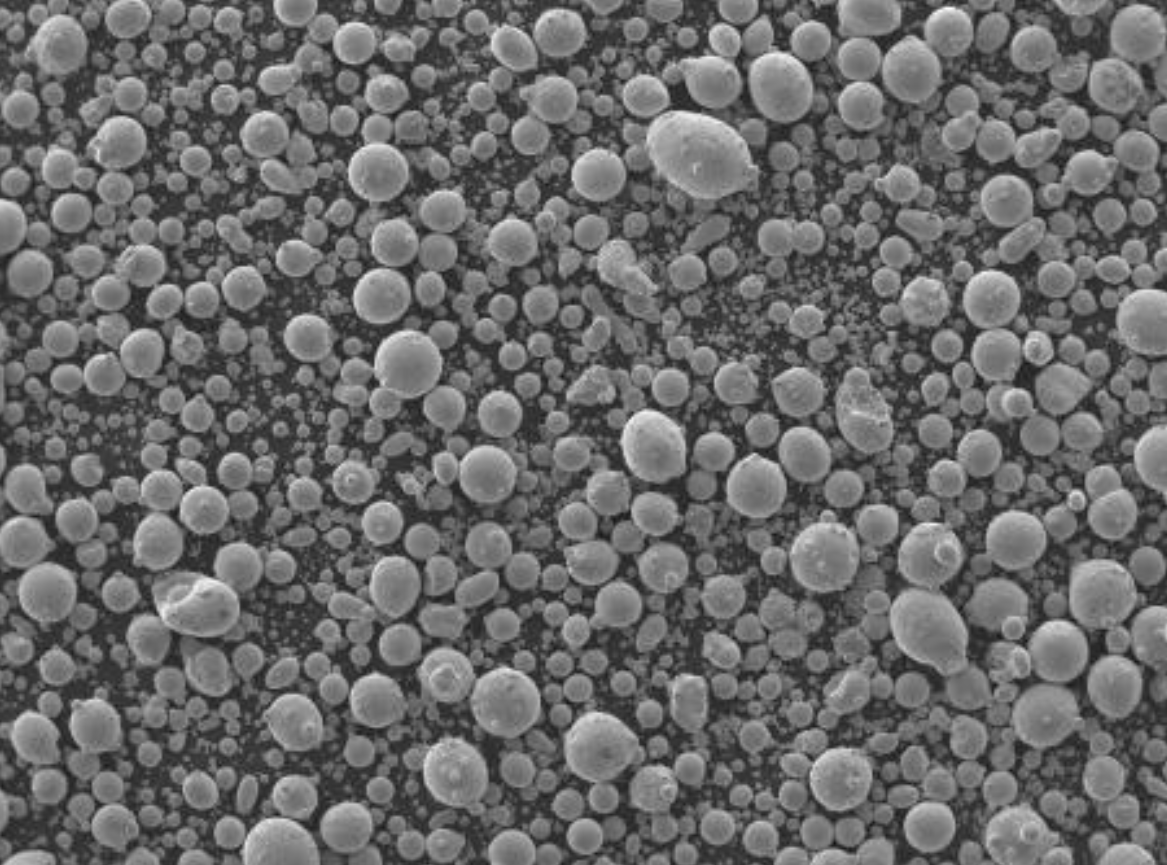
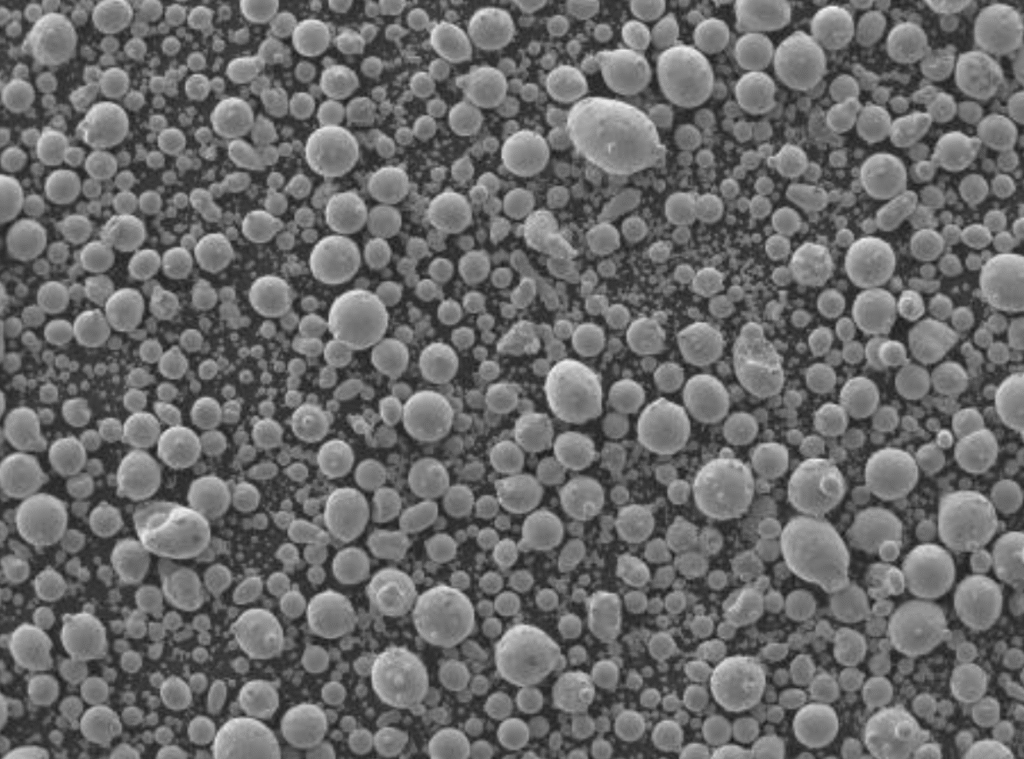
Following the launch of high-thermal-conductivity aluminum products, spherical Invar alloy powders (4J32 and 4J36) have now also been introduced. With their near-zero coefficient of thermal expansion, these materials provide an ideal “dimensionally stable” solution for applications in optoelectronic equipment, microwave communications, precision instruments, satellite manufacturing, and oil drilling.
From the optical lenses of deep-space probes to measurement instruments used in deep-sea oil wells; from the guide rails of semiconductor lithography machines to resonant cavities in 5G communication systems, high-precision equipment operating in extreme temperature environments can suffer signal distortion, measurement errors, or even system failure from micrometer-level deformation.
Traditional materials such as steel and aluminum alloys have thermal expansion coefficients of 12–23 × 10⁻⁶/°C. For a 1-meter component, a 100°C temperature difference can lead to deformation of 1.2–2.3 mm, which is far beyond the tolerance allowed in precision manufacturing.
In contrast, Invar alloys, thanks to their unique “Invar effect,” exhibit an extremely low coefficient of thermal expansion below 1 × 10⁻⁶/°C within the temperature range of −60°C to 100°C, enabling near temperature-independent dimensional stability.
Traditionally, Invar alloys have mostly been used in the form of bars or plates, which imposes clear limitations when manufacturing complex structures, integrated components, or lightweight precision parts. However, as additive manufacturing (3D printing) becomes a key technology for advanced precision manufacturing, Invar alloy powders with high sphericity, excellent flowability, and low oxygen content have become essential materials for overcoming the challenges of producing complex structures.
Developing high-quality Invar alloy powders tailored for additive manufacturing not only fully leverages the material’s ultra-low thermal expansion properties, but also enables complex geometries, integrated structures, and lightweight designs that are difficult to achieve with traditional processes. This represents an inevitable step toward higher precision, greater structural complexity, and longer service life in high-end equipment manufacturing.
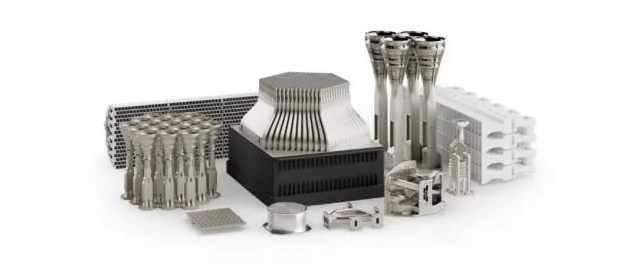
3D Printed Optical Instrument Components
Core Advantages
Extremely Low Coefficient of Thermal Expansion
- Dimensional stability far superior to ordinary metals, making it the “anchor of stability” for precision instruments.
- 4J32 (Super Invar Alloy): features an extremely low coefficient of thermal expansion.
- 4J36 (Invar Alloy): maintains ultra-low thermal expansion across a wider temperature range (e.g., 20°C–300°C), offering even better overall performance than 4J32.
Dimensional Stability vs. High Thermal Conductivity: A “Twin Material” Strategy
If the previously released high-thermal-conductivity aluminum acts as a “highway for heat transfer,” then Invar alloy serves as the “anchor of dimensional stability.”
- High-thermal-conductivity aluminum: designed for rapid heat transfer and dissipation.
- Invar alloy: designed to remain virtually unaffected by temperature changes, maintaining constant dimensions.
Excellent Processing and Compatibility
- Outstanding ductility: elongation can reach 38%–42%, making it suitable for a wide range of forming processes.
- Customized support: printing parameters and heat-treatment processes can be provided to help customers quickly integrate the material into production.
Controllable Cost and Stable Supply
Large-scale production enables stable batch supply, with costs more competitive than imported products.
Application Scenarios
Thanks to its exceptional dimensional stability, Invar alloy is widely used across high-end manufacturing industries.
Microwave Communication & Precision Instruments
Used in waveguide components, resonant cavities, gyroscopes, and precision calibration scales, ensuring signal integrity and measurement accuracy.
Aerospace & Optical Systems
Applied in satellite optical barrels, laser bases, and space optical structures, maintaining precise optical alignment under extreme temperature variations in space.
Oil Drilling & Deep-Sea Equipment
Used in measurement-while-drilling (MWD) instruments and deep-sea sensors, resisting dimensional drift under high-temperature and ultra-low-temperature environments.
Electronics Manufacturing & Display Technology
Serves as OLED mask frames, lithography machine components, and semiconductor packaging molds, meeting the ultra-high precision requirements of chip and panel manufacturing.
Medical Equipment & Scientific Instruments
Applied in MRI systems, surgical robots, and precision positioning devices, maintaining dimensional stability in complex operational environments.