

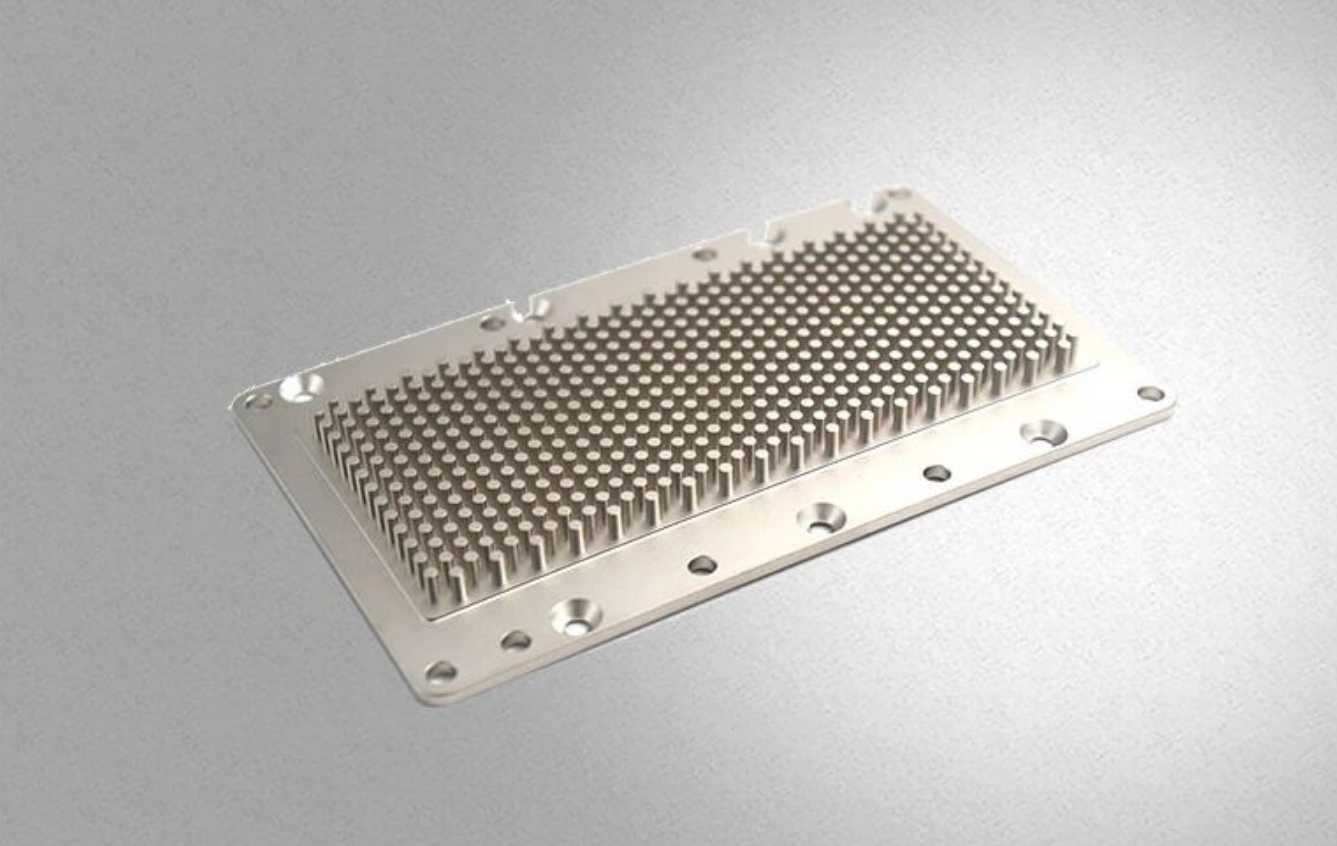
Aluminum silicon carbide (AlSiC) is a novel composite material formed by uniformly dispersing silicon carbide particles within an aluminum alloy matrix. Its density is only 3.0–3.2 g/cm³, making it about 60% lighter than steel and roughly 30% lighter than titanium alloys.
Combining the toughness of metals with the high-performance characteristics of ceramics, AlSiC offers an excellent balance of lightweight properties, heat dissipation, and thermal stability. As a result, it has become an indispensable core material in fields such as aerospace, electronic packaging, and new energy vehicles.
Key Advantages: Lightweight, Heat Dissipation, and Thermal Stability
In terms of thermal performance, AlSiC typically exhibits a thermal conductivity of 170–250 W/(m·K). Its coefficient of thermal expansion (CTE) can be adjusted within the range of 6.5–12 × 10⁻⁶/K, enabling excellent thermal matching with chips and ceramic substrates. This reduces the risk of thermal fatigue failure and even allows direct mounting of power chips.
Its thermal conductivity is about ten times higher than that of Kovar alloy, providing extremely efficient heat dissipation and significantly improving the reliability of electronic components. As a composite material, its properties can also be tailored to specific needs, achieving true “custom-fit” performance—something that traditional metals or ceramics find difficult to achieve.
In terms of lightweight performance, the material density is approximately 3.02 g/cm³, making it about 30% lighter than titanium alloys and less than one-fifth the density of Cu/W composites. This makes it highly suitable for weight-sensitive applications, such as aerospace systems and portable electronic devices.
Regarding mechanical performance, AlSiC can reach a flexural strength of up to 500 MPa. Its specific stiffness ranks among the highest in electronic materials—three times that of aluminum, five times that of W-Cu and Kovar alloys, and twenty-five times that of copper. In addition, it offers better vibration resistance than ceramics, making it particularly advantageous in harsh vibration environments such as aerospace and automotive applications.
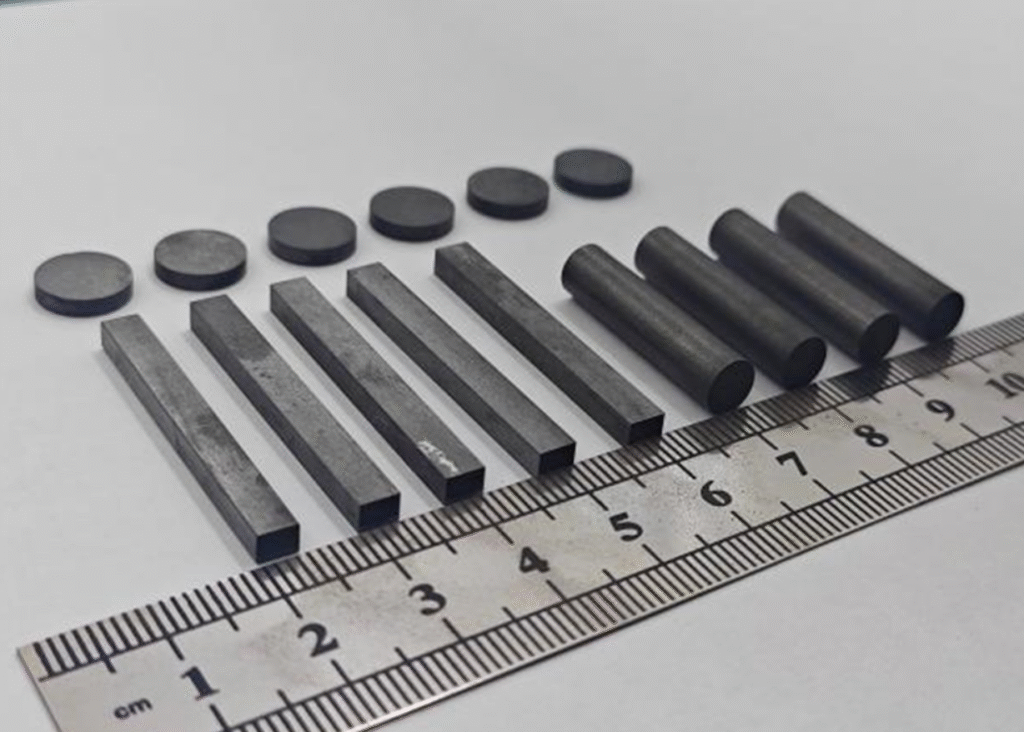
AlSiC Components
Designable Performance, Tailored to Demand
One of the most notable advantages of Aluminum Silicon Carbide (AlSiC) is its highly designable performance. By adjusting factors such as the volume fraction of SiC particles, particle size, composition ratio, distribution pattern, and even selecting different grades of aluminum alloy matrices, key properties—such as thermal expansion, thermal conductivity, strength, and modulus—can be precisely optimized to suit different application scenarios.
Based on the volume fraction of the SiC reinforcement phase, AlSiC materials are generally categorized as follows:
Low volume fraction (<25%)
These materials retain the good toughness and machinability of aluminum alloys, while improving modulus, strength, and fatigue resistance. They are commonly used for load-bearing structural components.
Medium volume fraction (25%–45%)
At this level, the material achieves higher modulus, hardness, and improved thermal expansion properties, while still maintaining high strength. It is suitable as a structural–functional integrated material.
High volume fraction (50%–80%)
These materials provide even higher stiffness and lower thermal expansion, and their thermal conductivity often surpasses that of aluminum alloys. They are widely used in electronic packaging and heat-dissipation functional components.
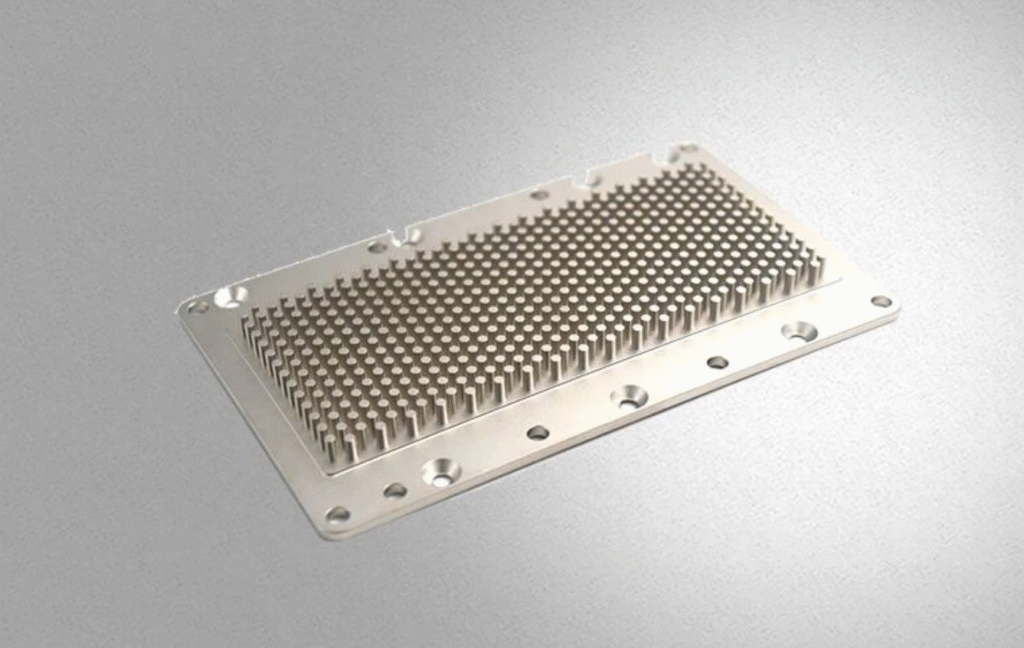
AlSiC Pin-Fin IGBT Heat Sink
Traditional Manufacturing Processes Encounter Bottlenecks
Because the thermal expansion coefficients of the aluminum matrix and SiC particles differ significantly, complex residual stresses are easily generated during material preparation, heat treatment, and cooling. These stresses can negatively affect mechanical performance and dimensional stability.
In addition, traditional manufacturing routes such as powder metallurgy and casting face major challenges. With silicon carbide having a Mohs hardness of up to 9.2, machining complex structural components often leads to edge chipping and cracking, resulting in very low yield rates.
Production cycles can take several weeks or even months, making it difficult to keep pace with the rapid iteration cycles of modern manufacturing. The combination of complex processing steps and low yields drives costs extremely high—often several times to dozens of times more expensive than conventional aluminum alloys—which greatly limits large-scale adoption.
Moreover, traditional manufacturing methods cannot integrally form complex internal structures, meaning that many innovative designs cannot be realized due to process limitations.
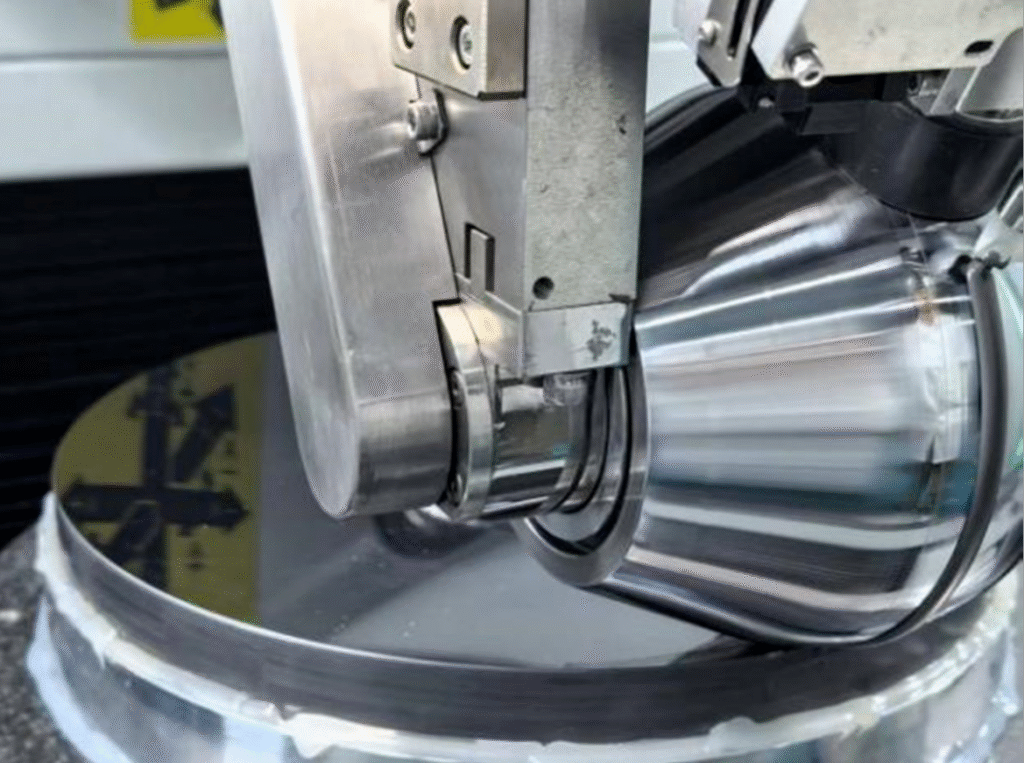
Grinding and Machining of Silicon Carbide and Its Composites
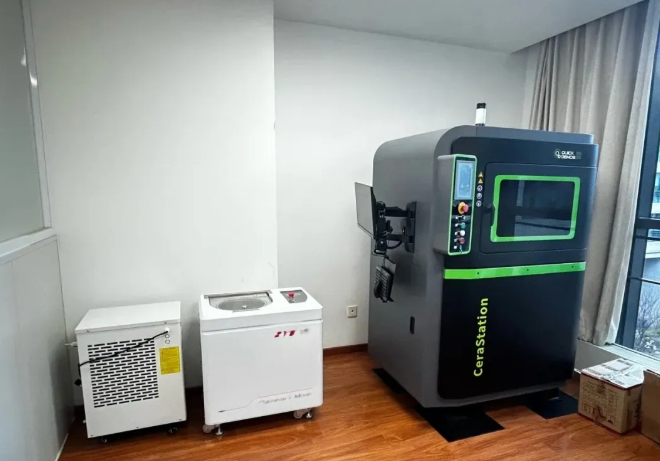
To address these industry challenges, Qiandu Hi-Tech has introduced its self-developed CeraStation 160 and CeraLab P60 ceramic 3D printers, specifically designed for silicon carbide green body printing.
The CeraStation 160 is oriented toward both research and industrial-scale production. It features a build volume of 160 × 100 × 200 mm (L × W × H), a horizontal exposure resolution of 62.5 μm, and a Z-axis repeat positioning accuracy of ±1 μm.
In addition, its batch printing efficiency is increased by 40%, enabling the high-precision fabrication of large and complex structures with ease. ⚙️
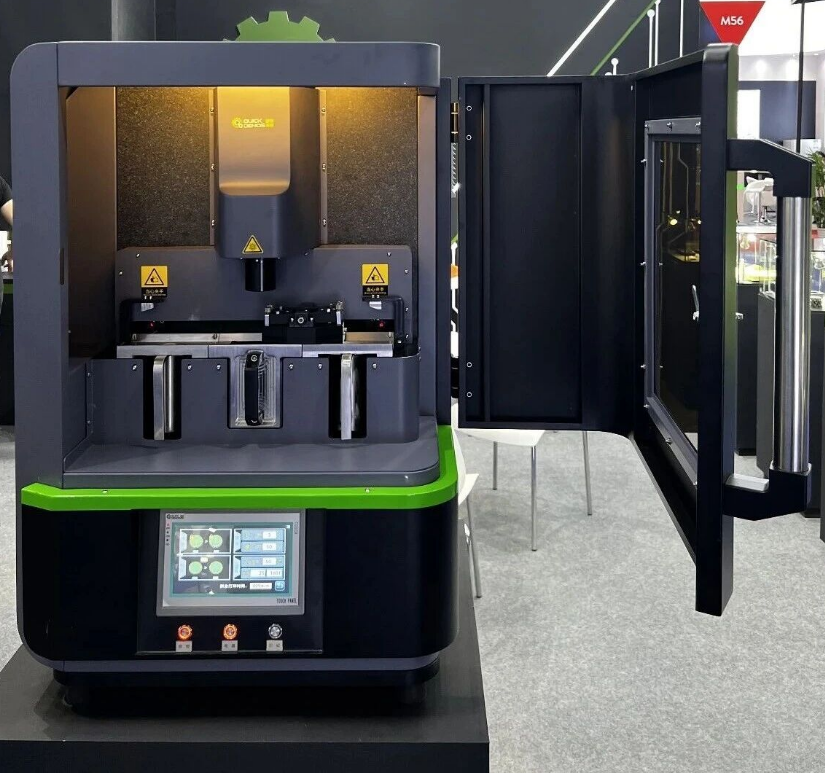
The CeraLab P60 is designed for research and small-batch prototyping. It offers a build volume of 64 × 40 × 100 mm and a horizontal exposure resolution of 50 μm.
The system is equipped with an anti-interference control system and an open material development module, making it ideal for the rapid fabrication of fine and intricate structures, while also supporting fast iteration of materials and process development.
In addition, silicon carbide powder is mixed with a photosensitive resin using a proprietary formulation to produce a low-viscosity, high solid-loading printing slurry. The solid volume fraction can reach 40%–55%, providing a solid foundation for high-precision and stable printing.
The freshly printed SiC green body contains a large amount of photosensitive resin and must undergo high-temperature debinding treatment. Through staged temperature control in a high-temperature furnace, organic components are removed and residual stresses are released, resulting in a porous silicon carbide skeleton suitable for subsequent infiltration. By collaborating with research institutions to optimize process parameters, a stepwise heating strategy is adopted to minimize the risk of deformation and cracking of the green body.
After debinding, the skeleton is placed in an infiltration furnace. Molten aluminum alloy is introduced, and capillary action allows the liquid aluminum to fully fill the pores of the SiC skeleton, ultimately producing a dense and uniform AlSiC component. Precise control of temperature, pressure, and holding time ensures full bonding between the aluminum and the SiC framework. The resulting products achieve a flexural strength exceeding 500 MPa and a thermal conductivity above 170 W/(m·K).
Compared with traditional manufacturing processes, this 3D printing solution offers clear advantages:
- Production cycles reduced from several weeks or months to just a few weeks, with efficiency increased severalfold
- Improved density, uniformity, mechanical performance, and thermal conductivity stability
- Significant reduction in post-processing machining thanks to near-net-shape printing
- Digital, mold-free production, lowering tooling costs and reducing material waste
- Overall manufacturing cost reduced by more than 60%
Currently, this technology is being actively industrialized across multiple sectors:
- Aerospace: Customized structural components optimized through topology design achieve 35% weight reduction, ensuring stable operation of optical devices under extreme temperature differences
- Electronic packaging: For power electronics manufacturers, microchannel IGBT substrates produced with this technology provide over 40% higher heat dissipation capacity than traditional copper substrates, while reducing weight by 60% and cost by 30%.
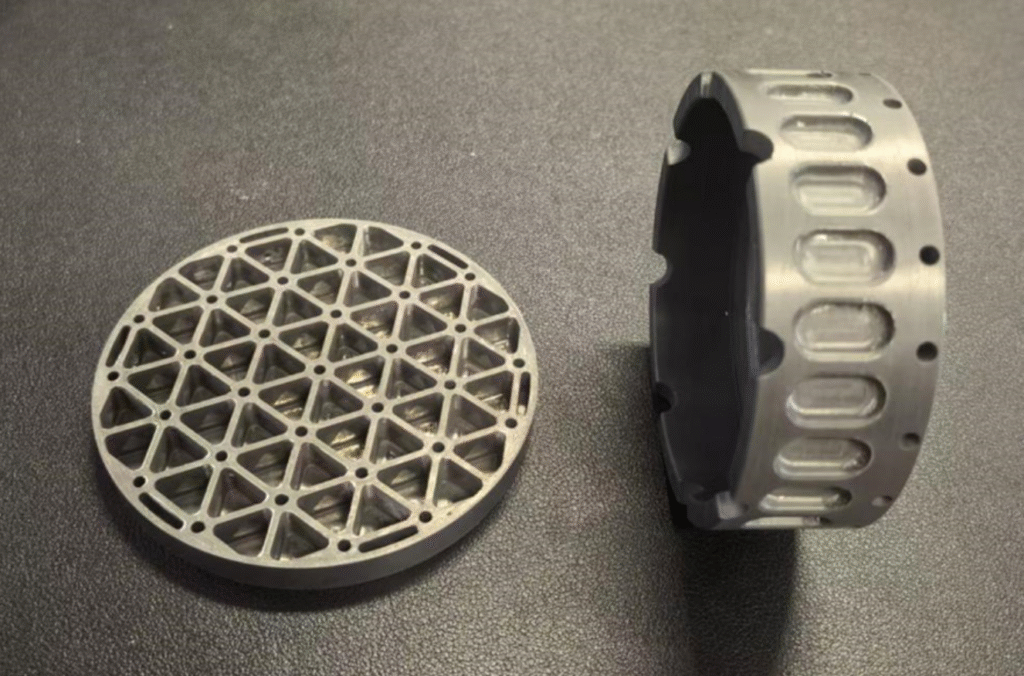
Preparation of AlSiC Components Using Photopolymerization Technology