

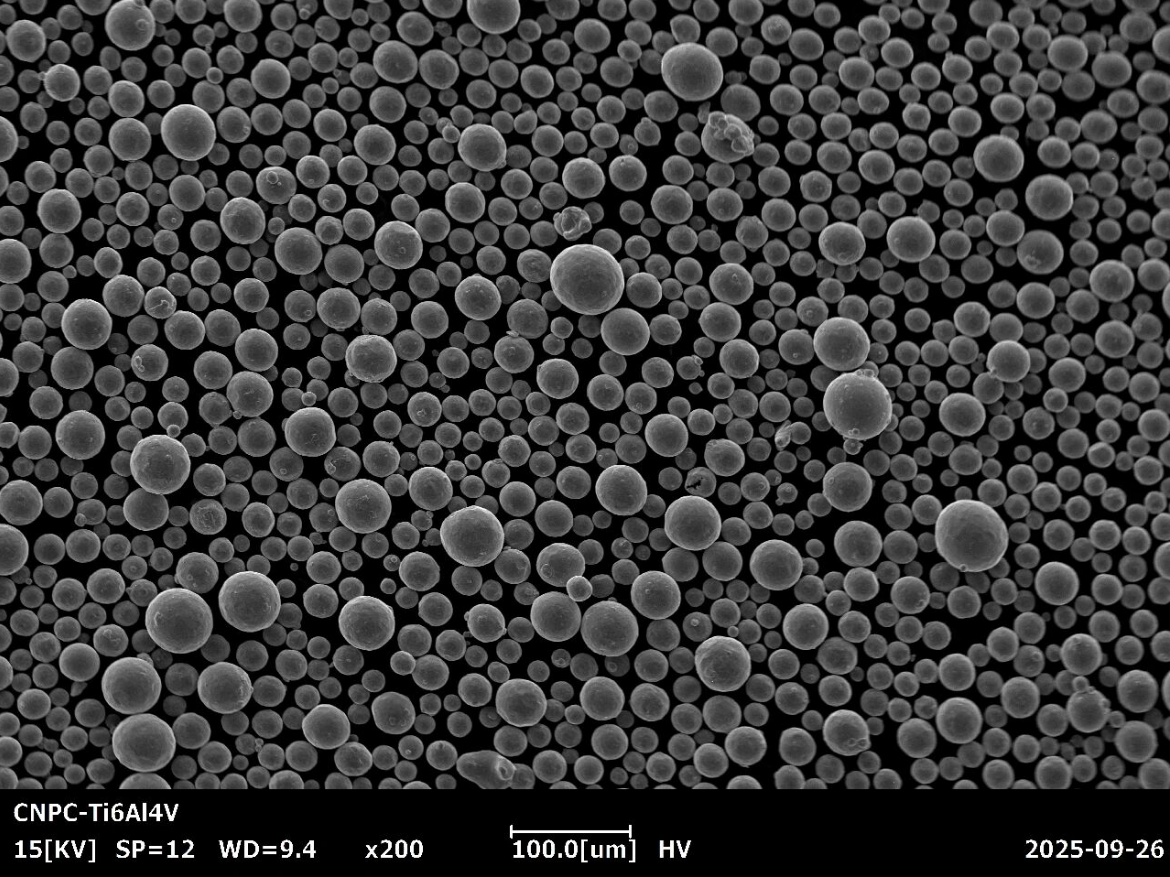
The particle size range of metal 3D printing powders is typically 15–53 μm, which covers the vast majority of application scenarios.
However, for high-precision 3D printing applications, a finer particle size range of 0–25 μm offers clear advantages. It enables more complex integrated structures, higher dimensional accuracy, lower surface roughness, and the ability to form ultra-thin walls.
In the 3C industry, it can be used for micro hinges, watch bands, and precision internal components in earphones. In the medical field, it is suitable for manufacturing micro forceps, scissors, and needle holders. In addition, it can also be applied to produce precision components for MEMS (microelectromechanical systems) and miniature thermal management devices.

Micro metal 3D-printed components by 3D MicroPrint
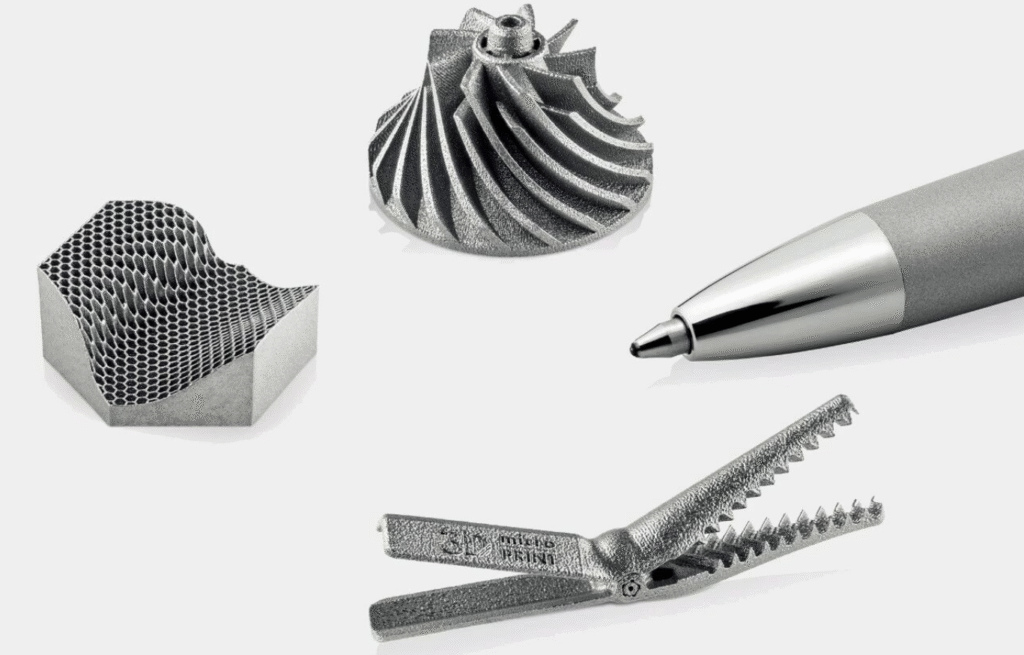
Micro 3D-printed components by Precipart
In these application scenarios, finer powders are an inevitable choice. Moreover, this particle size range is also the primary option for traditional MIM (metal injection molding) and binder jetting 3D printing processes.
However, with conventional powder production methods such as EIGA, the yield of 0–25 μm titanium alloy fine powder has long hovered around 20%, resulting in high costs and unstable supply—directly limiting its large-scale application in 3C electronics and precision components.
With plasma spheroidization technologies applied to titanium alloys such as Ti-6Al-4V (TC4) and TA15, the yield of fine powder in the 0–25 μm range has increased from about 20% to over 60%. This enables batch production of fine powders while significantly reducing costs.
At the same time, the powder demonstrates excellent performance in composition control, particle morphology, and batch consistency. Combined with a recycled feedstock recovery system, it offers high cost-effectiveness and scalability, enabling a stable material supply for mass production.
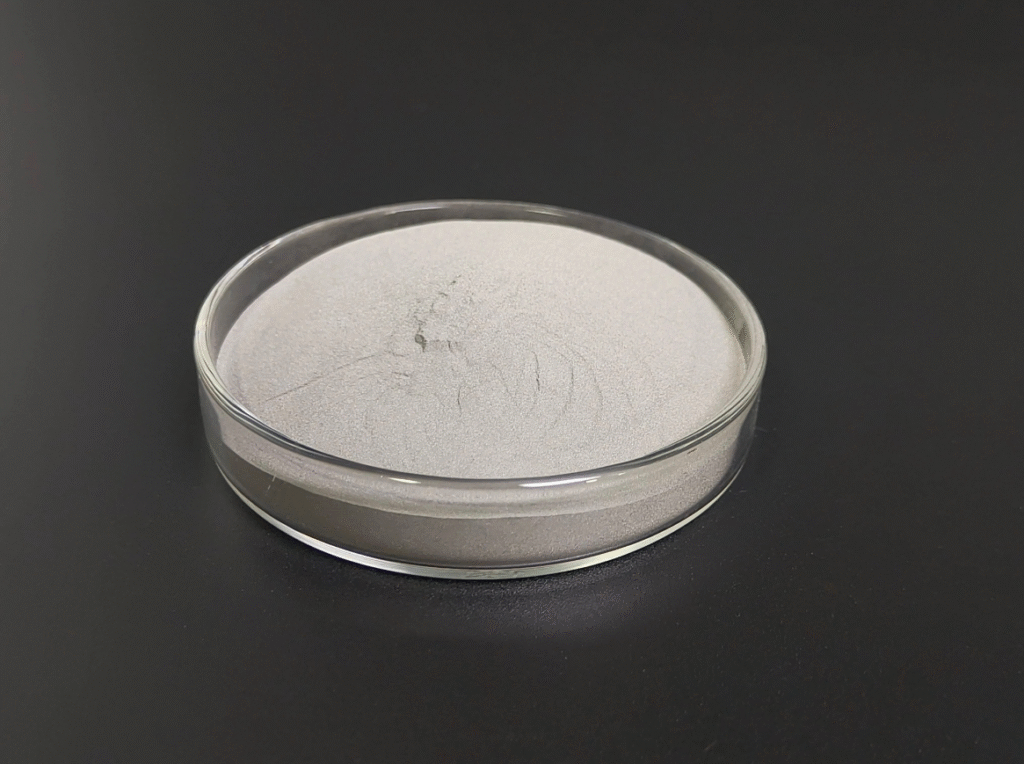
What does a 60% yield mean?
Simply put, it transforms the 0–25 μm fine powder from a by-product into a scalable, “main product.”
For manufacturers, the most immediate impact is a significant increase in output and a substantial reduction in cost. The effective fine powder yield per unit of raw material increases roughly threefold: from 1 ton of raw material, only 0.2 tons of fine powder could previously be produced, whereas now 0.6 tons of fine powder can be obtained. This dramatically lowers the unit manufacturing cost of fine powders and structurally improves the production efficiency of titanium alloy fine powders.
High quality + high performance + low carbon
Metal injection molding (MIM), binder jetting, and precision 3D printing require powders that go far beyond just being “fine.” Sphericity, oxygen content, and batch consistency all directly affect print success rates and part performance.
Through plasma spheroidization technology, not only is the yield improved, but sphericity is stabilized above 90% and oxygen content is controlled below 0.18%, meeting the stringent batch consistency requirements needed for large-scale production.
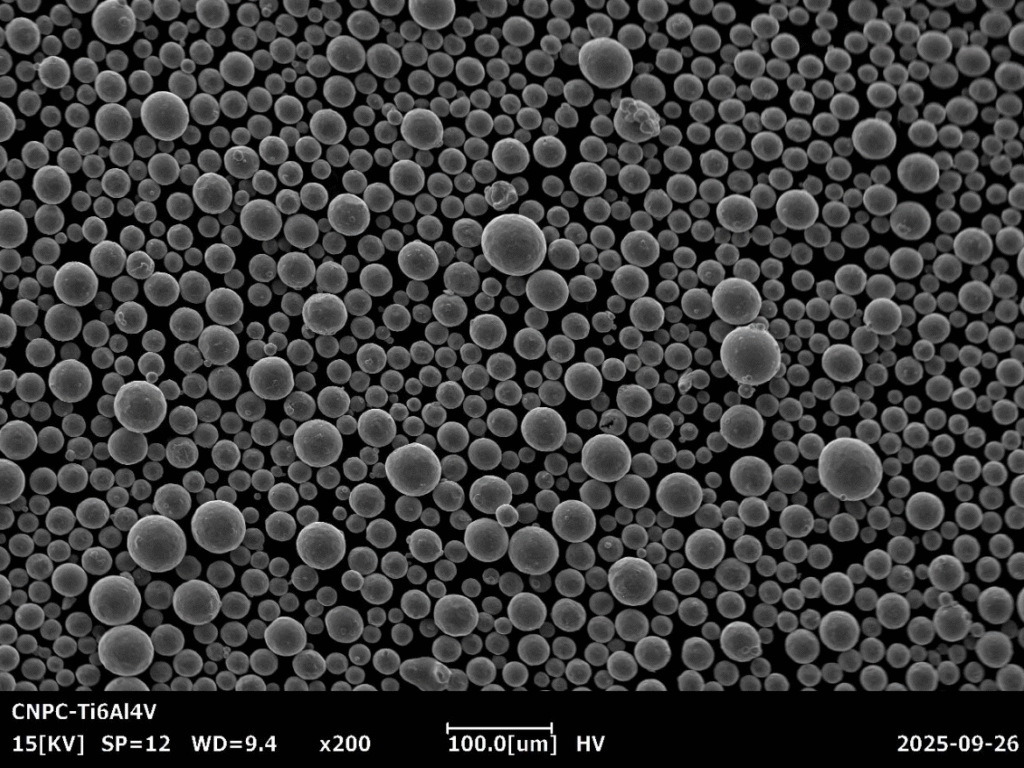
Plasma spheroidization (PS) is a core technology for improving titanium alloy powder performance and reducing costs, with very clear advantages.
First, it can utilize a wide variety of feedstock forms—including titanium scrap, chips, bars, and wires—while carbon emissions are only about 10% of those from traditional EIGA processes. Through process optimization, the sphericity of the powders is significantly improved, achieving performance comparable to virgin powders while avoiding raw material waste.
Second, the process allows flexible control of powder particle size, enabling precise tailoring to meet the specific particle size requirements of different application scenarios.
Stable mass supply + low cost
Mass production of 0–25 μm titanium alloy fine powders has now been achieved, with 12 plasma spheroidization production lines completed, providing a reliable supply chain to support customers’ large-scale development and mass production plans.
In addition, these fine powders have been widely applied in the 3C electronics sector and show great potential in high-end fields such as medical devices, aerospace, and humanoid robotics. They meet the demands for “lightweight, precision, and high-end” applications while offering significant cost advantages.